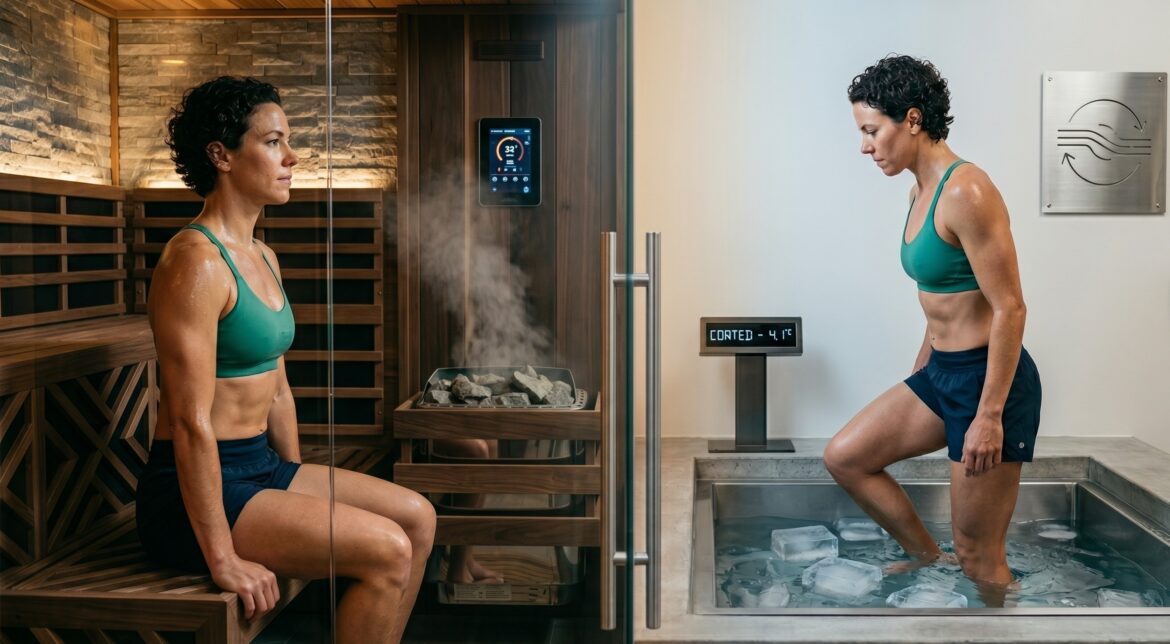
Contrast Therapy: Train Your Recovery System to Elevate Resilience
TL;DR
Core Concept: Contrast therapy — alternating heat exposure (sauna) and cold exposure (cold plunge or ice bath) — is one of the most powerful hormetic tools for recovery, nervous system regulation, and human optimization.
Significance: While sauna and cold exposure are powerful individually, the alternation between both creates a unique “vascular pump” effect that strongly stimulates circulation and nervous system adaptation.
Challenges: More intensity is not always better…Excessive cold exposure or poor recovery management can become counterproductive — especially around strength training adaptation. The key is progressive exposure and intelligent dosage.
Implementation Tips – Practical Guidelines (Shared below!) (Scroll down in the full article!)
OVERVIEW
Modern life keeps humans in permanent comfort:
- stable temperatures
- reduced thermal adaptation
But biologically, humans evolved under fluctuating environments.
Heat and cold are not just sensations. They are biological stress signals.
And when applied correctly, they trigger powerful adaptation mechanisms.
This is the foundation of contrast therapy.
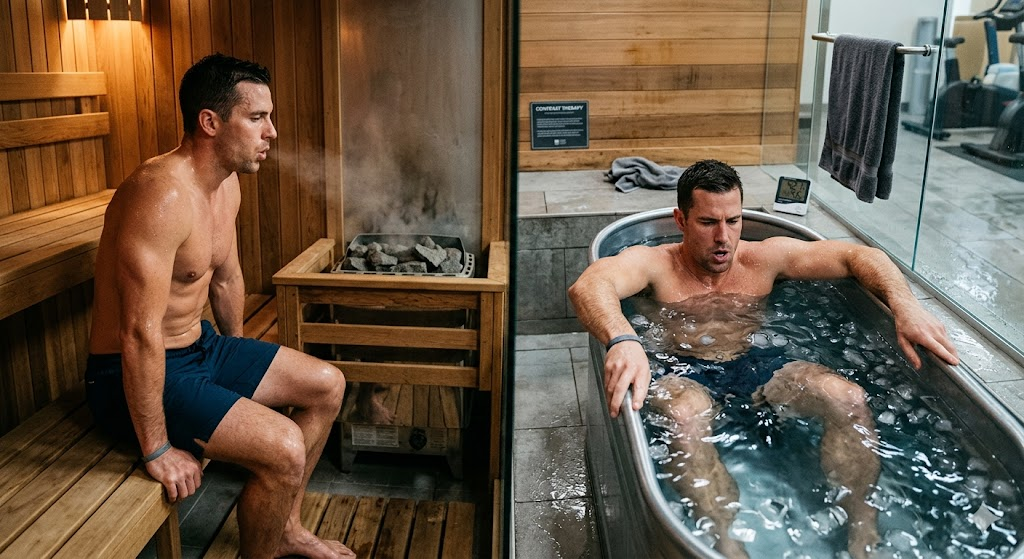
Block-Based Strategy: Why a Contrast Therapy Block Matters
Unlike exercise, which primarily builds physical capacity…Contrast therapy directly trains:
- the nervous system
- vascular flexibility
- stress adaptation
- thermoregulation
- recovery responsiveness
Due to the alternation between heat and cold that repeatedly shifts the body between:
| Heat Exposure | Cold Exposure |
|---|---|
| Vasodilation | Vasoconstriction |
| Relaxation | Sympathetic activation |
| Heat Shock Proteins | Catecholamine release (Dopamine, Norepinephrine, Epinephrine, etc.) |
| Parasympathetic rebound | Acute stress response |
This creates a form of: “adaptation training” for the body.
Heat Exposure: What Sauna Does
Sauna exposure increases :
- circulation
- heart rate
- vascular dilation
- parasympathetic rebound afterward
One of the most fascinating effects is the activation of Heat Shock Proteins (HSPs). [1][3]
These proteins help:
- repair damaged proteins
- protect mitochondria
- reduce oxidative stress
- improve cellular resilience
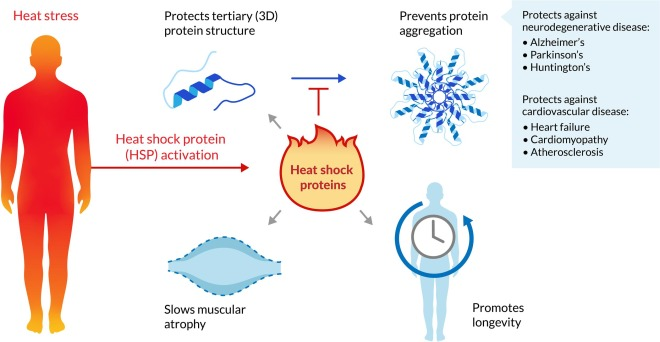
Heat exposure has also been associated with:
- cardiovascular benefits
- improved recovery
- reduced stress perception
- better sleep quality
- promoted longevity
Cold Exposure: What Ice Baths Do
Cold exposure strongly activates :
| Cold Exposure Effects (<15°C) [4] | Physiological Response |
|---|---|
| Norepinephrine release ↑ (200–300%) | Increased alertness, focus, vigilance, sympathetic activation |
| Dopamine elevation ↑ (up to 250%) | Improved motivation, mood, drive, prolonged sense of well-being |
| Brown fat activation | Increased thermogenesis and calorie expenditure |
| Vasoconstriction | Blood redirected toward vital organs and core temperature preservation |
| Cold shock response | Acute activation of the nervous system and stress adaptation pathways |
The Vascular Pump Effect
The power of contrast therapy comes from the alternation itself.
Heat expands blood vessels. Cold contracts them.
This repeated expansion/contraction creates: The “vascular pump effect” (like strength straining for your blood vessels). [2]
This help:
- improve circulation
- enhance recovery
- accelerate waste clearance
- improve oxygen delivery
- stimulate lymphatic flow
HRV and Nervous System Adaptation
Heart Rate Variability (HRV) reflects how efficiently the body transitions between stress and recovery.
Contrast therapy will also support HRV by improving:
- autonomic flexibility
- parasympathetic rebound
- recovery efficiency
- stress tolerance
But HRV is only one reflection of a larger process: building a more resilient nervous system.
It then makes perfect sense to integrate contrast therapy if we also aim to increase our HRV.
INTERESTING VIDEOS TO WATCH
HOW TO GET INTO HACKTION?

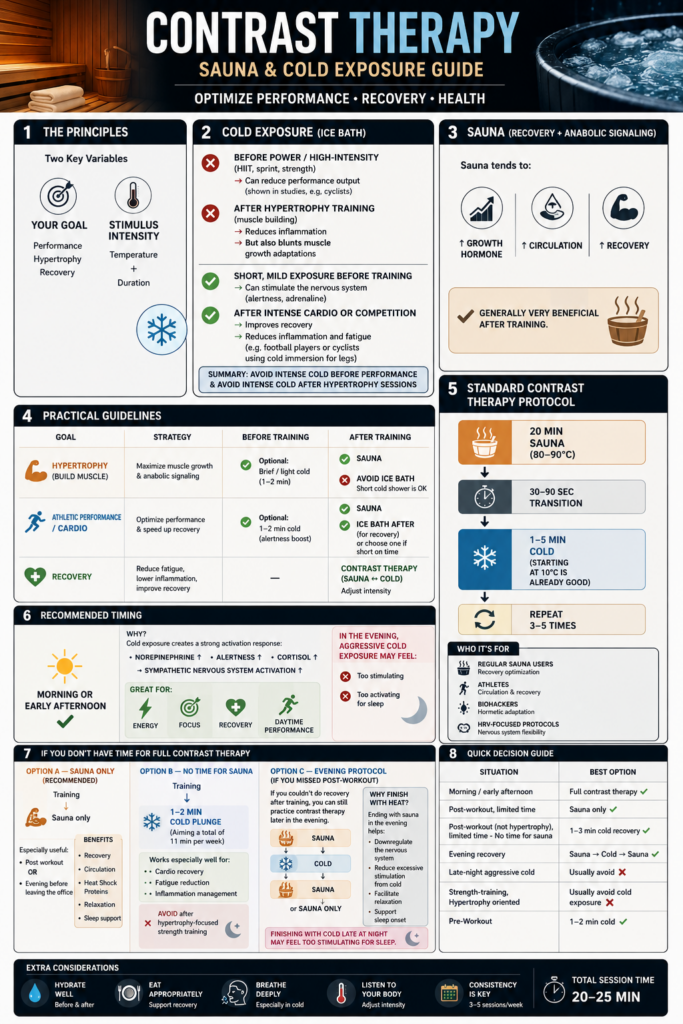
Practical Instructions – Contrast Therapy Protocol
The mission is simple:
Use controlled heat and cold exposure to stimulate recovery, vascular adaptation, nervous system regulation, metabolic resilience, and stress adaptation.
STANDARD CONTRAST THERAPY PROTOCOL
Who it’s for
| Profile | Goal |
|---|---|
| Regular sauna users | Recovery optimization |
| Athletes | Circulation & recovery |
| Biohackers | Hormetic adaptation |
| HRV-focused protocols | Nervous system flexibility |
Weekly Structure
- 3-5 sessions / week
- Total time per sessions 20-25mn
Session Formats
20 min SAUNA (80-90°C)
↓
30–90 sec TRANSITION
↓
1–3 min COLD (Starting at 10°C is already good, you can lower if you feel confortable)
↓
REPEAT 3–5 TIMES
Recommended Time
Morning or early afternoon ✓Why?
Cold exposure creates a strong activation response:
- norepinephrine ↑
- alertness ↑
- cortisol ↑
- sympathetic nervous system activation ↑
This is great for:
✅ energy
✅ focus
✅ recovery
✅ daytime performance
But in the evening, aggressive cold exposure may feel:
❌ too stimulating
❌ too activating for sleep
If You Don’t Have Time for Full Contrast Therapy
Option A — Sauna Only (Recommended)
Training
↓
Sauna only
Especially useful:
Post workout
OR
Evening before leaving the office
Benefits
- recovery
- circulation
- Heat Shock Proteins
- relaxation
- sleep support
Option B — No time for Sauna
You can still do:
Training
↓
1–2 min cold plunge  (aiming a total of 11mn per week)
This works especially well for:
✅ cardio recovery
✅ fatigue reduction
✅ inflammation management
❌ avoid after hypertrophy-focused strength training
Option C – Evening Protocol (If You Missed Post-Workout Recovery)
If you couldn’t do recovery after training: You can still practice contrast therapy later in the evening.
Recommended Evening Flow
SAUNA
↓
COLD
↓
FINISH WITH SAUNA

or SAUNA only.
Why finish with heat?
Ending with sauna in the evening helps:
- downregulate the nervous system
- reduce excessive stimulation from cold
- facilitate relaxation
- support sleep onset
Whereas finishing with cold late at night may sometimes feel too stimulating for sleep.
Other considerations
| Situation | Best Option |
|---|---|
| Morning / early afternoon | Full contrast therapy ✓ |
| Post-workout, limited time | Sauna only ✓ |
| Post-workout (not hypertrophy), limited time – No time for sauna | 1–3 min cold recovery ✓ |
| Evening recovery | Sauna → Cold → Sauna ✓ |
| Late-night aggressive cold | Usually avoid ❌ |
| Strenght-training, Hypertrophy oriented | Usually avoid cold exposure ❌ |
| Pre-Workout | 1–2 min cold ✓ |
📅 Example Week
| Day | Session |
|---|---|
| Monday | Sauna + Ice Bath (3’30”) post cardio training (ex : Zone 2) |
| Tuesday | Sauna only after strenght training in the morning or evening option (with mild cold eventually) |
| Wednesday | Only Ice bath (3’30”) in the morning |
| Thursday | Only Ice bath (3’30”) in the morning post cardio training (ex : HIIT Intervals) |
| Friday | Sauna only after strenght training in the morning or evening option (with mild cold eventually) |
Total : 3 sessions of sauna / ~11mn cold exposure / 1 or more full contrast therapy session
AUTHOR’S NOTE
Contrast therapy remains one of the simplest — yet most powerful — tools for improving recovery, metabolic resilience, and overall health.
Sauna exposure requires a bit of time, but it remains a genuinely pleasant practice. And importantly, it does not necessarily need to be done immediately after exercise. You can simply integrate it later in the evening after work or before going home. Ideally, aim for at least:
3+ sauna sessions per weekAs for contrast therapy itself — combining sauna and cold plunge — the hardest part is usually getting into the cold water.
Because once you’re in, and especially once you come out, the effects are often extremely rewarding:
- increased energy
- mental clarity
- improved mood
- deep sense of recovery
For cold exposure, I recommend respecting the protocol popularized by Dr. Susanna Søberg:
~11 minutes of cold exposure per weekThis seems to provide many of the metabolic and nervous system benefits without requiring excessive cold stress.
At the same time, it’s important to keep an eye on your overall stress load — particularly your HRV and recovery state.
Because cold exposure is still a physiological stressor.
If you are already highly stressed, sleep deprived, overtrained, or chronically sympathetic-dominant, excessive cold exposure may become counterproductive and potentially contribute to excessive cortisol and adrenal stress responses.
The goal is not to maximize suffering. The goal is adaptation.
And honestly, for most people:
3 sauna sessions per week + ~11 minutes of cold exposure weeklyis already enough to experience very significant benefits in:
- recovery
- resilience
- energy
- stress regulation
- and overall well-being.
CONCLUSION
Contrast therapy is one of the simplest — yet most powerful — tools for improving recovery, resilience, and stress adaptation.
The goal is not extreme discomfort. The goal is adaptation.
For most people: 3+ sauna sessions/week + ~11 min cold exposure/week (across 2-3 sessions) is already enough to experience meaningful benefits in energy, recovery, HRV, and overall well-being.
Start progressively, stay consistent, and let adaptation do the work.
With much care, Erwin 🙂
F.A.Q
Does contrast therapy directly improve HRV?
It supports HRV over time by improving autonomic flexibility, recovery efficiency, and nervous system resilience. However, HRV is only one reflection of a broader adaptation process.
Is colder always better?
No. More cold does not necessarily mean more benefits. For most people, 10–15°C is already highly effective. Excessive cold can become unnecessarily stressful.
How much cold exposure do I actually need?
~11 minutes of total cold exposure per week (across 2-3 sessions) as popularized by Dr. Susanna Søberg.
Can I do cold exposure before training?
A brief cold shower or short cold exposure (1–2 min) will increase alertness and adrenaline.
However, ❌ avoid intense cold exposure before:
HIIT
sprinting
strength training
maximal performance efforts
Should I finish with heat or cold?
It depends on your goal:
| Goal | Best Ending |
|---|---|
| Energy / metabolism / recovery | Finish with cold |
| Relaxation / sleep | Finish with sauna |
REFERENCES
[1] Patrick R.P., Johnson T.L., 2021 — Sauna Use as a Lifestyle Practice to Extend Healthspan. Experimental Gerontology.https://doi.org/10.1016/j.exger.2021.111509[2] Shadgan B., Pakravan A.H., Hoens A., Reid W.D., 2018 — Contrast Baths, Intramuscular Hemodynamics, and Oxygenation as Monitored by Near-Infrared Spectroscopy. Journal of Athletic Training, 53(8), 782–787.
https://pmc.ncbi.nlm.nih.gov/articles/PMC6188085/[3] Henderson K.N., Killen L.G., O’Neal E.K., Waldman H.S., 2021 — The Cardiometabolic Health Benefits of Sauna Exposure in Individuals with High-Stress Occupations: A Mechanistic Review. International Journal of Environmental Research and Public Health, 18(3), 1105.
https://pmc.ncbi.nlm.nih.gov/articles/PMC7908414/[4] Šrámek P., Simecková M., Janský L., Savlíková J., Vybíral S., 2000 — Human Physiological Responses to Immersion into Water of Different Temperatures. European Journal of Applied Physiology, 81(5), 436–442.
https://pubmed.ncbi.nlm.nih.gov/10751106/
