The Ultimate Creatine Guide: Transform Your Body and Mind
TL;DR
Core Concept: Creatine is not just a gym supplement. It’s a naturally occurring compound that helps your body regenerate ATP—its primary energy currency. Found mostly in muscle and brain tissue, creatine enhances cellular energy, strength, and resilience.
Significance: Beyond its athletic reputation, creatine is now recognized for its cognitive benefits, neuroprotection, bone density support, and role in cellular energy homeostasis. It’s one of the most studied and safest supplements in the world—with applications for nearly everyone, not just athletes.
Challenges: Creatine is still misunderstood. Myths about kidney damage, hair loss, or bloating persist. Many overlook its brain and longevity benefits, or use suboptimal forms and doses. Market confusion (HCL, buffered, etc.) often distracts from the gold-standard: creatine monohydrate.
Strong Fact: Over 1,000 peer-reviewed studies confirm creatine’s safety and effectiveness. One standout: creatine can improve cognitive performance under stress (e.g., sleep deprivation), with some studies showing benefits even after just 24 hours of use.
Implementation Tips – Practical Guidelines (Shared below!) (Scroll down in the full article!)
OVERVIEW
Imagine a supplement that can boost your energy at the cellular level—not only in your muscles but also in your brain. A naturally occurring compound, widely studied, with benefits that go far beyond muscle gain alone. This is the promise of creatine: a powerful tool to enhance physical performance, cognitive function, bone health, and much more.
For decades, creatine has primarily been associated with athletes looking to become bigger, stronger, and faster. While these benefits are well-established and provide a valid reason to use creatine, emerging research is unveiling a much broader potential—touching nearly every aspect of health and wellness. The real opportunity lies in leveraging this safe and affordable supplement to improve your overall health—whether that means athletic performance, mental clarity, or structural support for your aging body.
The ideal vision? To integrate creatine as a fundamental part of your health routine—just like exercise or a balanced diet. A simple daily addition that supports better cellular energy, faster recovery, clearer thinking, and a more resilient body equipped to handle the challenges of life and aging.
What is Creatine? (Definition)
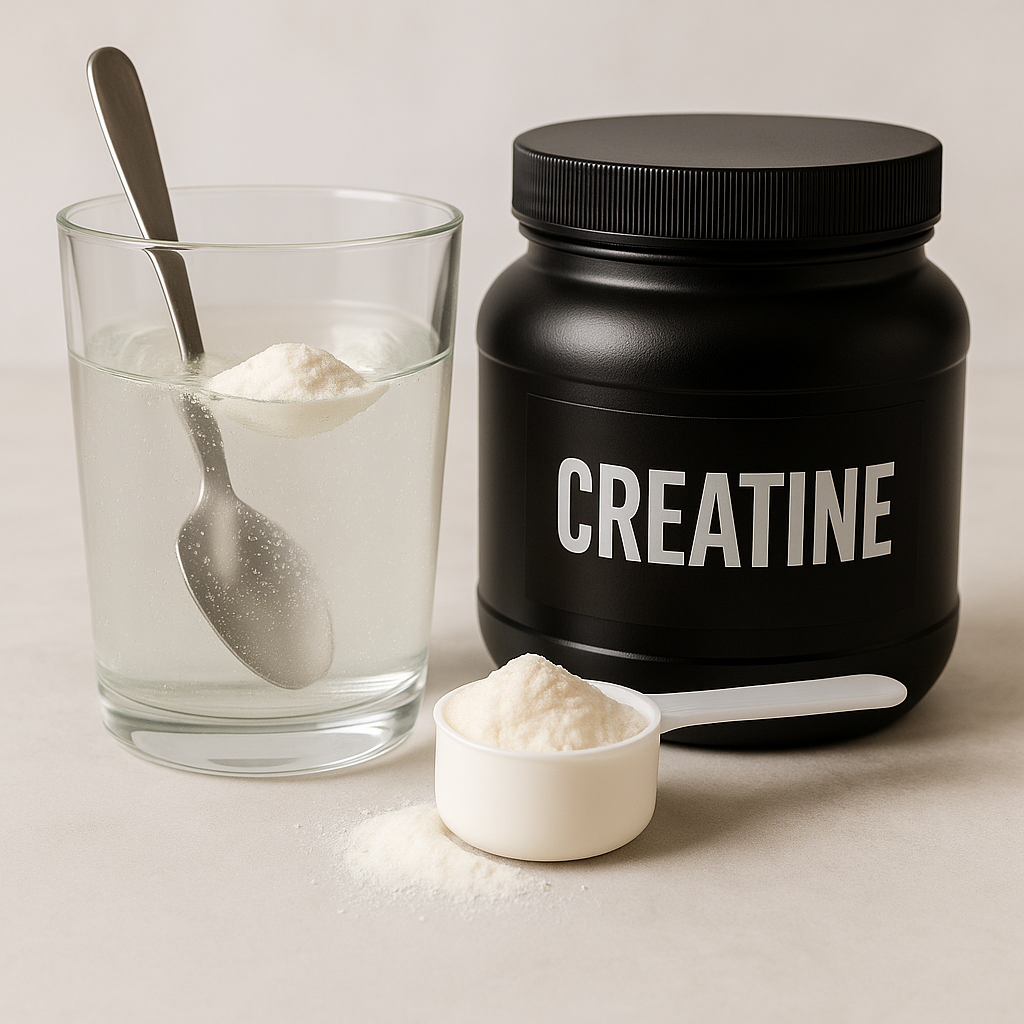
Creatine is a non-essential amino acid that the body produces naturally—mainly in the liver, but also in the brain. It is synthesized from three other amino acids: methionine, glycine, and arginine. In addition to internal production, we can get creatine from food, mainly red meat and seafood, which provide about 1 to 3 grams per day. For vegetarians or vegans, dietary intake is virtually zero, making them more likely to have lower reserves.
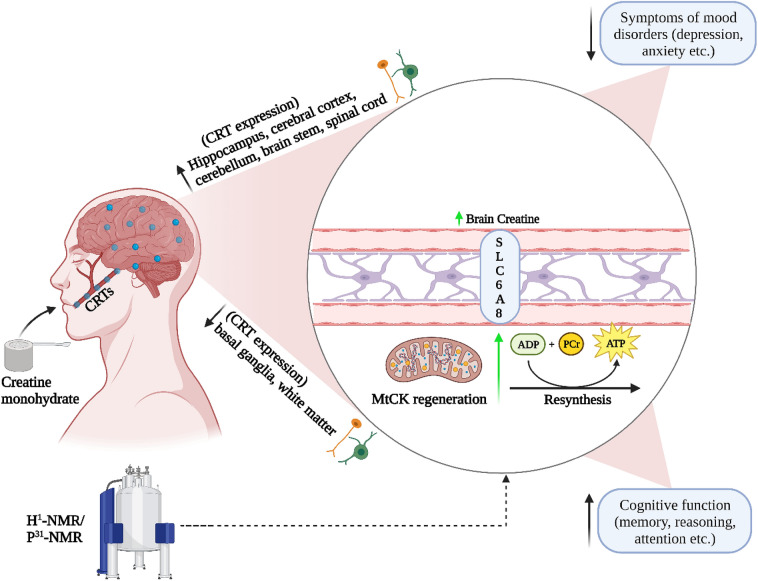
In the body, creatine is mostly stored in skeletal muscles as phosphocreatine (or creatine phosphate). A smaller amount is also present in the brain. Its fundamental role is to serve as a high-energy phosphate donor. Our cells use adenosine triphosphate (ATP) as their main energy currency. When ATP is used, it loses a phosphate and becomes adenosine diphosphate (ADP). Phosphocreatine steps in to donate a phosphate group to ADP, “recharging” it back into ATP—readily available to fuel muscle contractions, thinking, or other energy-demanding cellular functions. In essence, creatine helps maintain ATP availability, the critical energy source of the cell.
Beyond its direct energetic role, creatine also acts as a powerful osmolyte, meaning it draws water into muscle tissue. This cellular swelling may have potential anabolic effects.
The most researched and commonly used form of supplementation is creatine monohydrate, considered the gold standard for its safety, effectiveness, and nearly 100% bioavailability.
Why Should You Care About Creatine?
While many still view creatine as just a gym supplement, science is revealing benefits far beyond muscle. To care about creatine is to open up to a well-researched supplement that can potentially enhance your overall health and performance in multiple ways.
Here’s why creatine deserves your attention:
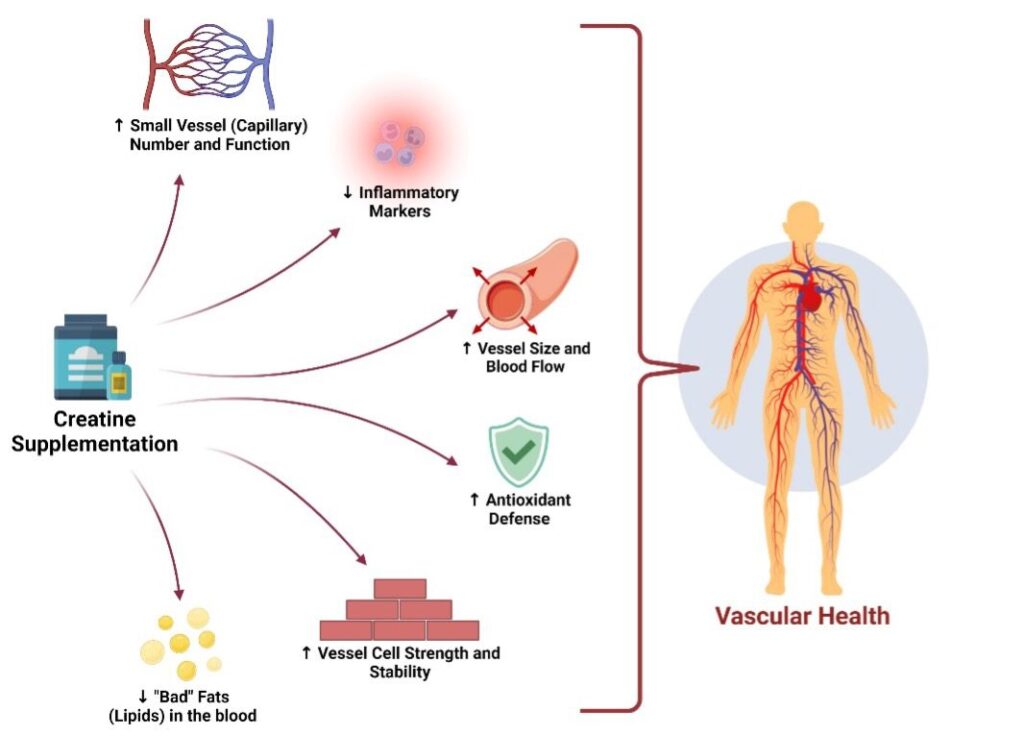
- Improved Physical Performance: The most well-known benefit. Creatine increases your ability to generate rapid energy, essential for high-intensity, explosive efforts like weightlifting, sprinting, or interval training. It can improve muscle strength, power, and training volume. It may also support recovery after intense workouts, including in endurance sports like marathons or triathlons, potentially by reducing inflammation markers and aiding muscle recovery. [1]
- Enhanced Brain Function: One of the most exciting and emerging areas. Though small, the brain uses about 20% of our daily energy. Creatine is essential for cellular energy in the brain. Supplementation can increase brain creatine stores. Studies suggest improvements in memory, cognition, and reduced mental fatigue, particularly under metabolic stress conditions like sleep deprivation, hypoxia, or aging. It may also support recovery after brain injury. Preliminary research is even exploring its potential in treating depression. [2][3][6]
- Bone Health: Some studies suggest creatine may help slow bone density decline, especially in older adults and postmenopausal women when combined with exercise. [4]
- Metabolic Support and Body Composition: In addition to increasing lean mass (including intramuscular water and actual muscle), creatine, when combined with exercise, may lead to small reductions in body fat. [1]
- Exceptional Safety: Despite persistent myths, creatine monohydrate is one of the most studied supplements globally, showing an excellent safety profile in healthy individuals—even at high doses and over long durations. Over 1,000 studies and billions of servings consumed. [5]
- Useful for Diverse Populations: Creatine isn’t just for muscular young men. Women, older adults, vegetarians/vegans, and even potentially children or pregnant women (more research needed for the latter) may benefit from supplementation. Vegetarians and vegans often respond especially well due to their lower baseline levels.
In short, caring about creatine means recognizing the potential of an accessible, safe, and scientifically proven supplement to enhance many dimensions of daily performance, health, and well-being.
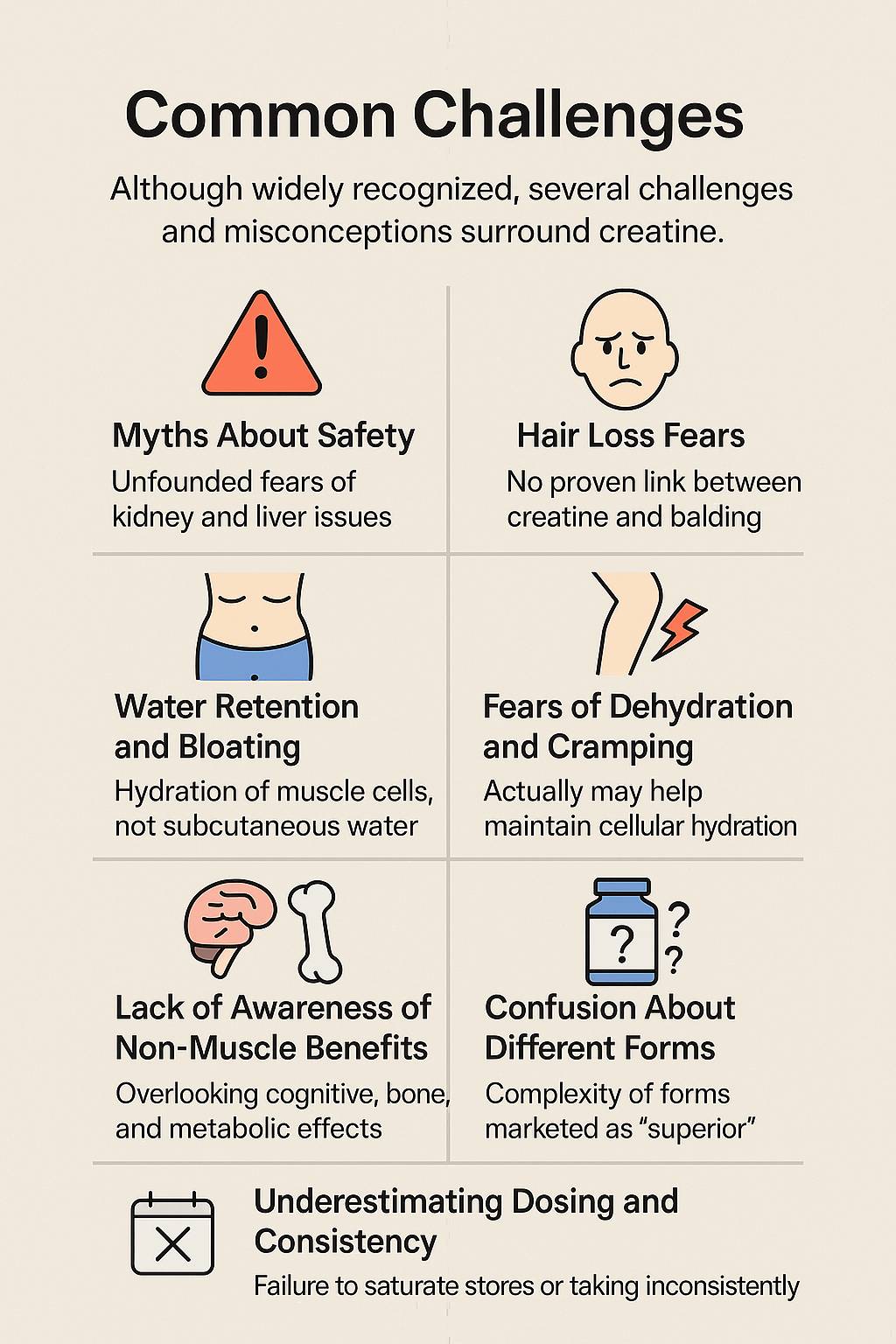
Common Challenges
Although creatine is widely recognized and studied, several challenges and misconceptions persist, potentially limiting its adoption or proper use:
- Myths About Safety: The most widespread concern involves unfounded fears about kidney and liver safety. These myths often stem from misinterpretations of scientific data or isolated anecdotes.
- Hair Loss Fears: A common myth is that creatine causes hair loss or baldness. This originates from a single old study showing an increase in DHT (a hormone linked to hair loss) in a specific population, but no study has shown a direct link between creatine and actual hair loss or changes in hair follicles.
- Water Retention and Bloating: Some users—especially women or those concerned about appearance—fear weight gain or bloating due to water retention. While creatine draws water into muscle cells, this is not subcutaneous water that causes a puffy look, but rather cellular hydration. Bloating can be more noticeable during loading phases or with high doses, but dosing strategies can minimize this.
- Fears of Dehydration and Cramping: Conversely, another myth is that creatine causes dehydration and cramps. In reality, as an osmolyte, creatine may help maintain cellular hydration and could even reduce the risk of cramps—especially during intense exercise or in hot conditions.
- Lack of Awareness of Non-Muscle Benefits: Many people are unaware of the cognitive, bone, and metabolic benefits of creatine, reducing its use among populations like older adults, women, or those not engaged in heavy resistance training.
- Confusion About Different Forms: The market is flooded with various forms (HCL, ethyl ester, buffered, etc.), often marketed as “superior” to monohydrate. The challenge lies in separating science from marketing, as monohydrate remains the most research-backed, effective, and cost-efficient form.
- Underestimating Dosing and Consistency: Suboptimal use can stem from not understanding the need to saturate muscle and brain stores, or from inconsistent intake.
These challenges highlight the need for clear, evidence-based information to bust myths and empower informed use of creatine—maximizing its many potential benefits.
Hard Facts to Motivate You (Science-Based)
Science has dissected creatine from nearly every angle since its discovery in 1832, building a massive body of evidence to support its use.
- Direct Energy Mechanism: The most fundamental scientific fact is that creatine, stored as phosphocreatine, acts as a high-energy phosphate donor to rapidly convert ADP back into ATP. This system—the phosphagen system—is the fastest energy source available to our cells, critical for short-duration, high-intensity efforts. Supplementing with creatine increases phosphocreatine reserves, helping to maintain higher ATP levels longer, delaying fatigue and enabling more work. [8]
- Muscle Performance Impact: Numerous studies show that creatine monohydrate supplementation leads to significant increases in muscle strength, power, and training volume (load x reps x sets). A meta-analysis confirmed its strength-enhancing effects. Benefits extend beyond short bursts—it can also reduce muscle damage and speed recovery post-exercise. [5][9]
- Cognitive Effects: Brain research is especially compelling. Creatine is stored in the brain and essential for energy metabolism. Supplementation has been shown to increase brain creatine content. In healthy adults, it may enhance working memory and reduce mental fatigue, especially during demanding tasks or sleep deprivation. One study even showed improved cognitive performance after 24 hours of sleep deprivation with high-dose creatine. [10]
These facts, backed by thousands of scientific papers, show that creatine is much more than a muscle supplement—it’s a potent modulator of cellular energy with positive implications for both body and mind.
INTERESTING VIDEOS TO WATCH
HOW TO GET INTO HACKTION?

Practical Instructions
Ready to add creatine to your routine? Here’s a simple, evidence-based guide:
- Choose the Right Form
→ Go with creatine monohydrate. It’s the most studied form, proven safe and effective. Avoid fancy alternatives that are more expensive with no strong evidence of superiority. Look for third-party tested products for purity (e.g., Creapure® certified).
For instance : The one from NUTRICOST (via Iherb Platform)
2. Determine Your Dose
- Without Loading (the long game): Simply take 3–5 grams daily, and your muscles will be saturated in about 3 weeks—often with fewer digestive issues or initial bloating. [Best Approach IMO]
- For Brain & Bone Benefits: Some studies suggest higher daily doses (~10g) may be needed to saturate the brain and bones.
- For Muscle Saturation: Use a loading phase—about 20 grams per day (usually split into four 5g doses) for 5–7 days to saturate muscles quickly.
- Minimal Maintenance: Just 2–3 grams per day may be enough to maintain saturation once achieved.
- Acute Stress (Cognition): In cases of acute cognitive stress (severe sleep deprivation, jet lag), a high dose (e.g., 20g) may offer quicker cognitive benefits.
3. When to Take It ? Don’t Cycle It
- Creatine works by saturating your body’s stores. There’s no scientific reason to cycle off.
- You can safely take it for years. After stopping, muscle and brain stores return to baseline in ~30 days.
4. Tell Your Doctor
- If you’re getting blood tests, tell your doctor you’re taking creatine. It can raise serum creatinine levels—a normal byproduct, not a sign of kidney dysfunction in healthy people.
5. Managing Minor Side Effects
- The most common issues: bloating, diarrhea, water weight (from intramuscular water).
- Usually manageable by reducing the dose, splitting the dose, or taking with meals.
AUTHOR’S NOTE
I’ll be honest: I didn’t jump on the creatine train early.
For years, despite facing chronic fatigue, muscle weakness, headaches, cognitive fog, and the lingering effects of Lyme disease, I never considered creatine. No doctor, no naturopath ever mentioned it. It just wasn’t on the radar—partly due to the lack of awareness, partly because creatine still suffers from old stereotypes as a “gym bro” supplement.
Looking back, it took me years to connect the dots between my symptoms and the underlying need for better cellular energy—both in muscle and brain tissue. But once I started supplementing (about five years ago now), the shift was real.
Creatine didn’t just help my muscles. It supported my recovery. It gave me more cognitive clarity, more stamina, and reduced that deep fatigue I once thought was “normal.” Today, it’s a non-negotiable in my health routine.
Every time I talk about creatine, I’m reminded how many people still hold onto outdated fears or think it’s not “for them.” But when you look at the science—and even more importantly, when you feel the difference—it’s clear: creatine is one of the most underrated, low-cost, high-impact tools available.
My message is simple: Don’t wait years like I did.
If you’re navigating low energy, chronic fatigue, or simply want to feel sharper and stronger—try it.
It’s safe, affordable, and the potential upside is simply too big to ignore.
CONCLUSION
At the end of this evidence-based exploration, it’s clear: creatine is much more than a “gym bro” supplement.
It’s a remarkably safe and versatile compound that offers significant benefits—not only for muscle performance (strength, power, volume, recovery)—but also for cognitive health (memory, mental fatigue, stress), bone health, and potentially metabolism and body composition.
The myths surrounding creatine have been thoroughly debunked by decades of rigorous research, confirming its excellent safety profile for the vast majority of healthy users. Creatine monohydrate remains the gold standard, backed by overwhelming scientific data.
Don’t let misinformation or outdated assumptions rob you of creatine’s many benefits. For a relatively low cost, you can actively support the energy needs of your muscle and brain cells, enhance your physical and mental performance, and potentially contribute to better long-term health—especially as you age.
Getting started is simple: choose a high-quality, third-party-tested creatine monohydrate, and integrate a daily dose (3–5g, or more if targeting broader benefits) into your routine. Think of it as a simple, science-backed investment in your energy, strength, and mental clarity.
By making creatine a consistent part of your daily health practice, you’re building an effective strategy to support both body and mind over time, unlocking your full potential.
Erwin
F.A.Q
What is creatine and how does it work in the body?
Creatine is a non-essential amino acid naturally synthesized in the liver, kidneys, and pancreas from methionine, glycine, and arginine. It’s also found in foods like red meat and seafood.
In the body, creatine is stored primarily as phosphocreatine in muscles and in smaller amounts in the brain. Phosphocreatine donates phosphate groups to regenerate ATP (adenosine triphosphate), the primary energy molecule in cells. This supports high-intensity performance, cellular energy, and cognitive function—especially under stress.
Is creatine safe? Does it harm the kidneys or liver?
Yes—creatine monohydrate is one of the most researched and safest supplements available.
Clinical studies, even at high doses over long periods, show no adverse effects on kidney or liver function in healthy individuals. Elevated blood creatinine levels while supplementing are a normal byproduct of creatine metabolism and not a sign of kidney damage. Always inform your doctor you’re taking creatine when doing lab tests to avoid misinterpretation.
Does creatine cause hair loss?
No scientific evidence supports this. The myth originates from a single 2009 study in rugby players, which showed an increase in DHT (a hormone linked to hair loss) but no actual hair loss or follicle changes.
No study has confirmed this effect since, and thousands of creatine users—including women—have not reported an increased risk of baldness. The concern is widely regarded as unfounded.
Does creatine cause water retention or bloating?
Creatine draws water into muscle cells (intracellular), which can lead to mild weight gain and a feeling of fullness—not puffy, subcutaneous bloating.
This effect is more common during a loading phase or with high doses. To reduce it:
- Skip the loading phase if needed
Bonus: This cellular hydration may support an anabolic environment for muscle growth.
- Use smaller, divided doses
- Take it with meals
What is the optimal dosage? Do I need a loading phase?
Loading phase: 20g/day (split into 4 doses) for 5–7 days = fast saturation
No loading: 3–5g/day continuously = full effect in 3–4 weeks
Brain/bone health: Studies suggest up to 10g/day may be ideal
By weight: 0.1g/kg of body weight per day is effective
There’s no need to cycle creatine; continuous use is safe and beneficial.
The loading phase isn’t mandatory. If you don’t have short term performance goals to achieve, you can consider to avoid the “loading phase”.
When should I take creatine?
The exact timing doesn’t matter much—what matters is taking it every day.
Some evidence suggests slightly better absorption when taken close to your workout.
Taking it with protein or carbs may enhance uptake and reduce potential stomach discomfort.
Who can benefit from creatine supplementation?
Athletes & fitness lovers: Strength, power, recovery
Vegans/vegetarians: Lower baseline levels → bigger gains
Older adults: Supports muscle mass, bone density, and cognitive resilience
Women: Equal benefits; creatine is not “just for men”
People under brain stress: Jet lag, sleep deprivation, mental fatigue
Clinical populations: Potential use in brain injury, depression, or sarcopenia
Kids & pregnant women: Early research shows potential, but more data is needed
What are the cognitive and brain benefits of creatine?
Creatine acts as a brain fuel enhancer. It helps regenerate ATP in brain cells and improves mitochondrial function, which supports mental clarity and resilience.
It’s particularly effective under metabolic stress (sleep deprivation, intense thinking, aging).
Studies show improvements in working memory, mental fatigue, and cognitive recovery after brain trauma. There’s growing interest in its role for mood disorders and neuroprotection.
Does it break fast?
doesn’t break fast. You can take it while fasting.
Why this? Creatine is a combination of three amino acids (glycine, arginine, methionine). It contains no sugar, no calories in the strict sense, and does not spike insulin when taken on its own. It’s considered safe and compatible with fasting, both intermittent and extended.
REFERENCES
[1] Wax, B., Kerksick, C. M., Jagim, A. R., Mayo, J. J., Lyons, B. C., & Kreider, R. B. (2021). Creatine for exercise and sports performance, with recovery considerations for healthy populations. Nutrients, 13(6), 1915. https://doi.org/10.3390/nu13061915PMID: 34199588 · PMCID: PMC8228369
[2] Forbes, S. C., Cordingley, D. M., Cornish, S. M., Gualano, B., Roschel, H., Ostojic, S. M., Rawson, E. S., Roy, B. D., Prokopidis, K., Giannos, P., & Candow, D. G. (2022).
Effects of creatine supplementation on brain function and health. Nutrients, 14(5), 921. https://doi.org/10.3390/nu14050921
Creatine supplementation and brain health. Nutrients, 13(2), 586. https://doi.org/10.3390/nu13020586[4] Candow, D. G., Forbes, S. C., Chilibeck, P. D., Cornish, S. M., Antonio, J., & Kreider, R. B. (2019).
Effectiveness of creatine supplementation on aging muscle and bone: Focus on falls prevention and inflammation. Journal of Clinical Medicine, 8(4), 488. https://doi.org/10.3390/jcm8040488
PMCID: PMC6518405[5] Kreider, R. B., Kalman, D. S., Antonio, J., Ziegenfuss, T. N., Wildman, R., Collins, R., Candow, D. G., Kleiner, S. M., Almada, A. L., & Lopez, H. L. (2017).
International Society of Sports Nutrition position stand: Safety and efficacy of creatine supplementation in exercise, sport, and medicine. Journal of the International Society of Sports Nutrition, 14, 18. https://doi.org/10.1186/s12970-017-0173-z
PMCID: PMC5469049 · PMID: 28615996[6] Candow, D. G., Forbes, S. C., Ostojic, S. M., Prokopidis, K., Stock, M. S., Harmon, K. K., & Faulkner, P. (2023).
“Heads up” for creatine supplementation and its potential applications for brain health and function. Sports Medicine, Advance online publication. https://doi.org/10.1007/s40279-023-01882-7
PMCID: PMC10721691 · PMID: 37368234[7] Clarke, H. E., Akhavan, N. S., Behl, T. A., Ormsbee, M. J., & Hickner, R. C. (2024).
Effect of creatine monohydrate supplementation on macro- and microvascular endothelial function in older adults: A pilot study. Nutrients, 17(1), 58. https://doi.org/10.3390/nu17010058
PMID: 39796490 · PMCID: PMC11723049[8] Wallimann, T., Wyss, M., Brdiczka, D., Nicolay, K., & Eppenberger, H. M. (1992).
Intracellular compartmentation, structure and function of creatine kinase isoenzymes in tissues with high and fluctuating energy demands: The ‘phosphocreatine circuit’ for cellular energy homeostasis. Biochemical Journal, 281(Pt 1), 21–40. https://www.ncbi.nlm.nih.gov/pmc/articles/PMC1130636/
PMCID: PMC1130636 · PMID: 1731757[9] Branch, J. D. (2003).
Effect of creatine supplementation on body composition and performance: A meta-analysis. International Journal of Sport Nutrition and Exercise Metabolism, 13(2), 198–226. https://doi.org/10.1123/ijsnem.13.2.198
PMID: 12945830[10] McMorris, T., Harris, R. C., Swain, J., Corbett, J., Collard, K., Dyson, R. J., Dye, L., Hodgson, C., & Draper, N. (2006).
Effect of creatine supplementation and sleep deprivation, with mild exercise, on cognitive and psychomotor performance, mood state, and plasma concentrations of catecholamines and cortisol. Psychopharmacology, 185(1), 93–103. https://doi.org/10.1007/s00213-005-0269-z
PMID: 16416332
