Liver Detoxification : Strategies for Optimal Health
TL;DR
Significance: Supporting your liver helps lower your lifelong toxic burden, protects mitochondria, and improves energy, hormones, digestion, and overall resilience — without chasing extreme detox protocols.
Core Concept: Liver detoxification is not a 7-day cleanse — it’s a continuous, enzyme-driven process that turns fat-soluble toxins into water-soluble waste your body can actually eliminate.
Challenges: Most people face silent, cumulative exposure (chemicals, metals, stress), overwhelmed barriers (gut, skin, lungs), mismatched detox phases, blocked elimination (constipation, poor bile flow), and chronic stress that shuts detox pathways down.
Strong Fact: The liver can regenerate and upregulate its detox enzymes — especially when oxidative stress is low, antioxidant defenses (like glutathione) are adequate, and the diet includes cruciferous, nutrient-dense whole foods.
Implementation Tips – Practical Guidelines (Shared below!) (Scroll down in the full article!)
OVERVIEW
Welcome to the deep dive into detoxification —a concept often misunderstood and wrongly equated with restrictive, short-term “cleanses”. True detoxification is a constant, sophisticated, metabolic process happening within your body thousands of times every second. Our focus today is on the central conductor of this process: the liver, the most famous detox organ.
We live in a world where we are constantly exposed to toxins—the extreme attack is 24/7. With over 80,000 new man-made chemicals introduced into our environment, including pesticides, plasticizers, and heavy metals, the challenge to our natural defenses has never been greater.
The opportunity and benefit of addressing liver detoxification are profound: you move beyond simply treating symptoms with “pills as a Band-Aid” and instead focus on root cause medicine. By supporting the liver, you aim to prevent the quiet accumulation of poisons that eventually lead to chronic disease.
The ideal outcome of adopting supportive liver practices is achieving a body that is resilient and functional, where the “toxic burden bucket” is emptying faster than it is filling. This proactive approach helps prevent chronic conditions that are often rooted in cellular and mitochondrial dysfunction caused by accumulated toxins.
What is Liver Detoxification and Toxic Burden? (Definition)
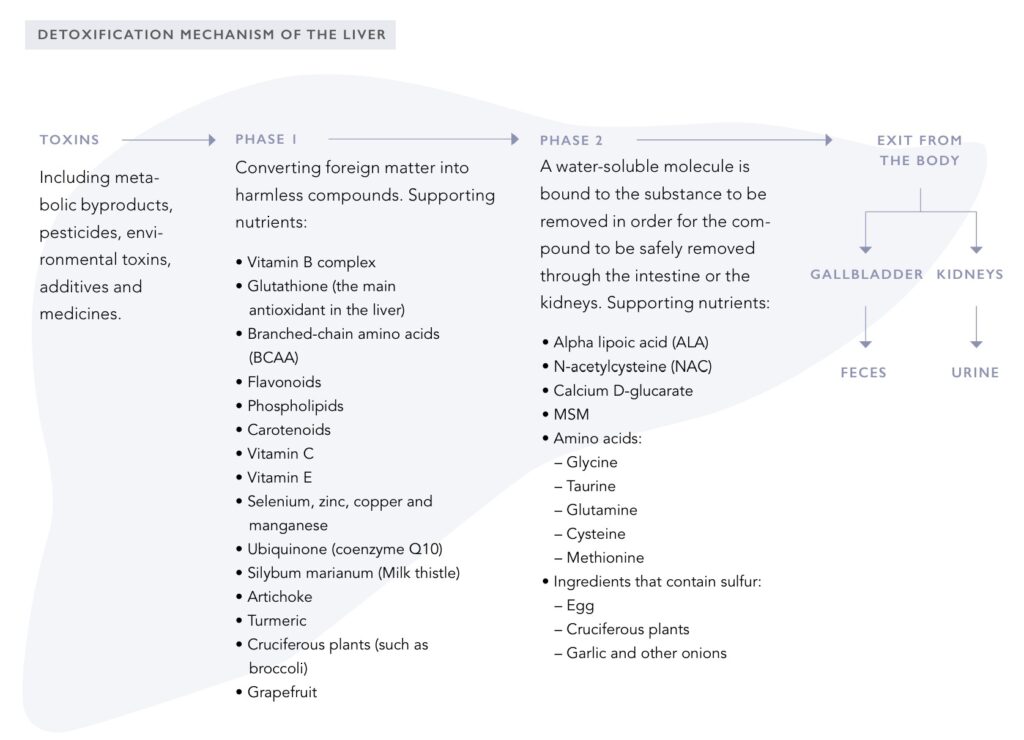
Detoxification is the fundamental biological process where the body takes fat-soluble poisons and, through a complex, nutrient-dependent, two-step enzymatic process primarily in the liver, breaks them down to make them harmless (1) and water-soluble (2).
Once water-soluble, these compounds can be easily excreted (often called “phase 3“) from the body via sweat, stool, and urine.
A toxic burden is the lifetime accumulation of these harmful substances. Traditional medicine focuses on acute, rapid toxicity (like lead poisoning), but functional medicine focuses on the subtle, cumulative exposure that builds up over years and decades.
The most crucial fact about toxins is that they are fat-soluble.
Because fat and water do not mix, these poisons get stuck inside the body. When they enter, they seek out and store themselves in fatty places.
Storage Sites: Every single cell in your body (except red blood cells) is surrounded by a membrane composed of about 50% fat. This provides trillions of potential storage sites for these toxins.
Sources of Toxins: Toxins originate internally (endotoxins, like those from SIBO or Candida) and externally (exotoxins, which are ubiquitous).
- Chemicals & Plastics: Glyphosate (the active ingredient in Roundup, considered a major health crisis), Phthalates (found even in athletic clothing), Benzophenone 3 (in sunscreen), VOCs (from new carpet or pressed wood), and chemicals found in cleaning products.
- Metals & Mold: Lead (from airplane exhaust), Mercury (from coal burning plants, fuel in oceans), and Mycotoxins (from moldy homes).
- Metabolic: Cortisol (from stress), alcohol, etc.
Why Should You Care ?
Why Should You Care About Liver Detoxification? The need to support the liver is driven by the reality that we are under continuous attack from chemicals and poisons. The accumulation of these toxins is the root cause of widespread cellular and mitochondrial damage, leading to systemic dysfunction and chronic disease.
Major Consequences of an Overburdened Liver :
When the liver and surrounding pathways cannot keep pace, the resulting toxic accumulation can manifest in numerous, often seemingly unrelated, symptoms:
- Hypersensitivity & Tolerance Loss: Experiencing headaches or feeling unwell from strong odors, perfumes, or walking down the laundry detergent aisle at the grocery store.
- Skin and Immune Issues: Recurring allergies, skin breakouts (rashes, eczema, acne), and chronic sinus congestion.
- Energy and Pain: Chronic fatigue, muscle aches, joint pain, and persistent headaches.
- Digestive Distress: Gas, bloating, diarrhea, constipation, foul-smelling stools, and heartburn.
- Hormonal Chaos: Toxic burden is highly damaging to hormones, particularly the thyroid. For instance, if the thyroid is “full of toxins,” it makes sense that the immune system might attack it, contributing to autoimmune diseases like Hashimoto’s. Toxic accumulation is tied to overall hormonal imbalances and premenstrual syndrome (PMS).
- Cognitive Decline: Difficulty concentrating and insomnia. Chronic diseases, including obesity, autism, endometriosis, and dementia, are all linked to mitochondrial dysfunction, and we know toxins cause mitochondrial damage.
Why This Is Tricky (Common Challenges)
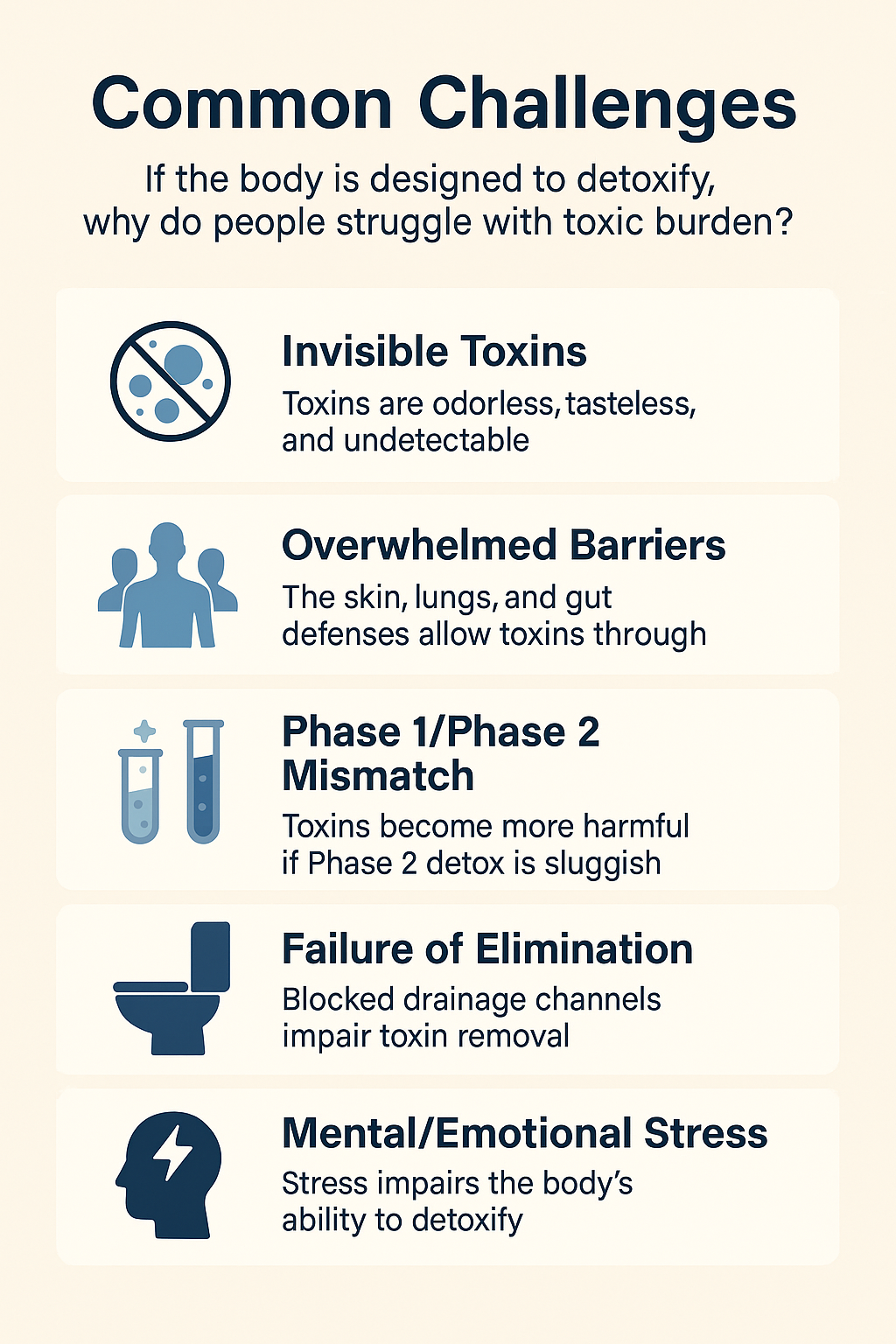
If the body is designed to detoxify, why do people struggle so significantly with toxic burden, often leading to illness?
1. The Invisible Nature of Toxins: Toxins are stealthy; they “get into our bodies quietly” because they are odorless, tasteless, and unfelt upon exposure. By the time someone is presenting with disease, accumulation has already happened.
2. Overwhelmed Barriers: The skin, lungs, and gut are the primary barriers meant to keep toxins out. Because people often treat their guts poorly (poor diet, antibiotics) and constantly expose their skin to chemical-laden lotions and soaps, these defenses become overwhelmed and toxins break through into the bloodstream.
3. The Phase 1/Phase 2 Mismatch: A critical challenge occurs when someone supports Phase 1 detoxification but neglects Phase 2. Phase 1 creates “intermediate metabolites” that are transiently more toxic and chemically reactive—even carcinogenic—than the original toxin. If Phase 2 is sluggish, these harmful compounds build up and cause cell damage.
4. Failure of Elimination (Blocked Drainage): The final step, Phase 3 (elimination), is often forgotten. If the drainage channels (like the bowels or bile ducts) are blocked, the water-soluble toxins cannot exit. Constipation is a significant blocker because if you are not pooping, toxins carried in the bile get reabsorbed back into the body, rendering the entire detox attempt useless.
5. The Mental/Emotional Barrier: The greatest obstacle to physical health is often mental, emotional, spiritual, and social stress. Stress activates the sympathetic nervous system (“fight or flight”), which shuts down key detox pathways. A stressed body develops low stomach acid and leaky gut (allowing more toxins in) and makes one less motivated to sweat (via exercise).
Hard Facts to Motivate You (Science-Based)
To truly commit to supporting your liver, here are 3 undeniable facts showing why liver health matters every single day:
1. Your Liver Regenerates — But Only in the Right Environment
The liver can fully regenerate, but only when oxidative stress is low and antioxidant levels (like glutathione) are sufficient. Low glutathione = reduced regeneration + higher inflammation. [2]
2. Cruciferous Vegetables Activate Your Detox Genes
Compounds like sulforaphane in broccoli, radish, and arugula activate Nrf2, boosting Phase 2 detox enzymes by 2–3× and enhancing toxin neutralization. [3]
3. Sauna Helps Remove Specific Toxins
Sweating through infrared or traditional sauna increases elimination of BPA, phthalates, cadmium, and lead — toxins that otherwise burden the liver. [4]
INTERESTING VIDEOS TO WATCH
HOW TO GET INTO HACKTION?

Practical Instructions
The goal here is not a “general detox,” but directly supporting the liver: reducing what damages it and feeding what regenerates it.
1. Behavioral/Environmental Adjustments (Easy Wins)
The 1st important step is Stop Exposure. If you continue to fill the bucket with toxic inputs (e.g., from polluted water, environmental toxins and inflammatory foods), supplements alone are futile.
- Eliminate Plastics: never microwave food or liquids in plastic containers or plastic cling wrap. Avoid storing food in plastic and use alternatives like glass, ceramic, or stainless steel.
- Cookware: Switch nonstick cookware to stainless steel, cast iron, or ceramic.
- Filter Water: Consider upgrading your water quality using proper filtration.
- Non-Toxic Cleaning: Use eco-friendly household products.
Then Before adding “detox foods”, you need to stop what clogs and inflames the liver:
- Prioritize organic, minimally processed foods and avoid :
- Ultra-processed foods (packaged snacks, cereals, ready-made meals)
- Seed oils (soybean, corn, sunflower, canola, cottonseed) used in processed foods and restaurant frying
- High fructose corn syrup & refined corn products (soft drinks, candies, many sauces, “glucose syrup”, “corn syrup”)
- Soy protein isolates / fake meats (highly refined soy protein used in diet shakes, meat substitutes, weight-loss programs)
If the ingredient list looks like a chemistry experiment, it’s not liver-friendly.
2. Choose Liver-Loving Fats
Healthy fats support bile flow, hormone metabolism, and reduce inflammation:
- Extra-virgin olive oil on salads and vegetables
- Grass-fed butter & ghee, rich in MCTs that are easier on the liver and don’t require as much bile
- Avoid cooking with seed oils; cook with ghee, olive oil (low–medium heat) or coconut oil.
3. Build Meal Around Quality Protein
The liver needs amino acids to repair tissue, produce enzymes, and run Phase 1 & 2:
- Grass-fed, pasture-raised meats (beef, lamb, goat)
- Wild-caught fatty fish (rich in omega-3, anti-inflammatory and liver-protective)
- Organic, pasture-raised eggs – especially the yolks, which are rich in choline, key to clearing fat from the liver and preventing fatty liver.
Target: some quality protein at every meal.
4. Load Up on Leafy Greens & Cruciferous Veggies
These plants bring the cofactors and phytochemicals the liver uses to detoxify:
- Dark leafy greens (spinach, kale, chard, arugula):
- Vitamin C, folate, magnesium, potassium → support liver enzymes and antioxidant defenses.
- Cruciferous vegetables (radish, arugula, broccoli, Brussels sprouts, cabbage):
- Rich in sulfur compounds that support Phase 1 & Phase 2 detox enzymes and help transform fat-soluble toxins into water-soluble waste.
Aim for: at least 1–2 big servings of greens/crucifers per day.
5. Support the Gut–Liver Axis with Probiotic Foods
A damaged microbiome stresses the liver; a healthy one protects it:
- Raw sauerkraut
- Kimchi
- Unsweetened kefir (ideally goat or sheep)
These help:
- reduce endotoxin load coming from the gut
- lower liver inflammation
- improve bile flow and digestion of fats.
Include a small portion of probiotic food daily, if tolerated.
6. Keep Bile & Elimination Moving
Toxins processed by the liver must leave via bile, stool, and urine:
- Ensure daily bowel movements (fiber from veggies, hydration, movement).
- Stay well hydrated.
- Include bitter foods (arugula, radish, rocket, lemon) to naturally stimulate bile.
7. Lifestyle Levers That Amplify Liver Health
- Sleep: growth hormone and liver repair peak at night – protect 7–9 hours of quality sleep.
- Movement: regular walking and strength training improve insulin sensitivity and reduce fatty liver.
- Stress regulation: chronic stress raises cortisol, disrupts hormones, worsens gut permeability and increases the toxin load reaching the liver.
- Sweat & Sauna: sauna (infrared or traditional) will help mobilize and eliminate certain toxins through sweat, reduce inflammation, and support cardiovascular and mitochondrial function – all of which indirectly unload the liver. Always hydrate well and replenish minerals (electrolytes) around sauna sessions.
8. Fundamentals First — Then Optional Targeted Supplementation
Everything above is the core, the foundations: a nutrient-dense, anti-inflammatory, whole-food diet that naturally supports Phase 1, Phase 2 and Phase 3 of liver detoxification.
This approach works because:
- micronutrients (vitamins, minerals, amino acids) fuel Phase 1 enzymes,
- sulfur-rich foods, proteins, and antioxidants support Phase 2 conjugation,
- fiber, hydration, bile flow and daily elimination keep Phase 3 (excretion) open.
This diet-first strategy is what maintains long-term liver health for most people.
Once this base is solid, you can layer additional tools on top if needed.
9. Advanced Liver-Supportive Supplements (Optional)
Some people like to add targeted supplements for a short period (e.g., 4–8 weeks).
This can be useful and effective to complement the daily routine.
Common options:
Liver herbs
- Milk thistle (silymarin) – classic hepatoprotective herb
- Milk thistle complex or broader liver herbal formulas (often including artichoke, dandelion, turmeric, burdock, schisandra)
These help reduce inflammation, support regeneration, and gently increase detox capacity.
Bile flow support
- Bile salts, especially TUDCA
- Digestive bitters (arugula, lemon, radish, gentian, artichoke leaf)
Improving bile flow is essential to avoid toxin recirculation.
Micronutrient boosters
- Alpha lipoic acid – optional mitochondrial support
- Omega-3 fatty acids (if already part of your routine, they help liver fat metabolism and inflammation)
- Vitamin E (tocopherols & tocotrienols)
- Vitamin C
- B-vitamins, especially methylated B9/B12 for Phase 1
- Phosphatidylcholine & lecithin – restore cell membrane fluidity and support bile composition
- NAC (N-Acetylcysteine) – glutathione precursor for Phase 2
- Liposomal glutathione – direct replenishment of the body’s master detox molecule, crucial for Phase 2 conjugation and protection against oxidative stress
Predigestive “shots”
Examples:
- lemon–ginger
- ginger–apple cider vinegar
- lemon–turmeric
These stimulate digestion, mild bile flow, and antioxidant activity.
[BONUS] HANGOVER RECEIPE PROTOCOL (simple & effective)
This isn’t the main focus of the article, but with the holiday season approaching — and because life happens — you may occasionally end up drinking more than planned. So here’s a simple protocol to support your liver detoxification on those occasions.
One of the simplest and most reliable ways to reduce hangover severity is to:
- increase your antioxidant reserves before drinking, and
- bind and eliminate toxic alcohol byproducts before they re-enter circulation.
Alcohol is metabolized into acetaldehyde, a compound far more toxic than ethanol itself. The liver neutralizes it primarily using glutathione and other antioxidant systems. Supporting this pathway with targeted nutrients—and reducing the recirculation of toxins in the gut—is a highly effective strategy.
There are many sophisticated “anti-hangover” methods, but one of the most practical and efficient approach is the combination of:
- Glutathione (ideally liposomal) → supports detoxification and neutralizes acetaldehyde.
- Activated charcoal (optional but highly effective) → binds residual toxins in the digestive tract before they recirculate.
- Magnesium (optional) → supports relaxation, reduces stress response, and aids recovery.
Below is a simple protocol “HANGOVER 🍹” that covers the essentials.
| Timing | What to Take | Dosage & Purpose |
|---|---|---|
| Before&After Drinking | Glutathione (liposomal preferred) | up to 2g/day → Increases antioxidant reserves, prepares liver for acetaldehyde detox. You can use 1g before & 1g after for instance. (500 mg minimum if sensitive) |
| Magnesium glycinate (optional) | 200–300 mg → Supports relaxation, helps sleep quality later. | |
| Before Bed (2–3h after last food/drink) | Activated Charcoal | 1–2 g → Binds gut toxins, reduces recirculation of acetaldehyde & fermentation byproducts. |
| Next Morning | Glutathione | 1 g → Reduces oxidative stress, improves energy & clarity. |
| Electrolytes | Water + sea salt or water + electrolytes → Rehydrates, restores minerals lost through alcohol’s diuretic effect. |
10. A word of caution on “intense detoxes”
If you don’t tolerate detox protocols well (fatigue, headaches, nausea, anxiety), it’s often because:
- Phase 1 is accelerated
- but Phase 2 isn’t ready
- and Phase 3 (elimination) is not fully open
→ Result: too many toxins get mobilized at once and recirculate, doing more harm than good.
That’s why the safest, most sustainable approach is:
Food first.
Lifestyle second.
Supplements third.
Provocation protocols better if supervised/mastered and really needed.
AUTHOR’S NOTE
From my own journey, I’ve learned how essential liver health truly is.
Back in 2017, I was going through a difficult period with a high toxic load, chronic inflammation, persistent symptoms, and a long list of medications, supplements, and naturopathic protocols. My health was fragile, and I felt the need to “detox everything” — my liver, my gut, my whole system.
Like many people in that situation, I turned toward multiple detox programs, liver cleanses, heavy metal protocols, herbal approaches, fasting, supplements… I tried almost everything. Some protocols helped a bit, others made me feel worse, and many left me exactly where I started, just more exhausted.
With time and hindsight, I understood something fundamental:
- Detoxification is not a two-week protocol. It’s a foundation.
- The liver doesn’t heal through intensity, but through consistency.
When you accumulate toxins over years, stored deep in fatty tissues and cellular membranes, they do not disappear in 7 or 14 days. In my case, even with all the “right protocols,” it took years to bring down my mercury levels — and I was extremely diligent.
This is why I insist so much on the foundational approach:
- daily habits
- nutrition
- low-tox living
- gut health
- hydration and bile flow
- stress regulation
- sleep quality
- sauna
- gentle, sustainable support
Not the “detox heroics” that promise to clean you out in a few days.
Short cleanses can sometimes offer temporary relief, but they rarely address the underlying issue:
your body’s daily capacity to process, neutralize, and eliminate what accumulates.
This is especially true for liver health.
You can’t bypass the basics — and no supplement replaces consistent habits.
One thing I didn’t mention earlier but that is absolutely relevant:
Intermittent fasting can also support liver health by reducing metabolic burden, improving insulin sensitivity, and giving both the liver and the digestive system periods of rest.
So my message is simple:
Build foundations.
Think long-term.
Support your liver daily.
And if you choose to add a detox protocol at some point, let it be a complement — not the core strategy.
You now have all the essential keys to support your liver in a realistic, effective and sustainable way. I’ve tested the other path, the extreme one, and sometimes you have some breakthrough with it is true but and I can tell you: the foundations win every time.
CONCLUSION
Supporting your liver isn’t about doing extreme detoxes or searching for miracle cleanses — it’s about building consistent habits that reduce toxic load and strengthen your body’s natural capacity to process and eliminate waste.
Focus on the foundations:
real food, clean environment, good sleep, movement hydration, stress regulation, and daily elimination.
Everything else — supplements, protocols, advanced tools — is optional (in the case where there is no evidence of already existing symptoms of course).
Start small, stay consistent, and your liver will do what it’s designed to do:
keep you energized, resilient, and healthy for the long term.
Erwin
F.A.Q
Is a juice cleanse the same as liver detoxification?
Not exactly. Juice cleanses can provide antioxidants, hydration, and a temporary digestive reset, which may support parts of the detox system. But true liver detoxification involves complex enzymatic phases (1, 2, and 3) that require amino acids, glutathione, bile flow, and open elimination pathways.
Juices can be a useful short-term boost, but they don’t replace a consistent, long-term detox-supporting lifestyle.
I have the MTHFR gene mutation. Does that mean my liver cannot detoxify?
Not necessarily. MTHFR is one famous methylation pathway, but it is often overhyped relative to the hundreds of other detox pathways your body possesses. If you have a sluggish gene, it means you must be more diligent in avoiding that specific toxin and ensuring proper nutrient support (like active B vitamins) for that pathway.
If I start taking liver support supplements, will I be cured?
No. If you take supplements while constipated or living in a moldy or toxic environment, the toxins will be reabsorbed or the input will simply overwhelm the output. You must fix your exposure and elimination (pooping) first.
Do toxins really cause chronic diseases like dementia or autoimmune issues?
While direct studies linking toxins (like lead or mold) specifically to every chronic disease are limited, the connection lies in the underlying mechanism: toxins cause mitochondrial damage. Since conditions like autoimmune disease, obesity, and dementia are rooted in mitochondrial dysfunction, supporting detox addresses the root cause of the cellular damage.
REFERENCES
[1] Biohacker’s handbook[2] Michalopoulos GK. Liver regeneration. J Cell Physiol. 2007;213(2):286–300.PMID: 17559071 — PMCID: PMC2701258 — doi: 10.1002/jcp.21172
Lien: https://pubmed.ncbi.nlm.nih.gov/17559071/ [3] Zhang Y, Talalay P, Cho CG, Posner GH. A major inducer of anticarcinogenic protective enzymes from broccoli: isolation and elucidation of structure. Proc Natl Acad Sci U S A. 1992;89(6):2399–403.
PMID: 1549603 — PMCID: PMC48665 — doi: 10.1073/pnas.89.6.2399
Lien: https://pubmed.ncbi.nlm.nih.gov/1549603/[4] Genuis SJ, Birkholz D, Rodushkin I, Beesoon S. Blood, urine, and sweat (BUS) study: monitoring and elimination of bioaccumulated toxic elements. Arch Environ Contam Toxicol. 2011;61(2):344–57.
PMID: 21057782 — doi: 10.1007/s00244-010-9611-5
Lien: https://pubmed.ncbi.nlm.nih.gov/21057782/
