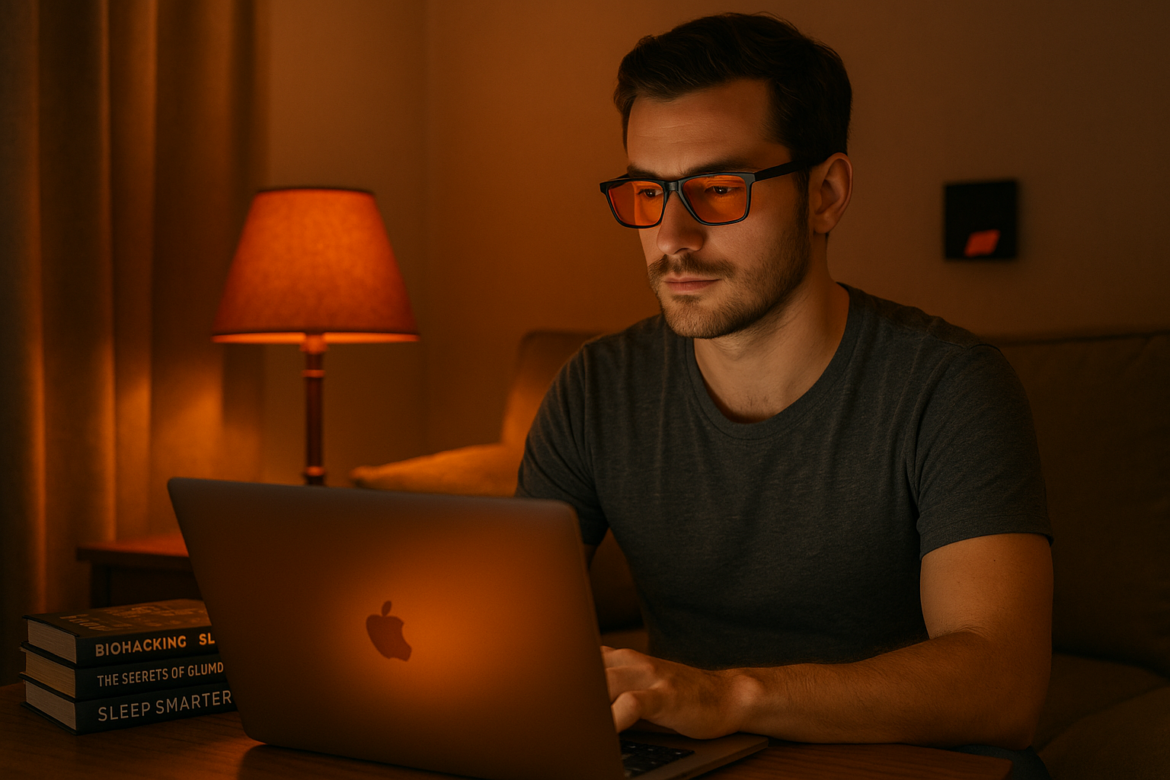
Beat Junk-Light: Unlock Deeper Sleep with Blue-Blocker Hacks
TL;DR
Core Concept: Blue-light “junk-light*” from LEDs, street-lamps and screens can suppress nighttime melatonin by up to 50 %, wrecking your sleep, metabolism and long-term health. Slip on quality blue-/green-blocking glasses after sunset, dim your devices, swap out harsh bulbs—and watch your sleep score and morning energy climb.
*Junk-light = artificial light in the 450 – 500 nm (blue/green) range that reaches your eyes after dark and tricks your brain into thinking it’s still daytime.
Significance: Virtually everyone in the modern world is bathed in junk-light—LED bulbs in 90 % of homes plus hours of evening screen time make blue-light exposure an almost universal nightly reality. Whereas melatonin drives deep, restorative sleep and orchestrates hormones, immunity, metabolism, and DNA repair.
Challenges: LED bulbs, late-night streaming, social scrolling, bright offices, and the cost or style of specialty glasses keep junk-light everywhere.
Strong Fact: Melatonin was cut in half for 85 % of people who slept under ordinary room-light conditions (Ref 7).
Implementation Tips – Practical Guidelines (Shared below!)
=> 5 Tips to implement!
OVERVIEW
“Junk-light” —the blue-green glare from LEDs, street-lamps, and screens that floods your eyes after sunset—doesn’t just keep you awake a little longer. It can slash your nightly melatonin in half, derail your circadian rhythm, and chip away at long-term brain, eye, and metabolic health.
This week’s article unpacks why slipping on “rockstar” amber lenses before bed can double your natural melatonin release, deepen recovery sleep, and leave you waking up with real, measurable energy. We’ll break down the science, show you the simple gear and habits to block junk-light, and map out how a few percent better sleep—night after night—compounds into years of sharper focus, stronger immunity, and longer health-span. Imagine a future where evening light hygiene is prescribed as routinely as brushing your teeth; that future starts here.
What is Junk-Light? (Definition)
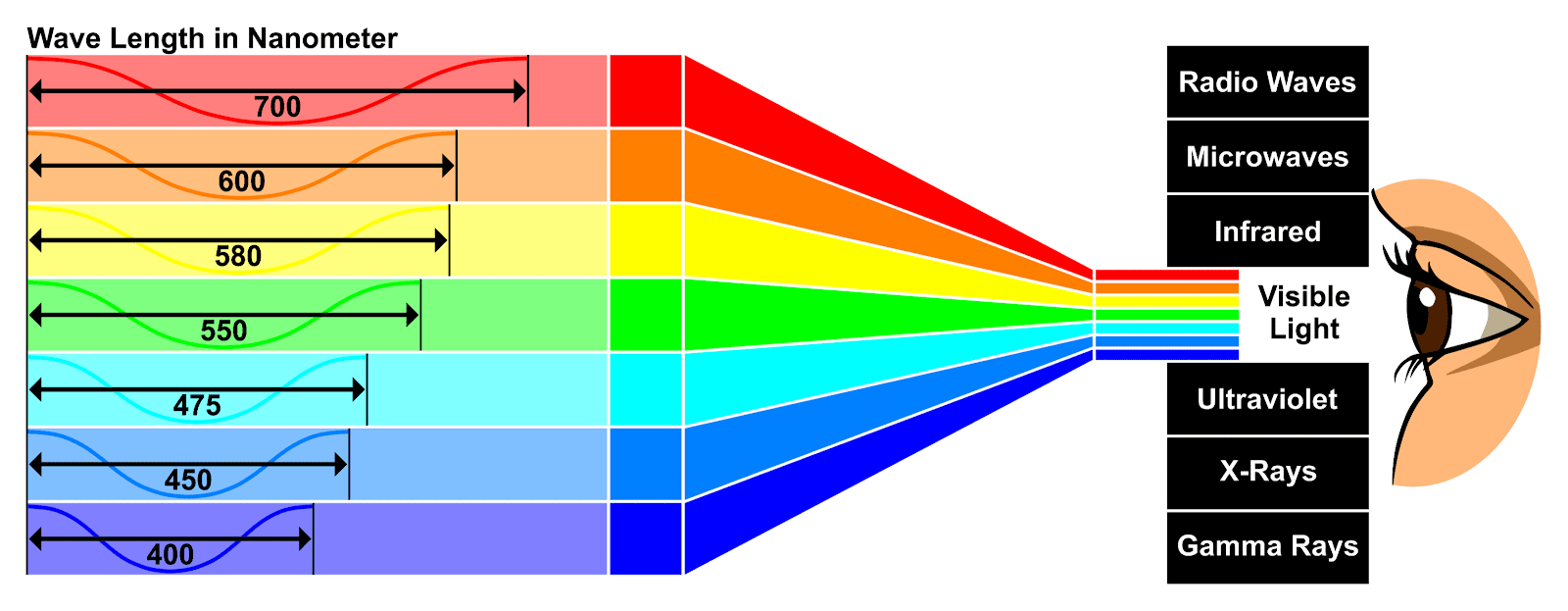
Junk-light = artificial light in the 450 – 500 nm (blue/green) range.
Evening “Junk-light” reaches your eyes after dark and tricks your brain into thinking it’s still daytime even after sunset, disrupting your natural sleep-wake cycle.
Daily exposure to blue-light junk from screens, such as computers, smartphones, and tablets, further compounds the issue by causing eye strain (computer vision syndrome [9]), fatigue and retinal damage over time. [10]
Why Should You Care About Evening Junk-Light?
Sleep is fundamental to your health, governing recovery, hormone balance, immunity, and even DNA repair. Junk-light directly undermines sleep quality, making it harder to fall asleep, stay asleep, and feel refreshed.
Chronic exposure impacts:
- Weight gain [1]
- Mood disorders [2]
- Insulin resistance [3]
- Increased cancer risk [4]
- Cardiovascular disease [5]
Fixing your nighttime lighting is thus a simple yet potent way to improve overall health.
Common Challenges With evening Junk-Light
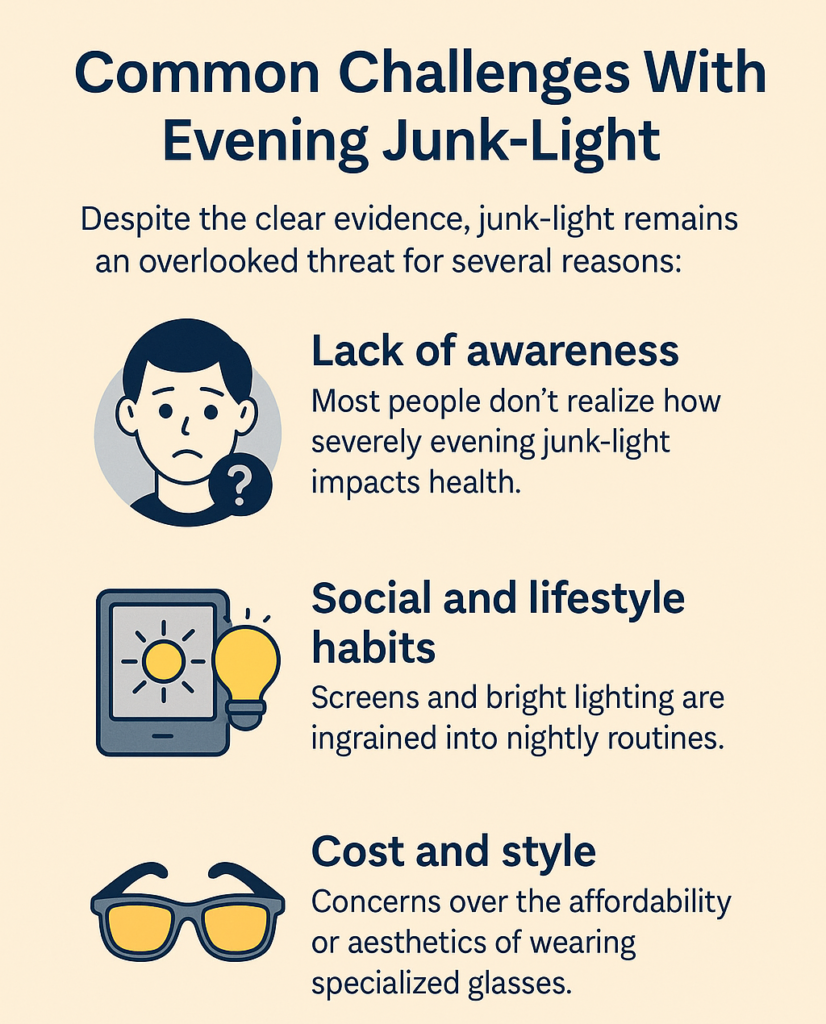
Despite the clear evidence, junk-light remains an overlooked threat for several reasons :
- Lack of awareness: Most people don’t realize how severely evening junk-light impacts health.
- Social and lifestyle habits: Screens and bright lighting are ingrained into nightly routines.
- Cost and style: Concerns over the affordability or aesthetics of wearing specialized glasses.
Hard Facts to Motivate You (Science Based)
Your body’s primary day/night signal comes through your eyes, guided by two key factors:
- Your circadian rhythm is regulated by the brain’s suprachiasmatic nucleus (SCN), highly sensitive to light.
- Your eyes contain the most sensitive photoreceptors in your body, significantly influencing melatonin secretion and sleep quality.
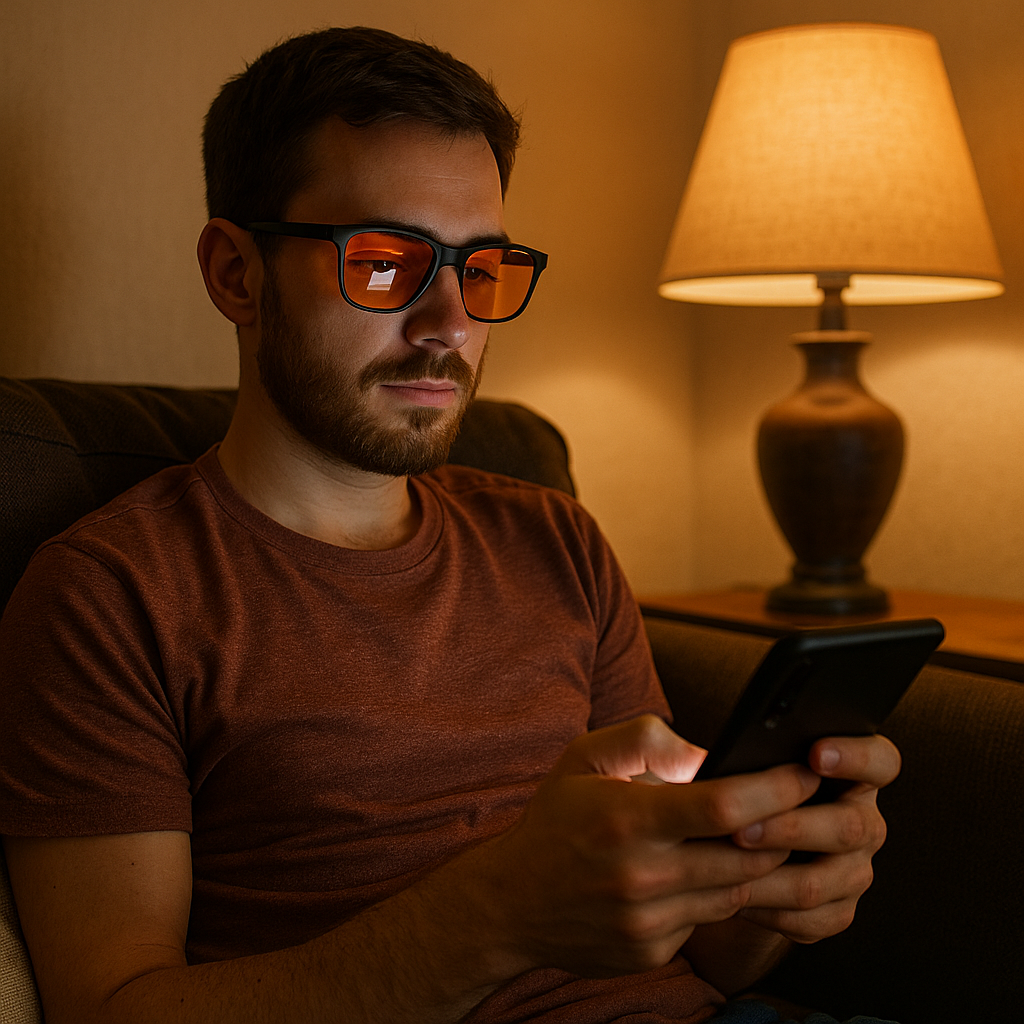
Using specialized amber/red lenses effectively blocks the disruptive blue-green spectrum (450-500 nm) that signals “daytime” to your brain, thus restoring normal melatonin production and improving sleep.
What Science Tells Us
Over the past decade, research has consistently shown that artificial evening light — especially in the blue/green spectrum (450–500 nm) — causes:
🕒 Delayed melatonin secretion [6][7]
📉 Reduced melatonin amplitude [6][7]
😴 Longer time to fall asleep [8]
💤 Less time spent in deep sleep [8]
😫 More fatigue upon waking [8]
👁️ Increased eye strain (aka “Computer Vision Syndrome”) [9]
🧿 Potential retinal damage due to chronic light exposure [10]
These effects may seem subtle at first, but night after night they compound into chronic sleep loss — silently impairing your metabolic, emotional, and cognitive health.
Concrete examples from studies:
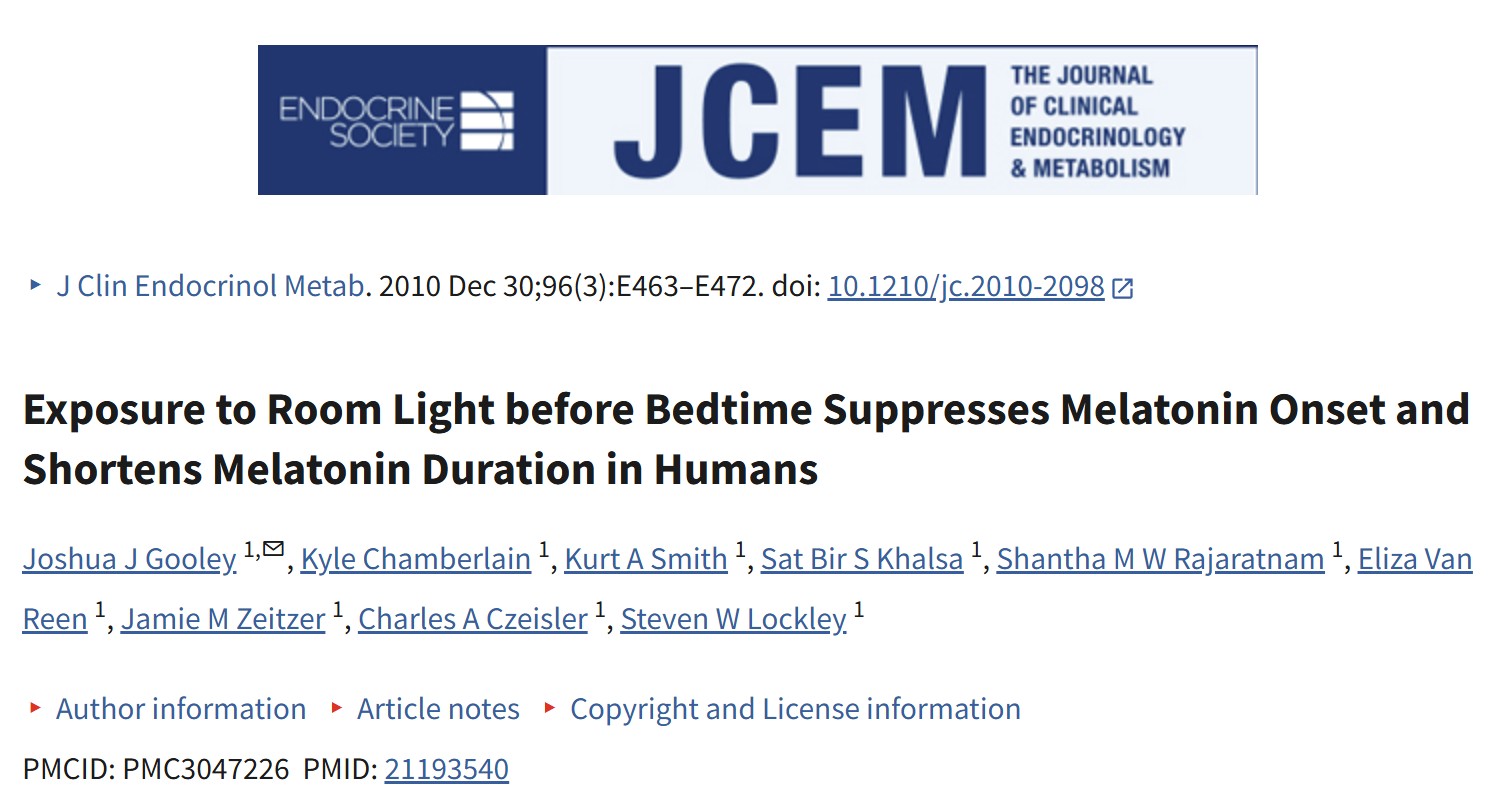
- Exposure to typical room lighting before bedtime suppressed melatonin onset in 99% of participants and reduced its duration by about 90 minutes. Additionally, 85% experienced over 50% melatonin reduction during their normal sleeping hours [7].
- Insomnia sufferers who wore amber-tinted glasses two hours before bedtime slept approximately 30 minutes longer and reported significantly improved sleep quality compared to clear lenses [11].
INTERESTING VIDEOS TO WATCH
INTERESTING PODCAST TO LISTEN TO
HOW TO GET INTO HACKTION?

Practical Instructions
- Get quality blue-blocker glasses:
| Type of Solution | Link | Price | Availability in Barcelona |
|---|---|---|---|
| Biohacker’s Evening Glasses | Biohacker Center | €59 | Ships to Spain |
| Bon Charge Brooklyn | BonCharge | €149,95 | International shipping |
| TrueDark Classic | TrueDark | $159.99 USD | International shipping (2–5 weeks) |
Note:
Other brands of blue light blocking glasses do exist, of course. However, the models listed above have either been personally tested with a spectrometer or are widely recognized for their true spectrum-blocking effectiveness. Always verify the performance when considering alternative brands.
Important:
For optimal nighttime protection, the lenses must appear distinctly amber or red. If the tint is too light or clear, it usually means the glasses do not fully block the crucial blue-green range (450–550 nm).
Traditional “blue light blockers” sold by opticians often only reduce part of the blue spectrum (typically around 10–30%), mainly for eye strain during daytime computer use. They are not sufficient for circadian protection at night.
To effectively preserve melatonin secretion and safeguard your sleep, you need glasses that block nearly 100% of blue and green wavelengths up to 550 nm — which requires a strong amber or red tint.
- Activate software filters:
- f.lux (PC/Mac)
- IrisTech.co (PC/Mac)
- Night Shift mode (phones/tablets)
- Adjust household lighting:
Try not to use any bright light at night. You can use candle light instead for instance. Or replace some light bulb into your house, like for instance you can replace bedside bulbs with red or amber LEDs (max. 630 nm) that you can dim down to minimum (not ideal but useful). (EXAMPLE HERE)
- Tape LED indicators:
Cover tiny standby lights (routers, TVs, chargers) with opaque tape.
- Adopt a screen curfew:
Avoid screen time at least 1 hour before bedtime.
CONCLUSION
Managing junk-light exposure is an impactful health practice, as critical as daily exercise or proper nutrition. By protecting your evening melatonin production, you can significantly improve sleep quality, cognitive function, metabolic health, and overall longevity.
Imagine your nightly routine involving effective junk-light management just like brushing your teeth—simple, habitual, and protective of your health. That better-rested, healthier future starts tonight.
F.A.Q
Why is junk-light harmful?
Junk-light disrupts your body’s circadian rhythm by suppressing melatonin, essential for restorative sleep, hormone balance, immune health, metabolism, and even DNA repair. Chronic exposure increases risks for weight gain, mood disorders, diabetes, cardiovascular diseases, and eye damage.
Can software filters fully replace glasses?
Software filters like f.lux or Night Shift help reduce blue-light exposure, but they don’t fully eliminate it. Specialized amber-tinted glasses are significantly more effective because they specifically block the blue-green spectrum critical for melatonin regulation.
How quickly will sleep improve?
Most people notice improved sleep within a few nights, with significant benefits such as easier sleep onset and greater morning energy typically evident after about a week of consistent use.
Are amber/red bulbs too dim to see clearly?
Amber or red bulbs emit sufficient light for nighttime tasks without disrupting melatonin. Your eyes quickly adapt, providing comfortable visibility that supports better sleep hygiene without feeling excessively dim.
Do kids need junk-light protection too?
Yes, children are equally sensitive to junk-light exposure. Protecting their evening melatonin production supports healthy growth, brain development, mood regulation, and optimal sleep patterns. Child-sized blue-blocking glasses or low-intensity amber/red lighting in their bedrooms are highly recommended.
Are all blue light glasses effective for sleep?
No — and this is a common misconception.
Important: For optimal nighttime protection, the lenses must appear distinctly amber or red. If the tint is too light or clear, it usually means the glasses do not fully block the crucial blue-green range (450–550 nm).
Traditional “blue light blockers” sold by opticians often only reduce part of the blue spectrum (typically around 10–30%), mainly for eye strain during daytime computer use. They are not sufficient for circadian protection at night.
To effectively preserve melatonin secretion and safeguard your sleep, you need glasses that block nearly 100% of blue and green wavelengths up to 550 nm — which requires a strong amber or red tint.
REFERENCES
[1] NIH (2019). Molecular ties between lack of sleep and weight gain.https://www.nih.gov/news-events/nih-research-matters/molecular-ties-between-lack-sleep-weight-gain[2] Medic, G., Wille, M., & Hemels, M. E. (2017). Short-and long-term health consequences of sleep disruption. Nature and Science of Sleep, 9, 151-161.
https://www.ncbi.nlm.nih.gov/pmc/articles/PMC6122651/[3] University of Chicago Medicine (2015). Study helps explain links between sleep loss and diabetes.
https://www.uchicagomedicine.org/forefront/news/new-study-helps-explain-links-between-sleep-loss-and-diabetes[4] Breus, M. (2022). Cancer and Sleep: Exploring the Connection. The Sleep Doctor.
https://thesleepdoctor.com/physical-health/cancer-and-sleep/[5] Cappuccio, F. P., Cooper, D., D’Elia, L., Strazzullo, P., & Miller, M. A. (2011). Sleep duration predicts cardiovascular outcomes: a systematic review and meta-analysis of prospective studies. European Heart Journal, 32(12), 1484–1492.
https://www.ncbi.nlm.nih.gov/pmc/articles/PMC2845795/[6] University of Haifa (2017). Blue light emitted by screens damages our sleep, study suggests. ScienceDaily, 22 August 2017.
https://www.sciencedaily.com/releases/2017/08/170822103434.htm[7] Gooley, J. J., Chamberlain, K., Smith, K. A., Khalsa, S. B., Rajaratnam, S. M. W., Van Reen, E., Zeitzer, J. M., Czeisler, C. A., & Lockley, S. W. (2011). Exposure to Room Light before Bedtime Suppresses Melatonin Onset and Shortens Melatonin Duration in Humans. Journal of Clinical Endocrinology & Metabolism, 96(3), E463–E472.
https://www.ncbi.nlm.nih.gov/pmc/articles/PMC3047226/[8] Chang, A. M., Aeschbach, D., Duffy, J. F., & Czeisler, C. A. (2015). Evening use of light-emitting eReaders negatively affects sleep, circadian timing, and next-morning alertness. Proceedings of the National Academy of Sciences, 112(4), 1232–1237.
https://www.ncbi.nlm.nih.gov/pmc/articles/PMC4313820/[9] Dessie, A., Adane, F., Nega, A., Wami, S. D., & Chercos, D. H. (2018). Computer Vision Syndrome and Associated Factors among Computer Users in Debre Tabor Town, Northwest Ethiopia. Journal of Environmental and Public Health, 2018, 1–8.
https://www.ncbi.nlm.nih.gov/pmc/articles/PMC6165611/[10] American Macular Degeneration Foundation (2021). What is Macular Degeneration?
https://www.macular.org/what-macular-degeneration[11] Columbia University Medical Center (2017). Amber-tinted glasses may provide relief for insomnia. ScienceDaily, 15 December 2017.
https://www.sciencedaily.com/releases/2017/12/171215135144.htm[12] PEL Eyewear Testing & Inspection (2022). The Case For and Against Blue Light Blocking Glasses.
https://www.pel-eyewear.com/eyewear-testing-and-inspection-blog/case-for-and-against-blue-light-blocking-glasses
