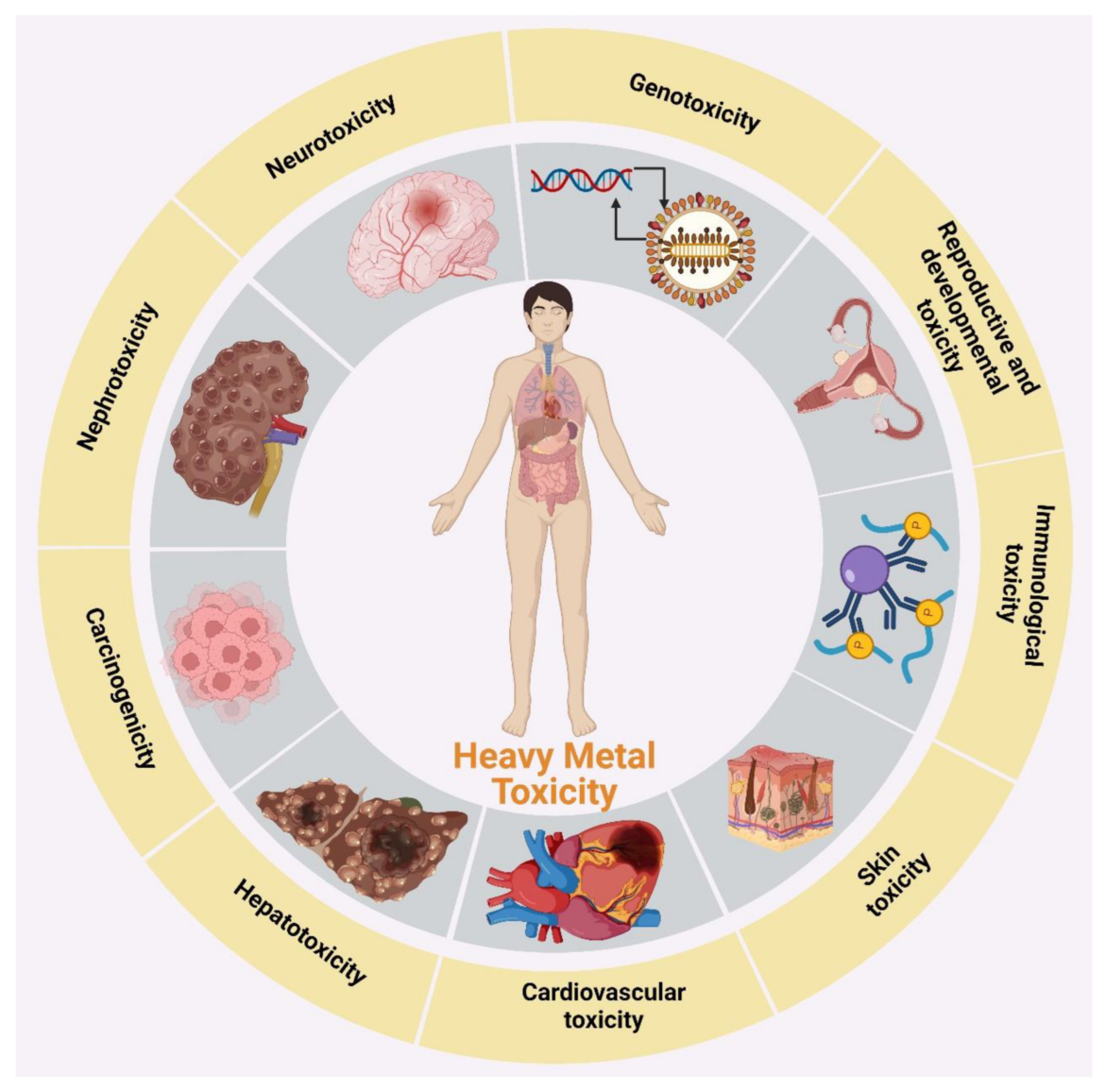
Heavy Metal Toxicity: The Hidden Threat Undermining Your Health
TL;DR
Core Concept: We are all potentially exposed to heavy metal toxicity — even at low levels — and it impacts our health.
Significance: Heavy metal toxicity is linked to a wide range of conditions such as degenerative diseases, autoimmune disorders, autism, behavioral issues, chronic fatigue, fibromyalgia, food intolerances, and electro-hypersensitivity.
Challenges: Diagnosing chronic heavy metal toxicity is complex. There’s no clear medical consensus on standardized testing, and the symptoms often mimic other conditions. Detoxing isn’t something to do lightly either — poorly executed, it can worsen symptoms.
Strong Fact: Studies show a growing connection between toxic trace metal exposure and severe illness. For example, even “normal” lead levels can drastically increase stroke and heart attack risks.
Implementation Tips – Practical Guidelines (Shared below!)
Reducing exposure to heavy metals is crucial. Scroll down for actionable steps!
OVERVIEW
Heavy metal toxicity happens when trace amounts of toxic metals build up in your body over time. These metals can bind to your cells, disrupting essential biological functions. Left unaddressed, this silent accumulation may lead to chronic symptoms — and in some cases, serious health consequences.

WHY THE HEAVY METALS ISSUE ACTUALLY MATTERS TO YOU ?
Whether we realize it or not, we are all likely exposed to toxic heavy metals — and even in microscopic amounts, they can silently disrupt our health.
These metals — including lead, mercury, aluminum, arsenic, nickel, and copper — often enter the body in molecular form, so small they’re invisible to the naked eye. Once inside, they can bind to your cells, interfere with biological functions, and accumulate over time.
How do they get in?
Heavy metals can enter your body through:
- Ingestion — eating contaminated food or drinking polluted water
- Inhalation — breathing in particles from polluted air, smoke, or dust
- Skin absorption — especially via contaminated cosmetics, personal care products, or water
What are the common sources?
These metals are found in everyday items and environments, including:
- Tobacco smoke
- Non-organic food (due to pesticides, additives, and metal-rich fertilizers)
- Conventional cosmetics and supplements
- Certain medications and vaccines
- Mercury dental fillings
- Unfiltered tap water
- Food packaging and kitchenware
- Air pollution in urban or industrial zones
Pesticides and fertilizers are particularly important here. Some of them contain or are contaminated with heavy metals like arsenic, copper, and cadmium — which can be absorbed by plants and passed up the food chain. Over time, this contributes to the body’s toxic metal load, even through a seemingly “healthy” diet.

What’s the impact?
A large-scale French study (Esteban) confirmed that toxic metals are detectable in virtually everyone today [1].
This chronic exposure can:
- Trigger or worsen neurodegenerative diseases, autoimmune disorders, behavioral issues, autism, and chronic fatigue.[2][3][4]
- Stress the liver and reduce natural detox capacity.[5]
- Accumulate in fat-rich tissues like the nervous system and brain (since many metals are lipophilic).
- Interact with each other in a “cocktail effect”, amplifying their toxicity.
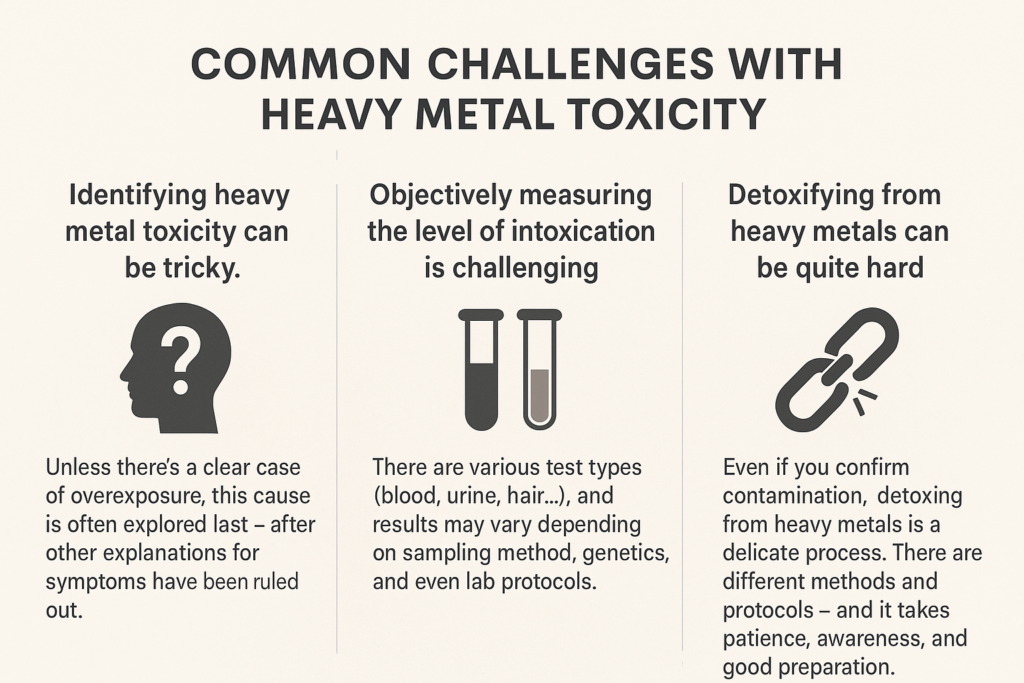
COMMON CHALLENGES WITH HEAVY METAL TOXICITY
1/ Identifying heavy metal toxicity can be tricky.
Unless there’s a clear case of overexposure, this cause is often explored last — after other explanations for symptoms have been ruled out.
On top of that, many serious health conditions share symptoms with metal toxicity, making diagnosis harder.
2/ Objectively measuring the level of intoxication is challenging
There are various test types (blood, urine, hair…), and results may vary depending on sampling method, genetics, and even lab protocols.
Provocation testing (see “How to get into Hacktion”) is considered more reliable — but it’s costly and should be done with proper guidance.
3/ Detoxifying from heavy metals can be quite hard
Even if you confirm contamination, detoxing from heavy metals is a delicate process. There are different methods and protocols — and it takes patience, awareness, and good preparation.
If done poorly, detoxing can make things worse by mobilizing metals into circulation without proper elimination. This may cause migration of metals, particularly toward the brain.
A safe, gradual, and supported approach is essential.
(EVEN MORE) FACTS THAT MIGHT STRIKE YOU
Here are some facts backed by scientific research — and why they matter:
- Dental amalgams made from mercury/silver/tin/copper alloys are toxic [6]
→ Mercury exposure can affect the nervous system, kidney function, and immune regulation — even at low levels.
Therefore, if you have one or more, you should understand that your toxicity exposure is probably high, and you would like to check your mercury levels.
Note : amalgams have been banned or partially banned already in many countries. Only partially in Europe.
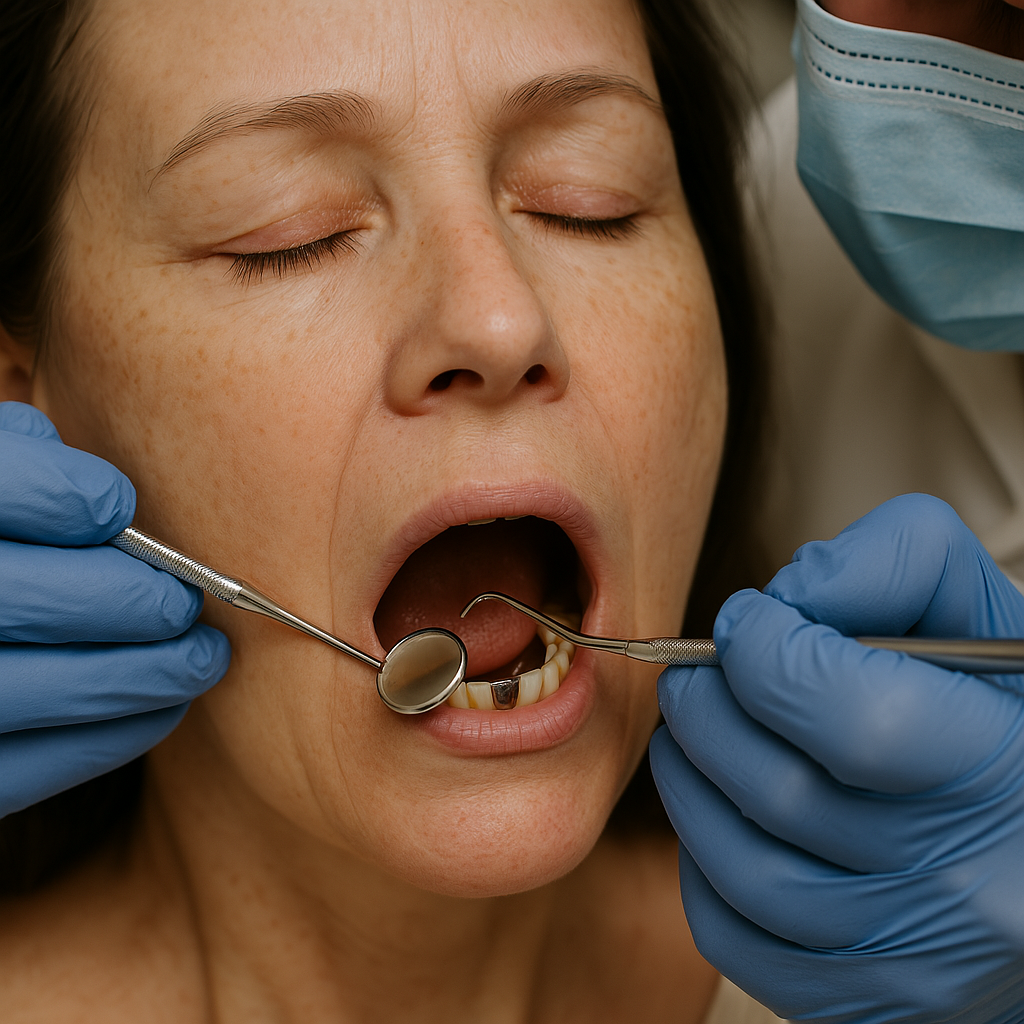
- Electro-galvanism, the current generated by mixed metals in the mouth, may trigger systemic imbalances [7]
→ Linked to fatigue, brain fog, anxiety, or chronic inflammation.
- Lead exposure, even at “historically acceptable” levels, has no known safe threshold [8]
→ Connected with lower IQ, attention issues, mood disorders, and cardiovascular risks.
INTERESTING VIDEO TO WATCH
HOW TO GET INTO HACKTION?

Practical Instructions
1 / Avoid Contamination
Start by reducing your exposure to heavy metals:
- Prefer filtered tap water over plastic bottles
- Choose organic foods to avoid pesticides
- Aim for zero additives in your food
- Use organic or homemade cosmetics, especially deodorants
- Eat smaller fish (they contain fewer metals) over large predatory fish
- Consider safe removal of mercury fillings by a trained dentist
2 / Support Natural Elimination
To reduce your toxic load, it’s essential to help your body do what it’s designed to do: eliminate.
Here’s how to optimize your natural detoxification systems, particularly the liver, kidneys, and intestines:
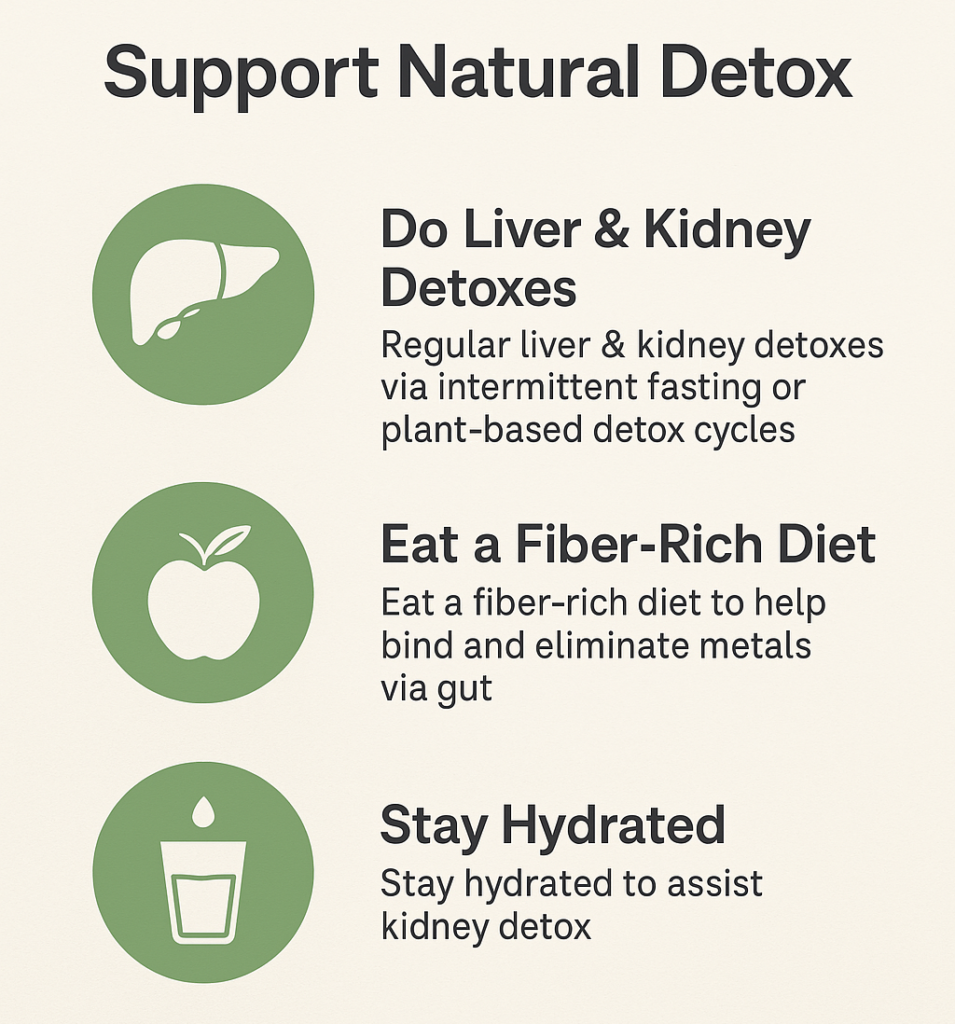
It’s crucial to support your body’s natural detox channels:
- Do regular liver/kidney detoxes via intermittent fasting or short detox cycles using plants.
- Eat a fiber-rich diet (psyllium husk, flaxseed, chia seeds etc.) to help bind and eliminate metals via the gut,
- Stay well-hydrated to assist kidney detox.
3 / Test for Contamination
Several test methods exist, but provocation testing (oral or IV) using chelators (DMPS, EDTA, DMSA) provides more accurate insights.
This method mobilizes metals stored deep in the body and makes them measurable in the test sample.
Recommended labs – 2 options :
🇩🇪 1/ Micro Trace Minerals Lab (Germany) – Urine test with provocation recommended
🇺🇸 2/ Quicksilver Scientific – Mercury Tri-Test (blood, hair, urine)
4 / Start a Chelation Protocol (= Binding and Removing Metals)
Chelators help bind and eliminate heavy metals. There are natural and synthetic options.
Natural chelation protocols – 2 options available :
Option 1: Anthony William’s protocol (from “Brain Saver” book or his website)
→ Celery juice + heavy metal detox smoothie
Option 2: Chlorella protocol (from Naturopathic medicine)
→ Chlorella as a powerful and safe natural chelator.
Structured in 3 stages: safety base, chlorella chelation, coriander turbo phase.
The safety base is key to prepare the body: antioxidants (A, C, E, zinc, selenium, glutathione), magnesium, liver support (NAC, milk thistle), and gut support.
Synthetic chelation protocols:
Chelators like EDTA, DMSA, and DMPS can be used under medical supervision.
Other advanced protocols include Dr. Pompa’s Cellular Detox and Quicksilver’s PushCatch® system.
I personally tried:
- IV Chelation with DMPS/EDTA (without any other anti-oxydant adjunction through IV it is not recommended, even made by a physician)
- IV Chelation + IV Antioxidants like glutathione, alpha lipoic acid (recommended with expert guidance)
- Oral DMSA every 15 days (700mg dose)
- Dr. Pompa’s oral protocol
- Anthony William’s protocol
Note: I chose not to use the Andy Cutler protocol for personal reasons, though it’s widely known.
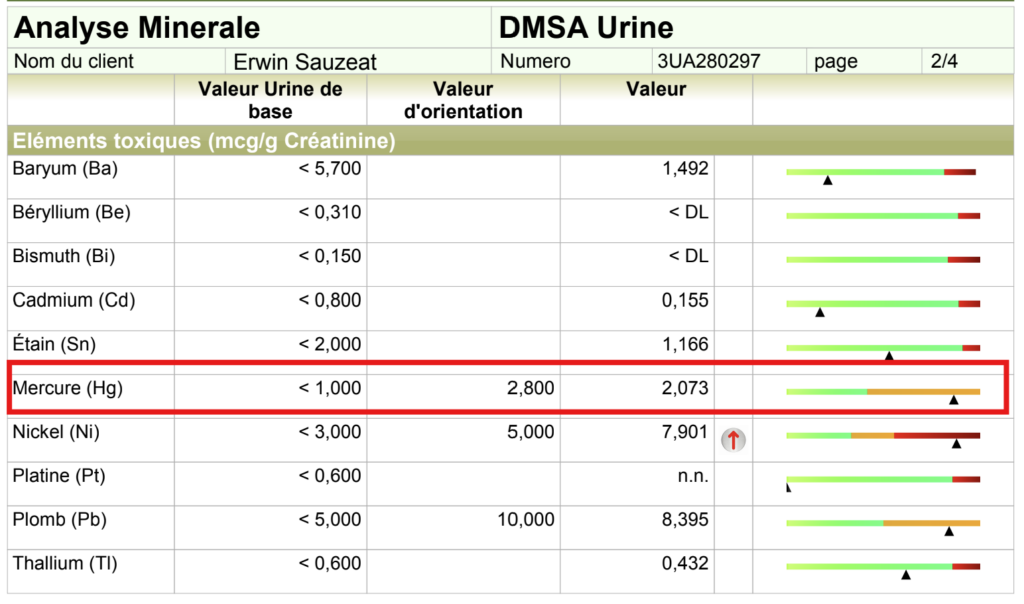
After years of work, I’ve had encouraging results — but heavy metals are no joke. It takes tenacity AND patience.
[2019] Mercury = 50 mcg/g !!
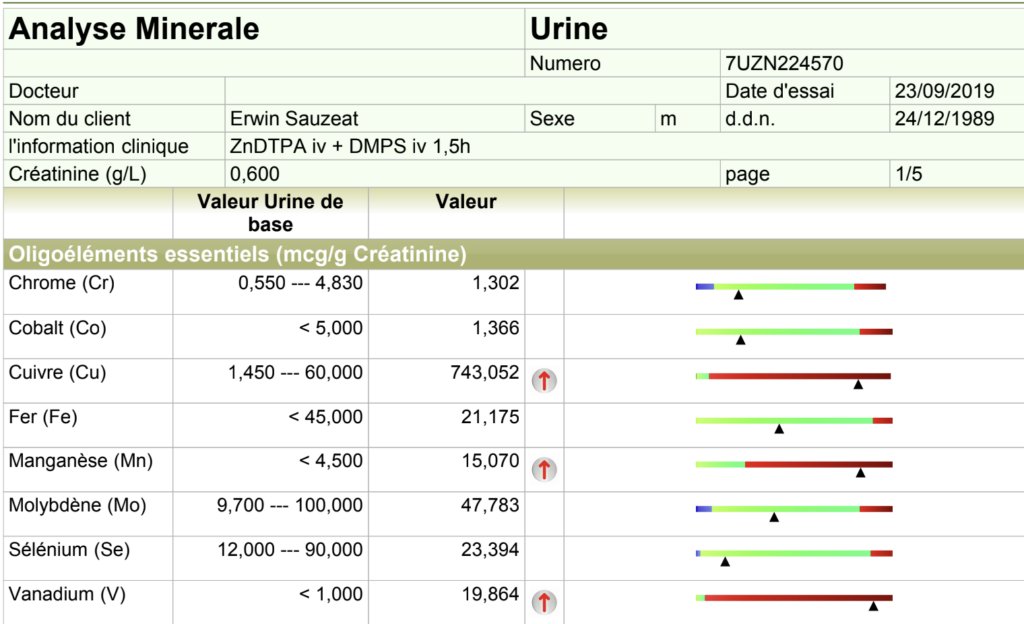
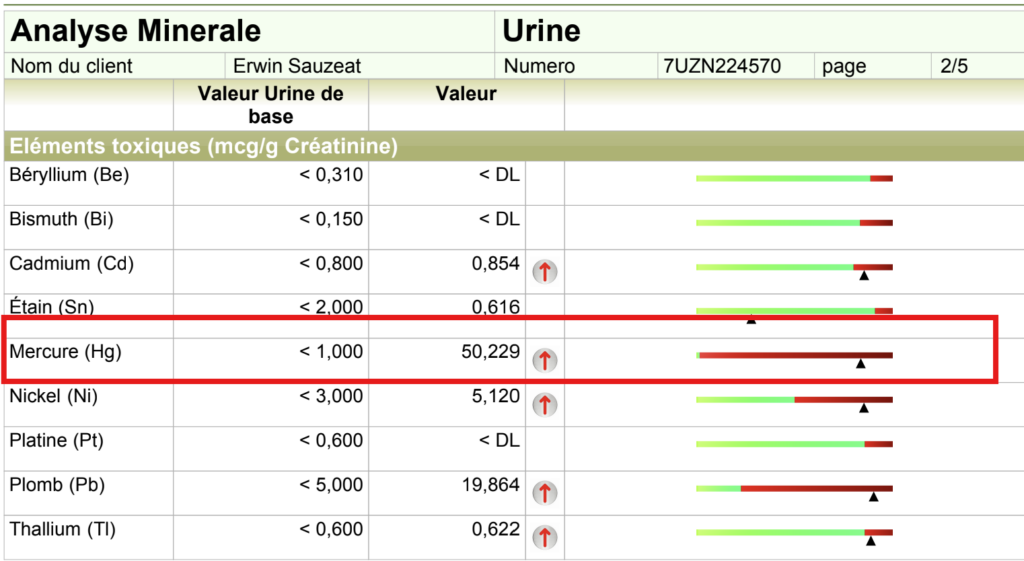
(note : it is considered by medical doctors that an amount of mercury above 1 is toxic and very highly toxic at 8. Above, the amount should translate a highly symptomatic case)
[2024] Significant improvements… we’re getting closer.
Budget-based Recommendations
If you finally got some test results that show you are dealing with heavy metal toxicity and you want to detox, here’s how I’d approach it — based on your budget:
1/ Unlimited budget, in a rush → Do IV chelation (in clinic or with a trusted practitioner) + a daily oral protocol (Dr. Pompa or William/Naturopatic Doctor)
2/ Mid-budget (~$400/month for 6–8 months) → Try Dr. Pompa’s protocol + light natural support
3/ Low budget → Start with a natural protocol and support your body with hygiene-based detox tools: intermittent fasting, liver cleansing, fiber, hydration.
Obviously, it’s best to go through the process under the guidance of an expert.
CONCLUSION
Heavy metal toxicity is a real issue we all face. Being aware of the sources and potential health consequences is the first step. Taking action to reduce exposure and support detox is the second.
When using chelators, do so safely, gradually, and with expert guidance (highly recommended).
A well-managed detox can be a powerful step toward a healthier, clearer, more vibrant life.
F.A.Q
Are we all contaminated by heavy metals?
Yes. Studies confirm universal exposure. The question is: is your level already critical?
How do I know if I’m contaminated?
A symptom questionnaire could help but can be very generic. A metallic taste in your mouth can be a sign. Lab tests give clearer results, especially with provocation. Keep in mind: tests mostly reveal extracellular metals, not what’s hiding inside your cells.
Is detox dangerous?
Yes, if done poorly. Support your detox organs first and never mobilize too much at once.
What are the first steps?
Reduce exposure + support natural detox with clean eating, water, fiber, rest, and movement.
Are chelators necessary?
To remove accumulated metals, chelators (natural or synthetic) are often needed.
REFERENCES
[1] Health Study on Environment, Biomonitoring, Physical Activity, and Nutrition (ESTEBAN 2014–2016) : https://www.apop-france.com/uploads/elfinder/doc-telecharger/ESTEBAN.pdf[2] Chronic Exposure to Toxic Metals as a Risk Factor for Alzheimer’s Disease: A Reviewhttps://med-fom-ubcmj.sites.olt.ubc.ca/files/2019/08/UBCMJ-Volume-11-Issue-1-12-14.pdf[3] The Severity of Autism Is Associated with Toxic Metal Body Burden and Red Blood Cell Glutathione Levels : https://pmc.ncbi.nlm.nih.gov/articles/PMC2809421/[4] Disease-associated metabolic pathways affected by heavy metals and metalloid : https://pmc.ncbi.nlm.nih.gov/articles/PMC10313886/[5] Toxic Mechanisms of Five Heavy Metals: Mercury, Lead, Chromium, Cadmium, and Arsenic : https://pmc.ncbi.nlm.nih.gov/articles/PMC8078867/[6] Toxic effects of mercury in dental amalgam https://www.oraljournal.com/archives/2024/vol10issue3/PartB/10-3-28-833.pdf[7] https://texasholisticdentist.com/blog/oral-galvanism-metals-in-dentistry-a-silent-killer/[8] What Are Possible Health Effects from Lead Exposure? https://archive.cdc.gov/www_atsdr_cdc_gov/csem/leadtoxicity/physiological_effects.html
