Micro(nano)plastics: Invisible Threat, Real Impact
TL;DR
Core Concept: Microplastics pose a hidden but significant threat to health as they infiltrate our air, water, and food. These tiny particles, often smaller than 5 mm for microplastics and under 100 nanometers for nanoplastics, are pervasive due to their widespread presence and the difficulty in avoiding exposure.
Significance: The prevalence of micro(nano)plastics highlights a crucial link between environmental pollution and human health – including hormonal disruptions, neurological issues, and cardiovascular problems – emphasizing the need to address the impacts of these particles.
Challenges: Key challenges include identifying and avoiding sources of microplastics, understanding the health implications of prolonged exposure, and mitigating their presence in our environment.
Strong Fact: Exposure to microplastics through ingestion or inhalation is equivalent to absorbing the material of two credit cards each year, underscoring the significant load that accumulates in the body over time.
Avoidance and Excretion Guidelines (Shared below!)
OVERVIEW
Microplastics and Nanoplastics have become a major concern in the contemporary world. These tiny fragments of plastic, resulting from the degradation of larger waste or the manufacture of products, are ubiquitous in our environment. They are found in the air we breathe, the water we drink, the food we eat, and even in some personal care products. This ubiquity raises crucial questions about their potential impact on human health and the need to take steps to limit our exposure. This document aims to shed light on these issues, drawing on scientific data and reliable sources.
WHAT “MICRO(NANO)PLASTIC” REFERS TO ?
Micro(nano)plastics are extremely small plastic particles, generally defined as those smaller than 5 mm for microplastics and under 100 nanometers for nanoplastics. These tiny fragments arise from the breakdown of larger plastic waste or are deliberately produced, such as in cosmetics as microbeads. Found in environments like water (both bottled and tap), air, soil, and food, micro(nano)plastics are ubiquitous. They often contain hazardous chemicals like BPA, phthalates, and PFAS, known to interfere with the endocrine system.
Key Aspects of Micro(nano)plastics:
| Aspect | Details |
|---|---|
| Size | Microplastics are under 5 mm; nanoplastics are less than 100 nanometers. |
| Origin | Originated from the photodegradation of larger plastics or intentionally manufactured. |
| Occurrence | Widespread across multiple environments, including water, air, and soil. |
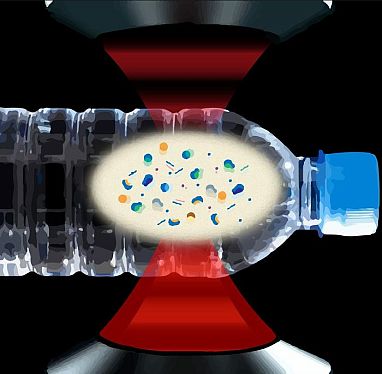
| Human Exposure | Primary exposure through ingestion, inhalation, and skin contact, with tens of thousands of particles consumed or inhaled annually. |
WHY SHOULD THIS CONCERN YOU ?
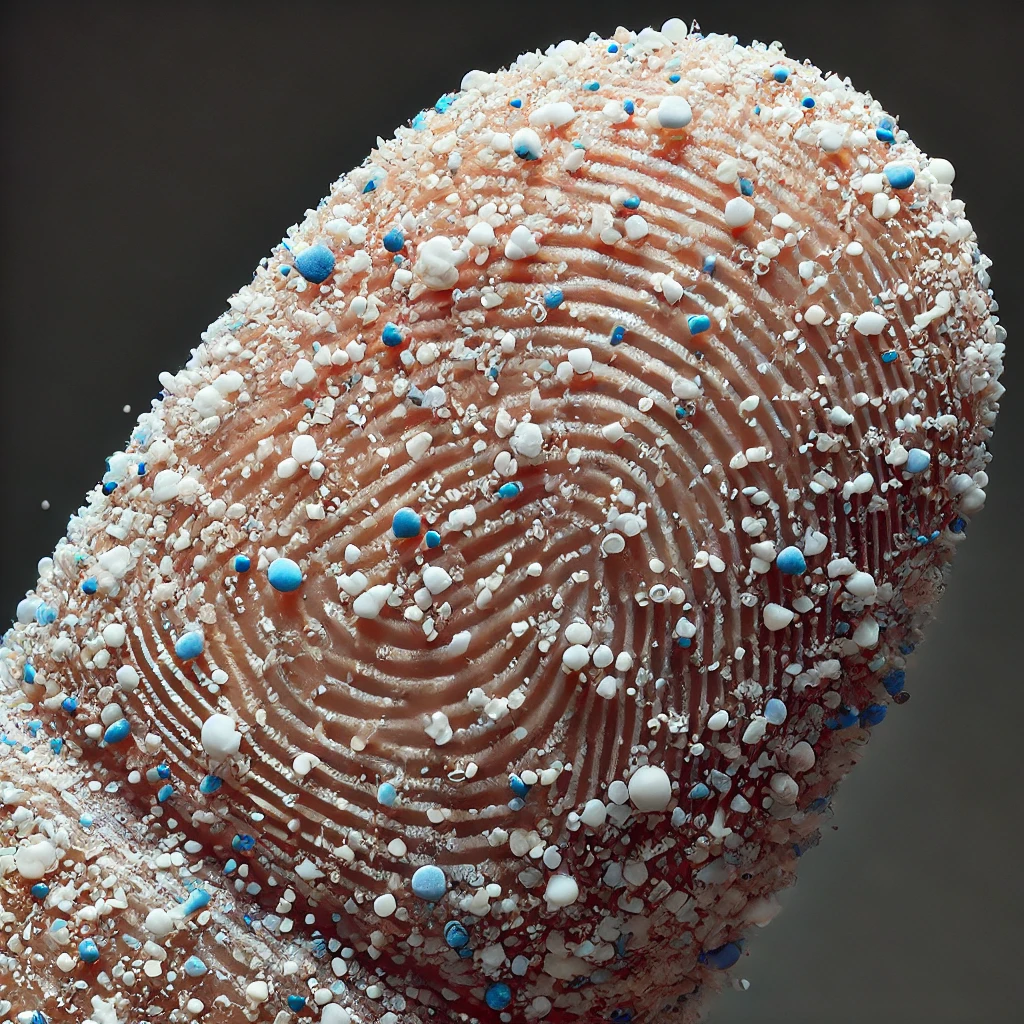
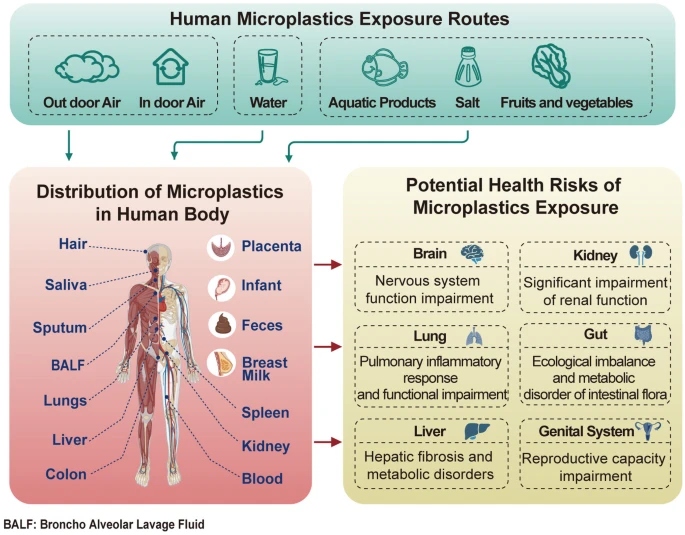
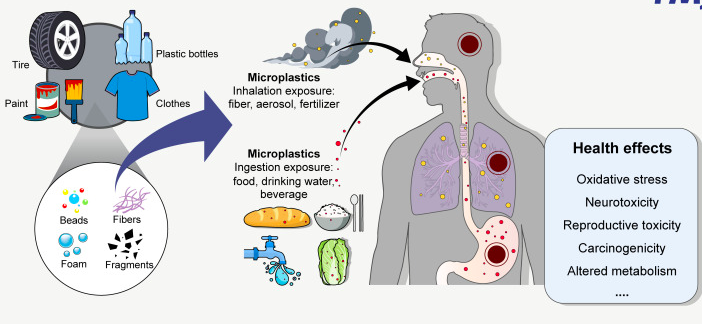
Exposure to microplastics is inevitable in the modern world. We ingest and inhale them daily, and they accumulate in our bodies, including the lungs, liver, placenta, and even the brain, with potential long-term health consequences.[1]
To help you having an idea about the quantity you ingest each year we can refer to a study published in 2023 [2] :
| Source | Microplastics per Year (Range) | Approximate Average Ingestion/Inhalation |
|---|---|---|
| Dietary Total | 488,000 to 577,000 | ~532,500 particles |
| – Salt | 5,000 to 7,000 | ~6,000 particles |
| – Fish | 5,000 to 12,000 | ~8,500 particles |
| – Fruits | 448,000 to 462,000 | ~455,000 particles |
| – Vegetables | 29,600 to 95,500 | ~62,550 particles |
| Drinking Water | 220,000 to 1,200,000 | ~710,000 particles |
| Inhalation Total | 210,000 to 2,510,000 | ~1,360,000 particles |
| – Indoor Air | 160,000 to 2,300,000 | ~1,230,000 particles |
| – Outdoor Air | 46,000 to 210,000 | ~128,000 particles |
⇒ Using* these numbers to give you a more “practical” idea, the total average ingestion and inhalation of microplastics by an average adult each year could be visualized as being equivalent to the plastic content of about two standard credit cards! (some estimations are even more dramatic…The equivalent of a credit card would be inhaled each week! [8])

And for your information, micro(nano)plastics can cause:
- Endocrine Disruptions: They contain chemicals like BPA and phthalates, which mimic or block natural hormones. This can lead to fertility issues, developmental disorders, and increased risks of certain cancers. [3][4]
- Reproductive Issues: Studies have shown links between microplastic exposure and sperm abnormalities, fertility problems, and complications during pregnancy. [1][2][4]
- Inflammation and Chronic Diseases: Microplastics can cause chronic inflammation and are linked to diseases like inflammatory bowel disease (IBD). [1][4]
- Neurological Impacts: Microplastics have been found in the brain. They impact cognitive functions and neurological development. [1][4]
- Cardiovascular Impacts: Microplastics could be linked to cardiovascular events, settling in arterial plaques and increasing the risk of heart problems. [1][4]
- Mitochondrial Effects: They can damage mitochondria, the power plants of cells, thereby disrupting cellular energy production. [1][4][5]
It is therefore crucial to understand the risks associated with microplastics to take measures to limit our exposure and protect our health.
CURRENT CHALLENGES
There are numerous challenges related to the management and reduction of exposure to microplastics:
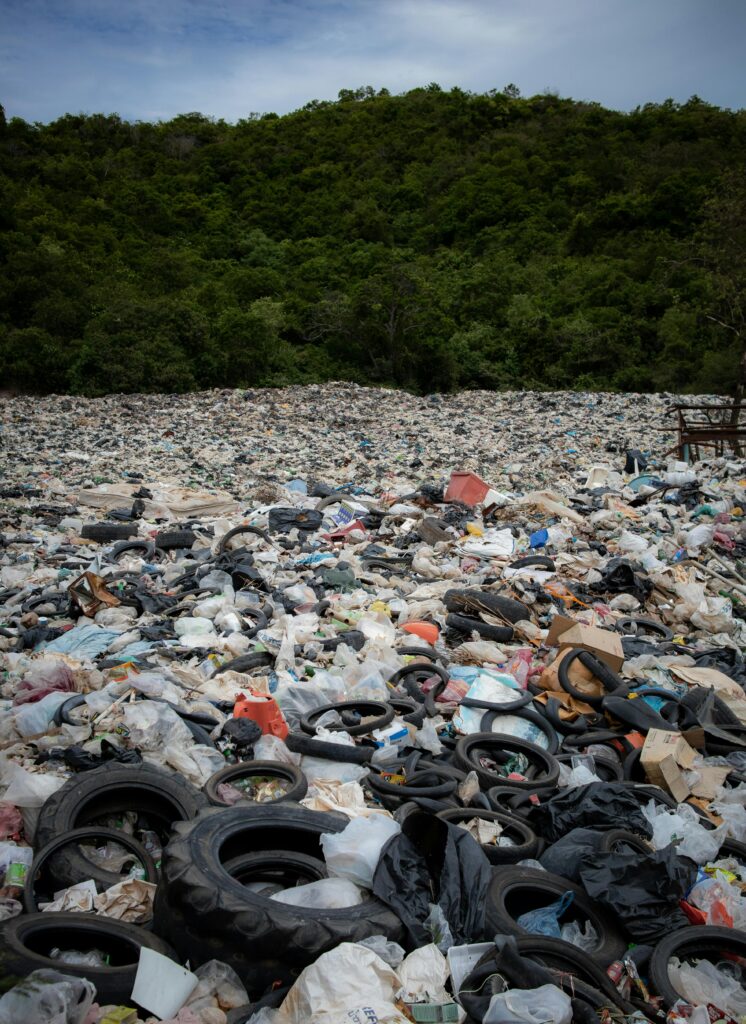
- Ubiquity: Microplastics are everywhere, making total avoidance nearly impossible. They are present in the air, water, food, and even personal care products. And they are difficult to detect.
- Varied Sources: Microplastics come from many sources, making it difficult to implement uniform reduction measures. Sources include packaging, synthetic textiles, tires, paints, and many others.
- Detoxification Difficulty: Microplastics are difficult to eliminate from the body once they have accumulated. Our bodies do not have an active excretion pathway for plastics, causing them to persist and accumulate in our tissues.
- Regulatory and Industrial Challenges: Regulations on microplastics are insufficient, and there is a lack of large-scale cooperation to reduce their production and dispersion in the environment. So, they are here to stay in our close environment for a while (even if some worldwide authorities seem “concerned” about this topic…)
(EVEN MORE) FACTS THAT STRIKES
Here some figures around micro(nano)plastics :
Tissue Accumulation: Post-mortem studies of brain tissues show that they contain about 0.05% of their total weight in microplastics, roughly half a teaspoon. [10]
Cardiovascular Risk: Research has identified polyethylene in the carotid artery plaques of 58% of the patients studied, linking the presence of microplastics in arterial walls to a 4.5 times higher likelihood of major cardiovascular events. [10]
Male Fertility: Microplastics found in human testicles are associated with decreased sperm count and mobility. [10]
Digestive Health: People with irritable bowel syndrome (IBS) and inflammatory bowel disease (IBD) show higher concentrations of microplastics in their stools—up to 41.8 particles per gram of dry fecal matter in IBD patients, compared to 28.0 particles in healthy individuals. “A 2023 study found that plastic cutting boards can make a person consume 7.4 to 50.7 G of microplastics per year from polyethylene chopping boards and 49.5 G from polypropylene chopping boards” [11]
INTERESTING VIDEO TO WATCH
HOW TO GET INTO HACKTION?
Practical Instructions
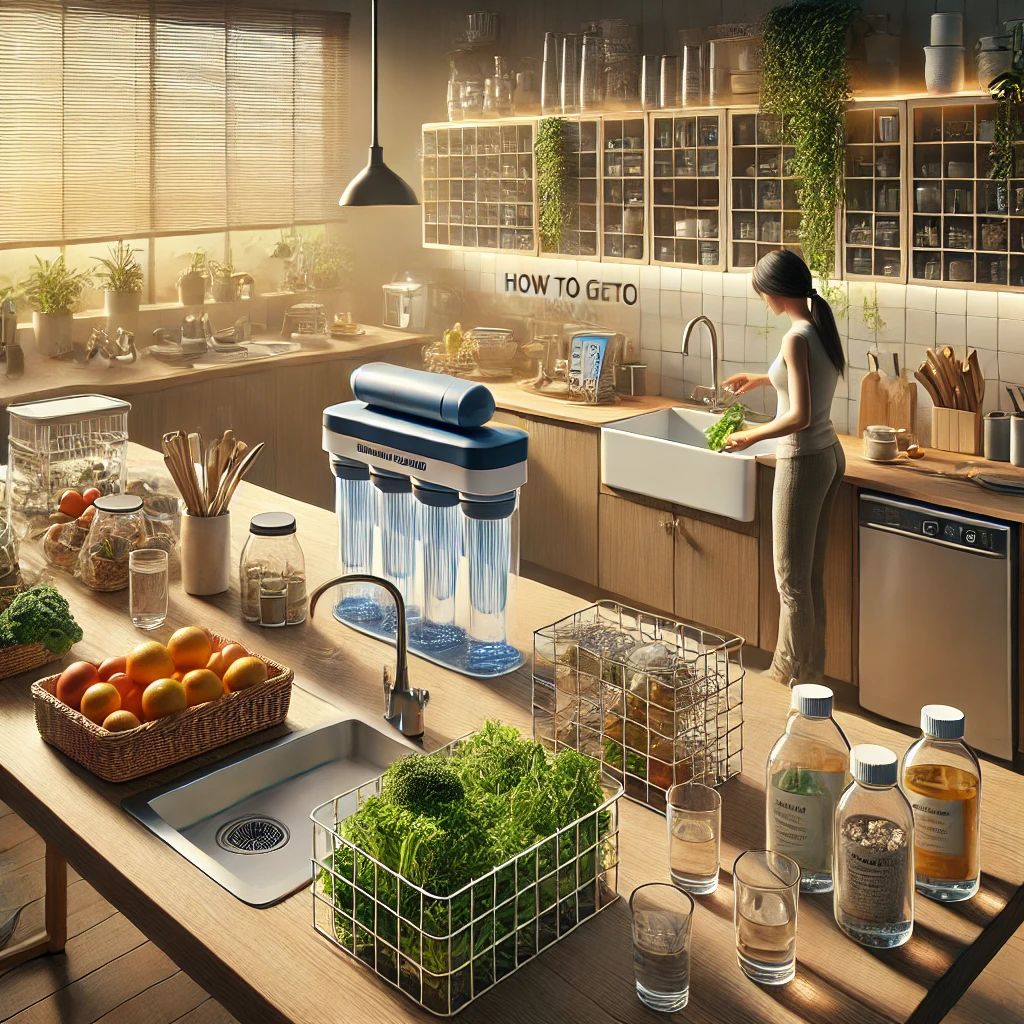
Here are some practical strategies to limit your exposure to microplastics:
- Water Filtration: Use a reverse osmosis filter for tap water (like AQUA TRU : https://aquatruwater.eu/).
Avoid plastic water bottles and prefer glass or stainless steel bottles. - Diet:
- Reduce your consumption of foods packaged in plastic or in cans. Prefer fresh, local, and seasonal foods.
- Avoid prepared meals and ultra-processed foods that are often exposed to plastics during their manufacture.
- Thoroughly wash fruits and vegetables, soaking them in water with baking soda for about ten minutes.
- Choose non-marine salt, like Himalayan pink salt.
- Avoid plastic tea bags and prefer loose tea leaves or cotton or paper bags.
- Prepare your coffee with a French press or a paper filter rather than plastic pods.
- Cooking: Use stainless steel or ceramic kitchen utensils. Avoid Teflon non-stick coatings and plastic cutting boards.
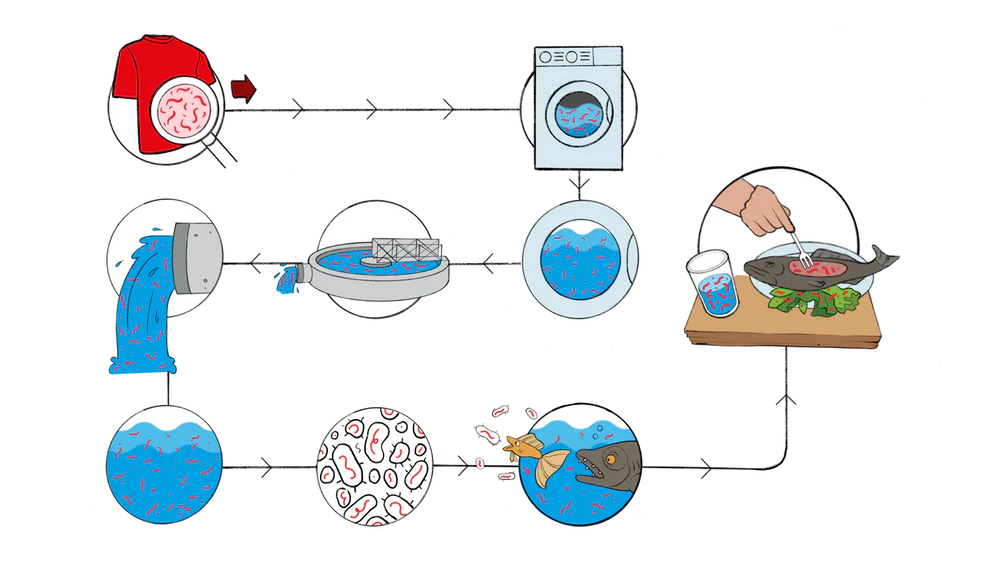
- Textiles: Choose clothing made from natural fibers like cotton, wool, or bamboo. Avoid synthetic textiles that release microfibers during washing. Use specific laundry bags to retain microfibers.
- Home Environment:
- Regularly vacuum and dust your home to reduce airborne microplastics.
- Frequently ventilate your interior.
- Use Air filters to reduce airborne microplastics.
- Personal Care: Choose personal care products with minimal packaging or packaged in glass. Pay attention to nano plastics into the product.
- Excretion:
- Regularly exercise and use a sauna to promote sweating, a pathway for the excretion of toxins, including certain types of plastics.
- Consider supplementing with :
- Ensure adequate intake of B vitamins, particularly vitamin B6.
- Consume amino acids like glycine, cysteine, glutamine, or methionine.
- Ensure sufficient taurine intake, essential for bile production.
- Eat a diet rich in fibers and cruciferous vegetables to aid liver detoxification.
- NAC to support liver detoxification processes and lower down inflammation.
- Other :
- Plasma donation
- Regularly exercise and use a sauna to promote sweating, a pathway for the excretion of toxins, including certain types of plastics.
INTERESTING VIDEO TO WATCH
CONCLUSION
Addressing microplastics is crucial for both our health and the environment. By grasping where these particles come from, how they infiltrate our lives, and their potential harm, we can effectively reduce their impact. While it may seem overwhelming to change many habits at once, if you need to prioritize, focus on using a sauna and taking N-acetylcysteine (NAC) supplements to aid in detoxification—alongside at least one method of reducing exposure, like choosing better product alternatives. Small, consistent actions make a difference.
F.A.Q
Are tap water filters effective against microplastics?
Activated carbon filters can retain some microplastics, but reverse osmosis filters are more effective at removing the finest particles.
Where do microplastics accumulate in our body?
Microplastics can penetrate cell membranes and accumulate in various organs and tissues, including the lungs, blood, heart, brain, intestines, liver, placenta, amniotic fluid, sperm, and even the testicles. They can cross protective barriers like the blood-testis and blood-brain barriers.
REFERENCES
[1] https://www.foundmyfitness.com/topics/microplastics[2] Human Microplastics Exposure and Potential Health Risks to Target Organs by Different Routes: A Review : https://link.springer.com/article/10.1007/s40726-023-00273-8 [3] A review of the endocrine disrupting effects of micro and nano plastic and their associated chemicals in mammals https://pmc.ncbi.nlm.nih.gov/articles/PMC9885170/ [4] https://articles.mercola.com/sites/articles/archive/2024/12/19/microplastics-health-risks.aspx [5] In vitro evaluation of nanoplastics using human lung epithelial cells, microarray analysis and co-culture model : https://www.sciencedirect.com/science/article/pii/S0147651321009490?via%3Dihub[6] https://www.weforum.org/stories/2025/02/how-microplastics-get-into-the-food-chain/[7] Plastic particles in bottled water : https://www.nih.gov/news-events/nih-research-matters/plastic-particles-bottled-water[8] How microplastics are transported and deposited in realistic upper airways? https://pubs.aip.org/aip/pof/article/35/6/063319/2895950/How-microplastics-are-transported-and-deposited-in[9] Health Effects of Microplastic Exposures: Current Issues and Perspectives in South Korea : https://www.eymj.org/search.php?where=aview&id=10.3349/ymj.2023.0048&code=0069YMJ&vmode=AONLY[10] The Effects of Microplastics on Your Health & How to Reduce Them: https://youtu.be/vfRtLI6cJrk?si=sRNfVgBO3rlR-y1J [11] Cutting Boards: An Overlooked Source of Microplastics in Human Food? : https://pubmed.ncbi.nlm.nih.gov/37220346/
(*)Total Average Microplastics per Year:
Adding these together gives an average ingestion and inhalation of microplastics:
532,500+710,000+1,360,000=2,602,500532,500 + 710,000 + 1,360,000 = 2,602,500532,500+710,000+1,360,000=2,602,500 microplastic particles per year.
Physical Object Equivalent:
To visualize this amount, consider that a standard credit card weighs about 5 grams and can contain millions of micro-sized particles if ground into plastic dust. Assuming a very small size for each microplastic particle, we could compare the annual average ingestion and inhalation to roughly a couple of credit cards’ worth of microplastic particles.
Thus, the total average ingestion and inhalation of microplastics by an average adult each year can be visualized as being equivalent to the plastic content of about two standard credit cards.
