Discover the crucial roles of Omega-3 fatty acids in maintaining brain health, reducing inflammation, and supporting cardiovascular wellness. In this article you’ll learn practical and safe ways to increase your intake of these essential nutrients.
WHY THIS MATTERS FOR YOU?
Omega-3 fatty acids, particularly EPA and DHA, are vital for cognitive function and heart health. Understanding how to optimize your Omega-3 intake can lead to significant improvements in your overall health and quality of life.
COMMON CHALLENGES
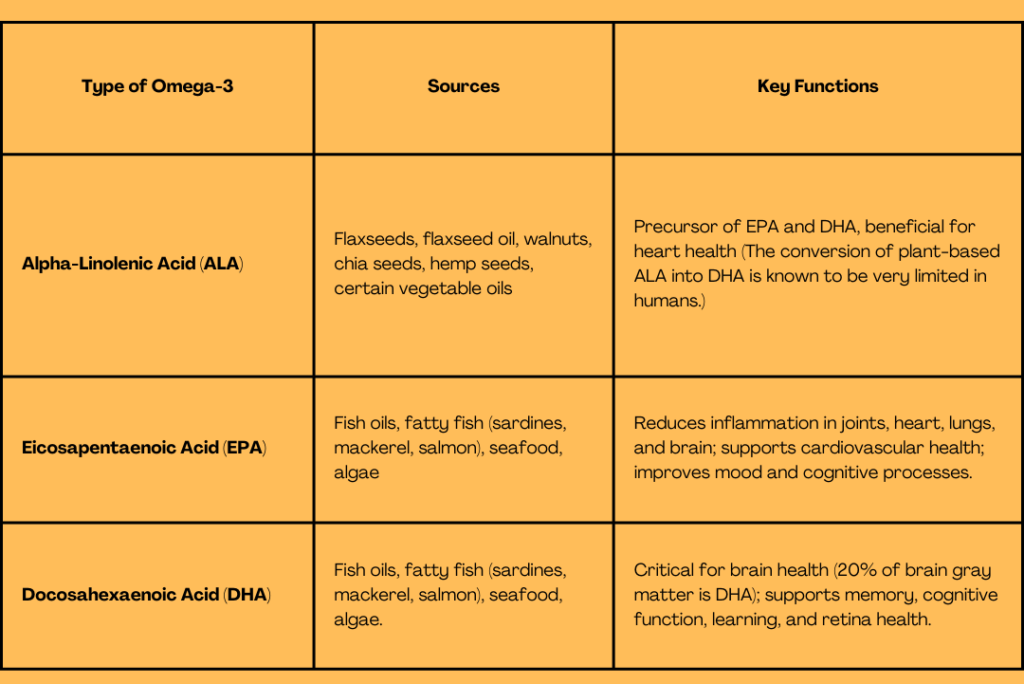
Many people struggle to differentiate between the types of Omega-3 (ALA, EPA, DHA) and find reliable sources in their diets.
Also, navigating the complex world of supplements can be daunting. Misleading marketing often confuses consumers about the types of Omega-3s (ALA, EPA, DHA) and their sources. Ensuring the intake of EPA and DHA, which are pivotal for cognitive performance, is a challenge amidst prevalent marketing biases towards ALA.
EPA and DHA are important for fetal development, cardiovascular function, and Alzheimer’s disease prevention, weight management, and cognitive function.
FACTS TO INSPIRE YOU
🧠 Mental Health: Regular consumption of Omega-3 fatty acids has been linked to a reduced risk of cognitive decline and improved overall brain function.” [1]
⚡ Brain Function: “Omega-3s, particularly DHA, are crucial for the structural integrity of brain cells and communication between neurons, which supports memory and learning.” [2]
📉 Mental Health: “A daily intake of Omega-3s can improve mood, reduce anxiety, and even enhance your problem-solving abilities.” [3]
INTERESTING VIDEOS TO WATCH
Here is a short video to catch up on that topic! (Credits : Dr. Jin W. Sung)
Great explanation from Dr Berg that highlights the importance of OMEGA 3 for general health.(Credits : Dr. Berg)
An Omega-3 deficiency can have serious consequences for your health. (Credits : G.Brecka)
HOW TO GET INTO HACKTION?
Practical Instructions – Omega-3 Integration
1/ Understanding Omega-3 Types: Grasping the crucial differences and roles of ALA, EPA, and DHA.
2/ Increase your dietary intake : Integrating fatty fish like salmon and mackerel or opting for plant-based sources like algae, flaxseeds and walnuts can already help to get more omega 3 on a daily basis without supplementation.
💡 If you’re not consuming 227–340 grams of seafood or fish varieties per week, there’s a high likelihood that you’re not meeting the recommended daily intake of 500 mg of EPA + DHA.
3/ Start supplementing :
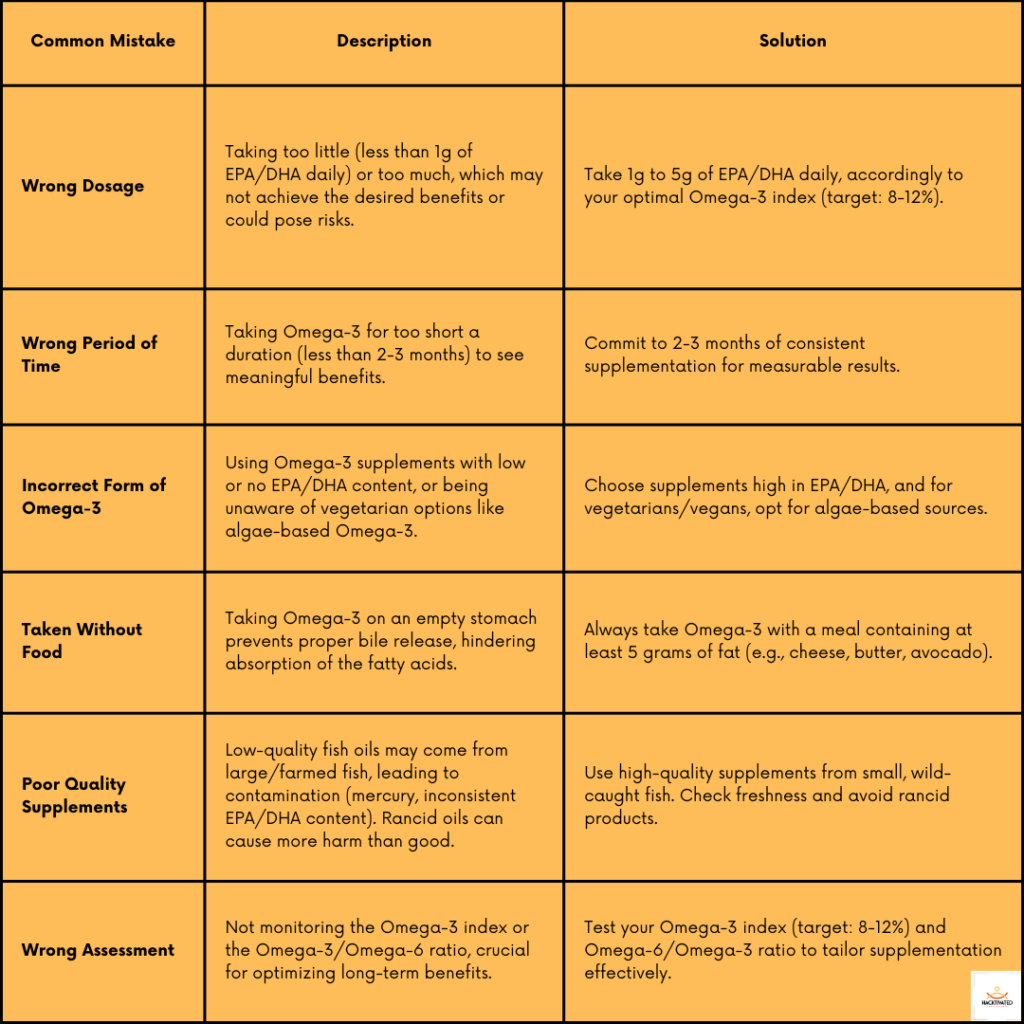
A/ Choose high-quality fish oil or algae-based supplements to meet your daily Omega-3 needs, especially focusing on EPA and DHA. I recommend personnally : N°1 – Norsan Omega-3 Vegan Oil : https://norsan.es/shop/#vegano N°2 – Norsan Omega-3 Fish oil or cold liver oil : https://norsan.es/shop/
(If you don’t order from Norsan, choose a clean product with no heavy metals and high EPA/DHA concentration, you can check the mini checklist below in the F.A.Q)
B/ Supplementation Strategy:
4/ Get tested :Measuring Your Omega-3 Index and Omega-6/Omega-3 Ratio 🧪
To truly understand the appropriate dosage for you in the long run, it is highly recommended that you undergo testing.
This method provides a precise and reliable understanding of your fatty acid profile, including your:
1️⃣ Omega-3 index: The percentage of EPA/DHA in your red blood cell membranes, a key marker for heart, brain, and overall health.
2️⃣ Omega-6/Omega-3 ratio: A critical balance for reducing inflammation and optimizing health.
Option 1: A Lab Analysis in Person
Visit a certified lab and request the following test: Erythrocyte Fatty Acids – Chromatography.
Cost ? around 85€.
You’ll receive a detailed report on your Omega-3 index and Omega-6/Omega-3 ratio.
Option 2: At-Home Testing
Use a service like OmegaQuant, which lets you measure your fatty acid profile with a simple blood spot test from home.
Cost: €79.95 + shipping.
You’ll get a detailed analysis of your Omega-3 index and Omega-6/Omega-3 ratio, giving you a full picture of where you stand.
Testing doesn’t just show you your Omega-3 index—it also gives you insight into your Omega-6/Omega-3 ratio, which is crucial for reducing chronic inflammation and maintaining balance in your body.
Without this knowledge, it’s easy to either:
Underdose (missing out on the benefits of supplementation).
Overdose (wasting supplements unnecessarily).
CONCLUSION
Embark on enhancing your health by integrating Omega-3 into your daily regimen. Begin with manageable steps, maintain consistency, and witness significant transformations in both your physical and mental well-being.
Here is a recap of the essentials discussed above :
The Importance of Omega-3: These essential fats are crucial for your cell membranes, reducing inflammation, and enhancing the health of your heart and brain.
Understanding Omega-3 Types: We learned about ALA, EPA, and DHA, and why EPA and DHA are critical for optimal brain health.
Choosing Supplements: We shared how practically selecting high-quality Omega-3 supplements that benefit you the most.
Estimating Your Deficiency: We introduced a straightforward, accessible method for beginners to identify potential Omega-3 deficiencies.
Measuring Your Levels: We discussed accurate tools and tests available for assessing your Omega-3 index and Omega-6/Omega-3 ratio, whether through lab tests or convenient at-home kits.
It is highly recommended to ensure you are fully leveraging the health benefits of Omega-3s, enhancing your journey toward improved well-being.
F.A.Q
What is the ideal daily intake of Omega-3?
The recommended daily intake of EPA and DHA is at least 500 mg, but higher amounts might be necessary depending on individual health goals and personal omega 3 index. The range of 1g to 2g of DHA+EPA per day is a practical starting point for many people, particularly for those looking to enhance cognitive function or cardiovascular health.
Can Omega-3s improve my mental performance?
Absolutely. Clinical studies affirm significant improvements in cognitive function, particularly in memory and processing speed.
Are there any risks associated with Omega-3 supplementation?
While generally safe, higher doses (above 5g per day) may cause side effects. If you are considering high dosages, it is recommended that you consult with a healthcare provider.
Quick & Approximate Baseline for Omega-3 Intake
If you’re unsure about your Omega-3 levels and prefer not to do a lab test, here’s a simple rule of thumb:
💡 If you’re not consuming 227–340 grams of seafood or fish varieties per week, there’s a high likelihood that you’re not meeting the recommended daily intake of 500 mg of EPA + DHA.
This doesn’t guarantee optimal levels, but it strongly suggests that a deficiency might already exist. Starting supplementation or increasing fish consumption can help bridge the gap.
Where can I find more information about Omega-3?
You can check this website : https://omegaquant.com/ Otherwise : Academic journals, health websites.