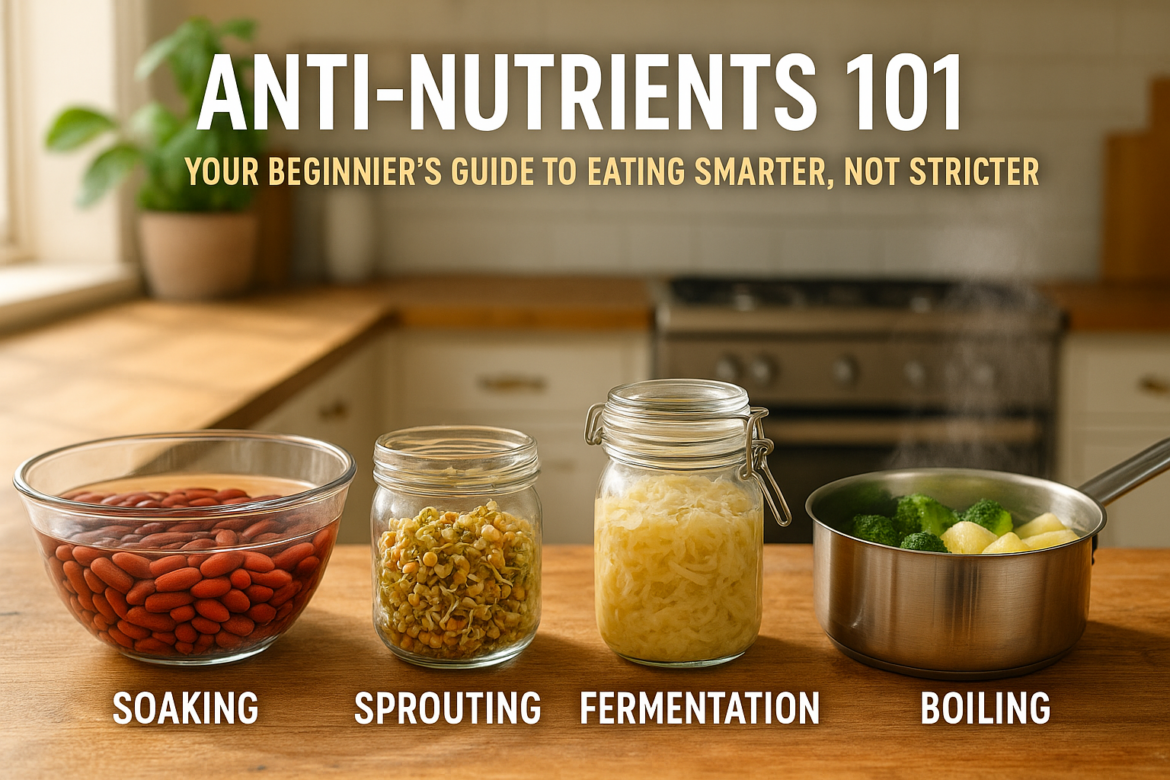
Anti-Nutrients 101: Your Beginner’s Guide to Eating Smarter, Not Stricter
TL;DR
Core Concept: Anti-nutrients are natural compounds in plant foods that can block nutrient absorption or irritate the gut when poorly prepared — but with the right techniques, they can also deliver protective, even beneficial effects.
Significance: Understanding and managing anti-nutrients can improve digestion, nutrient uptake, and metabolic health — without cutting out whole food groups. It’s not about restriction, but optimization.
Challenges: Modern diets have lost the ancestral wisdom (soaking, sprouting, fermenting) that once neutralized these compounds. Conflicting advice and “gluten-free” marketing often create more confusion than clarity.
Strong Fact: Proper preparation methods can reduce lectins and phytates by 80–99%, transforming them from irritants into antioxidants and potential cancer-preventive compounds.
Implementation Tips – Practical Guidelines (Shared below!) (Scroll down in the full article!)
OVERVIEW
Ever eat a “healthy” meal and feel bloated, foggy, or wiped out? Anti-nutrients may be part of the story. These natural plant compounds can interfere with digestion and absorption—and in sensitive people, they can aggravate issues like IBS or increased intestinal permeability.
Still, there’s no need to panic or cut out plants altogether.
The key is understanding, preparing and balance. Many anti-nutrient–containing foods are also nutritional powerhouses packed with vitamins, minerals, and fiber. By learning how these compounds work — and how to neutralize them through traditional preparation methods — you can keep the benefits while minimizing the drawbacks.
Goal: fewer food-triggered crashes, better digestion, and more nutrition from the foods you already eat by preparing them correctly.
What Are Anti-Nutrients? (Definition)
Anti-nutrients are natural plant chemicals that act as defensive agents against insects, fungi, and herbivores. They exist in virtually all plant foods.
“Natural” doesn’t automatically mean “beneficial.” Just as arsenic is natural but harmful, some plant compounds can have unwanted effects — though most are harmless in normal dietary amounts.
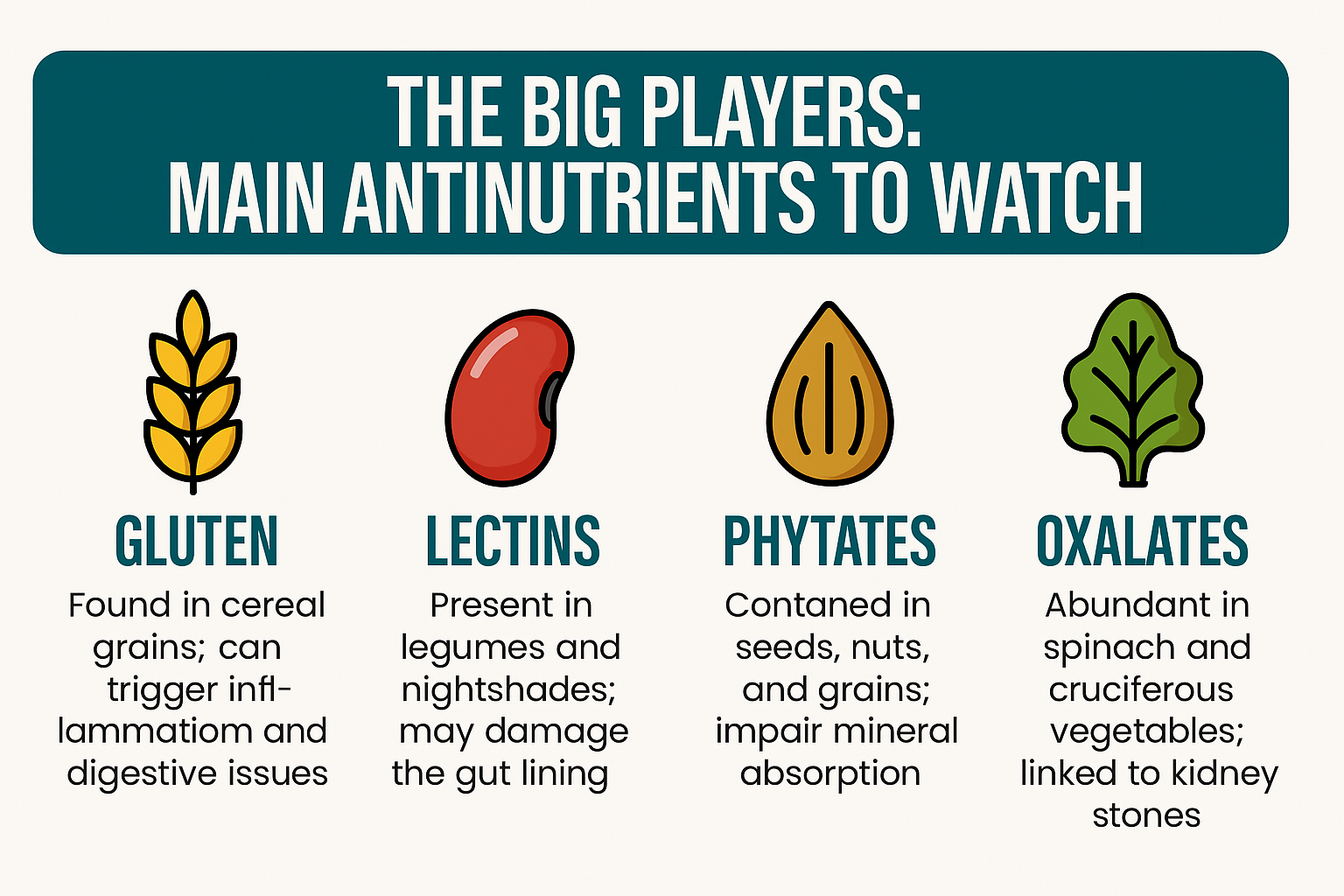
The Big Four:
Oxalates (oxalic acid) — bind calcium; in excess may contribute to kidney stones or trigger pain in sensitive folks.
Gluten — a family of proteins in wheat, barley, rye; problematic for celiac disease and some sensitivities.
Lectins — “sticky” proteins that bind carbohydrates and may irritate the gut lining in some people.
Phytates (phytic acid) — mineral chelators that reduce absorption of iron, zinc, calcium.
Why Should You Care ?
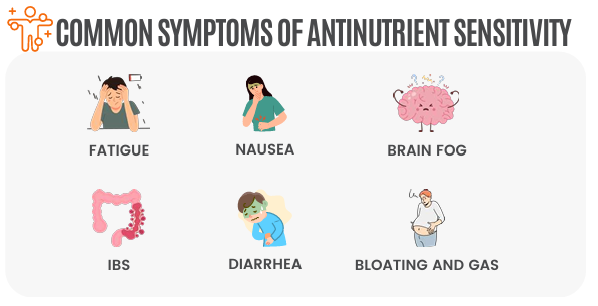
Anti-nutrients can trigger digestive and systemic symptoms — in some people immediately, and in others more subtly over time.
While everyone is affected biochemically (for instance, gluten and certain lectins always irritate the gut barrier to some degree), the severity and visibility of the response vary from person to person.
Here are anti-nutrients digestive and systemic symptoms:
- Gut: bloating, gas, nausea, loose stools; IBS-like flares.
- Inflammation: swollen joints/gums; body aches.
- Neuro: fatigue, brain fog, low mood.
- Nutrition: gradual mineral and micronutrient shortfalls (e.g., iron, zinc, calcium) if intake is high and prep is poor.
Balance Matters
Anti-nutrients aren’t purely harmful — many have protective effects when consumed in reasonable amounts and properly prepared.[6]
- Phytates also have antioxidant properties and may be protective for metabolic and cardiovascular health.
- Lectins in properly cooked legumes are dramatically reduced; some data suggest immunity booster and potential anticancer effects at low intakes.
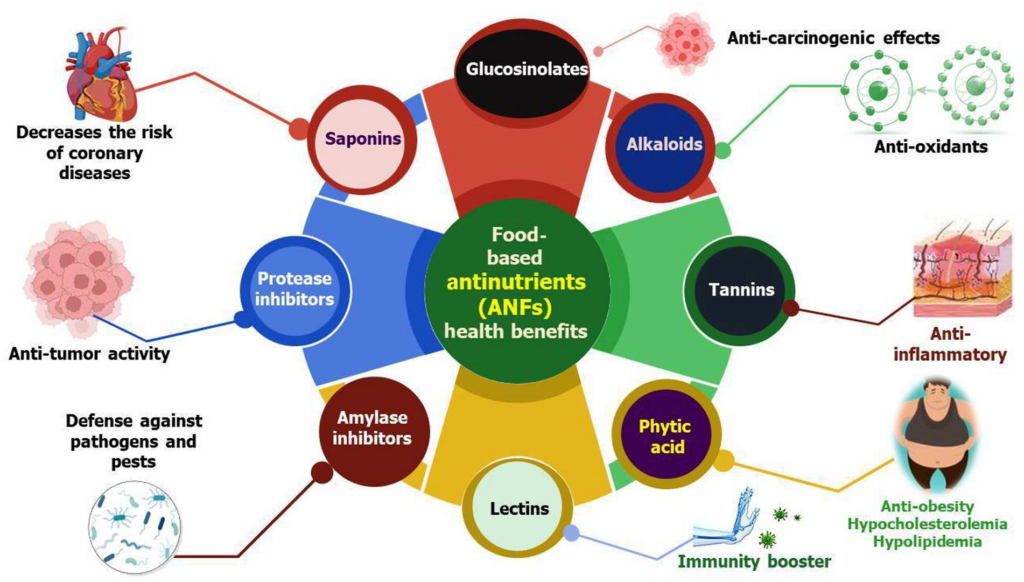
The point isn’t elimination, it’s dose + preparation + individual tolerance.
It all comes down to three principles:
Dose — small, varied exposures build tolerance; chronic overconsumption of one plant type can cause imbalance.
Preparation — ancestral methods (soaking, sprouting, fermenting, cooking) deactivate most anti-nutrients naturally.
Individual Tolerance — genetics, microbiome, and gut health determine how your body responds.
Why This Is Tricky (Common Challenges)
If anti-nutrients are so disruptive, why are they still part of nearly every “healthy” diet on Earth?
Because the problem isn’t black and white. These compounds are woven into our food culture, and our modern lifestyle has broken the ancestral wisdom that once kept them in check. We’ve lost the time, patience, and culinary intuition our ancestors used to make plants safe and nourishing.
Add to that a flood of conflicting information, “gluten-free” marketing hype, and the belief that natural automatically means healthy—and it’s easy to see why so many people stay confused, bloated, and nutrient-depleted despite eating “clean.”
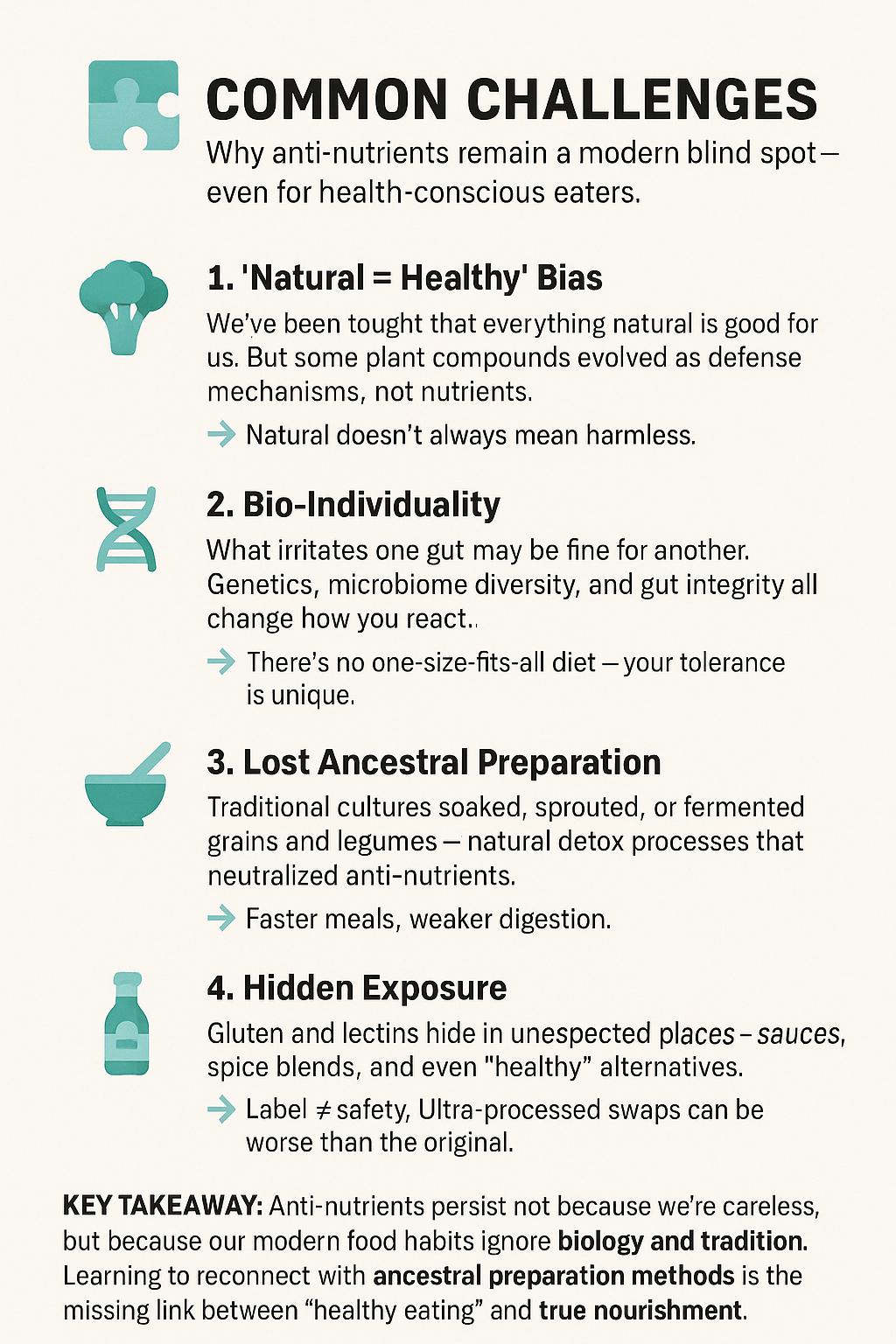
COMMON CHALLENGES :
- “Natural = Healthy” bias. We assume every plant compound is beneficial. Not always. The final form of the product matters most.
- Bio-individuality. What bothers one person may be fine for another.
- Lost ancestral prep. Soaking, sprouting, fermenting are effective—but time-consuming—so modern kitchens skip them.
- Hidden exposure. Gluten sneaks into sauces/spice blends; “gluten-free” swaps can be ultra-processed.
- Reward chemistry. Gluteomorphins (from gluten) can bind opioid receptors, reinforcing cravings for bread/pasta/pastries.
Hard Facts to Motivate You (Science-Based)
To understand why anti-nutrients matter, here are 4 undeniable facts showing how they can silently sabotage your health:
- Lectins & the Gut Barrier
- Lectins in beans, grains, and nightshades can bind to intestinal cells and weaken your gut lining.
Regular exposure increases intestinal permeability (“leaky gut”) and low-grade inflammation.
Pressure-cooking or boiling destroys over 99% of lectin activity. [1][5]
- Lectins in beans, grains, and nightshades can bind to intestinal cells and weaken your gut lining.
- Phytates & Mineral Absorption
- Phytic acid in whole grains, nuts, and legumes binds essential minerals like iron, zinc, and calcium. This can block up to 60–70% of mineral absorption, leading to fatigue, anemia, or brittle nails. Soaking, sprouting, or fermenting reduces phytates by up to 80%. [2]
- Phytic acid in whole grains, nuts, and legumes binds essential minerals like iron, zinc, and calcium. This can block up to 60–70% of mineral absorption, leading to fatigue, anemia, or brittle nails. Soaking, sprouting, or fermenting reduces phytates by up to 80%. [2]
- Oxalates & Crystal Formation
- Oxalates in spinach, beets, and almonds bind calcium to form sharp calcium-oxalate crystals. These can accumulate in joints and kidneys, contributing to pain or stones. [3]
- Oxalates in spinach, beets, and almonds bind calcium to form sharp calcium-oxalate crystals. These can accumulate in joints and kidneys, contributing to pain or stones. [3]
- Gluten & Immune Stress
- No human enzyme fully breaks down gluten. The resulting fragments trigger zonulin, loosening the gut wall and activating the immune system—even in non-celiac individuals.
⚠️ This permeability is linked to fatigue, brain fog, and autoimmune flare-ups. Removing gluten for a few weeks can significantly reduce inflammation and improve gut integrity. [4]
- No human enzyme fully breaks down gluten. The resulting fragments trigger zonulin, loosening the gut wall and activating the immune system—even in non-celiac individuals.
INTERESTING VIDEOS TO WATCH
HOW TO GET INTO HACKTION?

Practical Instructions
Anti-nutrients aren’t kitchen villains—they’re plant defenses we can disarm with smart prep and personal awareness. Cook like your great-grandparents: soak, sprout, ferment, boil. Notice how you feel, keep what serves you, and leave the rest. That’s eating smarter, not stricter.
Traditional prep = modern performance. Use these tools to keep nutrients high and irritants low.
1. Core Methods (Tools/Resources)
- SOAKING
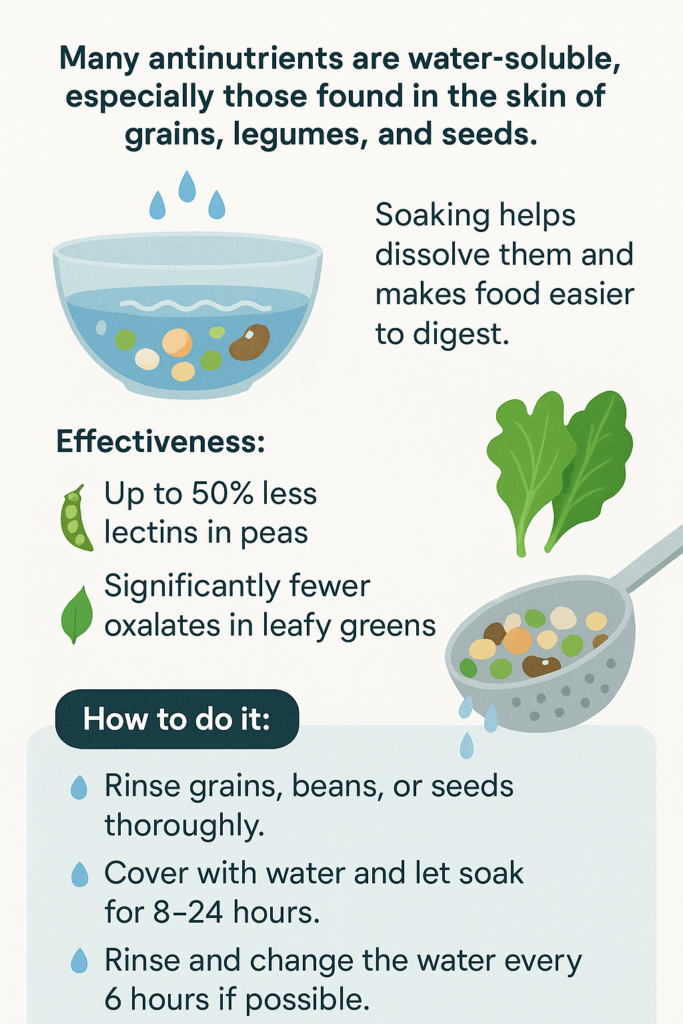
Many antinutrients are water-soluble, especially those found in the skin of grains, legumes, and seeds.
Soaking helps dissolve them and makes food easier to digest.
Effectiveness:
- Up to 50% less lectins in peas
- Significantly fewer oxalates in leafy greens
🔹 How to do it:
- Rinse grains, beans, or seeds thoroughly.
- Cover with water and let soak for 8–24 hours.
- Rinse and change the water every 6 hours if possible.
2. SPROUTING
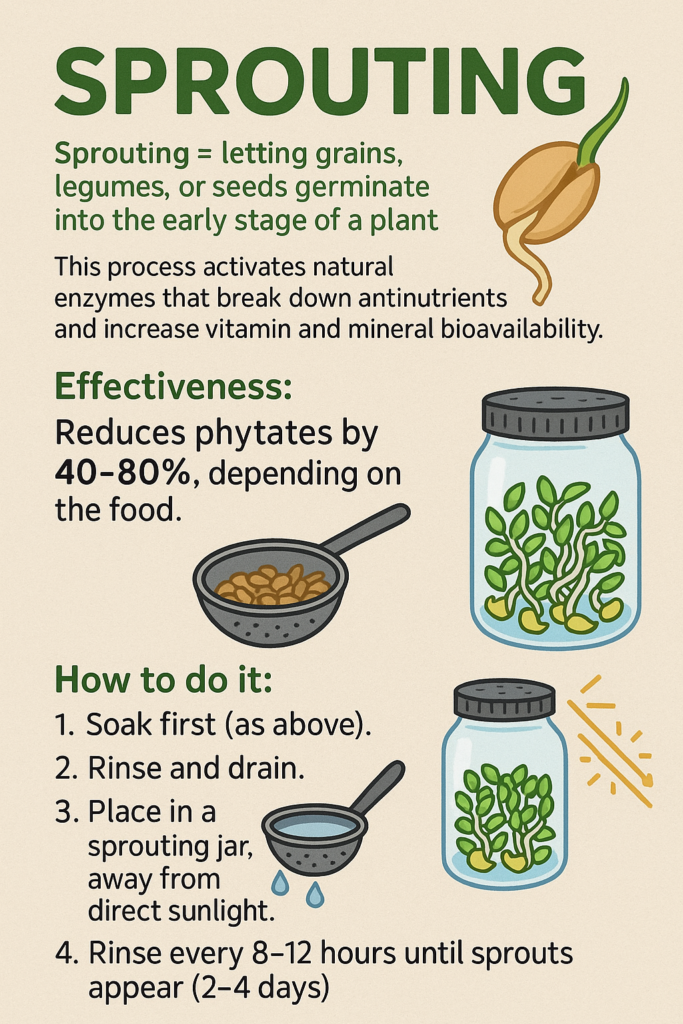
Sprouting = letting grains, legumes, or seeds germinate into the early stage of a plant 🌾
This process activates natural enzymes that break down antinutrients and increase vitamin and mineral bioavailability.
Effectiveness:
Reduces phytates by 40–80%, depending on the food.
🔹 How to do it:
Rinse every 8–12 hours until sprouts appear (2–4 days).
Soak first (as above).
Rinse and drain.
Place in a sprouting jar, away from direct sunlight
3. FERMENTATION
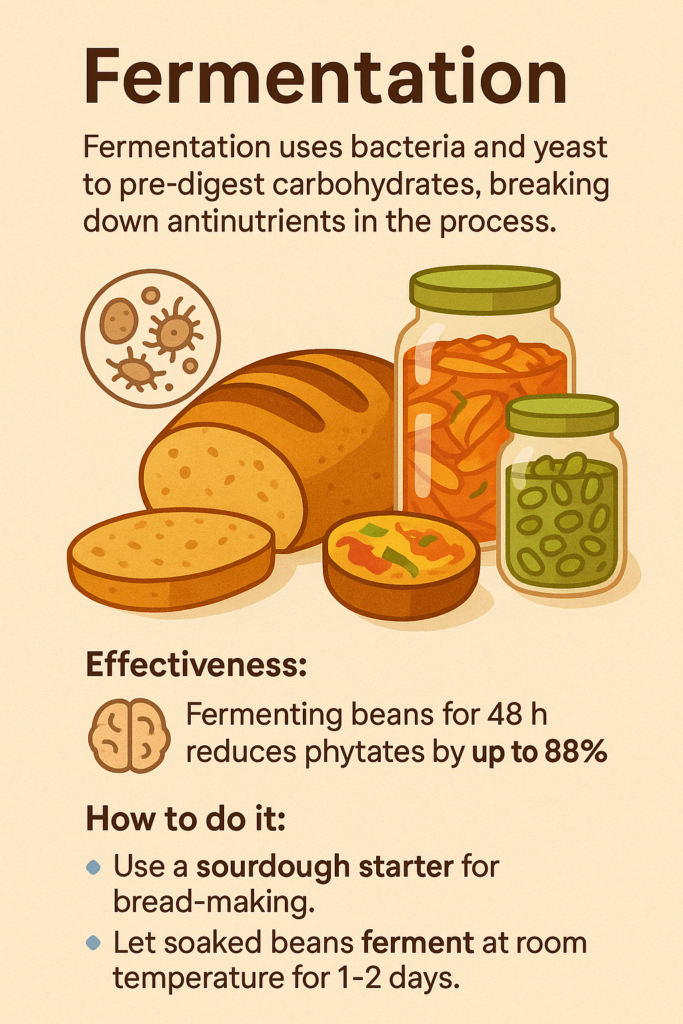
Fermentation uses bacteria and yeast to pre-digest carbohydrates, breaking down antinutrients in the process.
This is why foods like sourdough bread, kimchi, sauerkraut, or fermented beans are easier on the gut and richer in nutrients.
Effectiveness: Fermenting beans for 48h reduces phytates by up to 88%.
🔹 How to do it (examples):
- Use a sourdough starter for bread-making.
- Let soaked beans ferment at room temperature for 1–2 days.
You can also check on youtube any fermented receipe you would like to try ! 🙂
4. BOILING
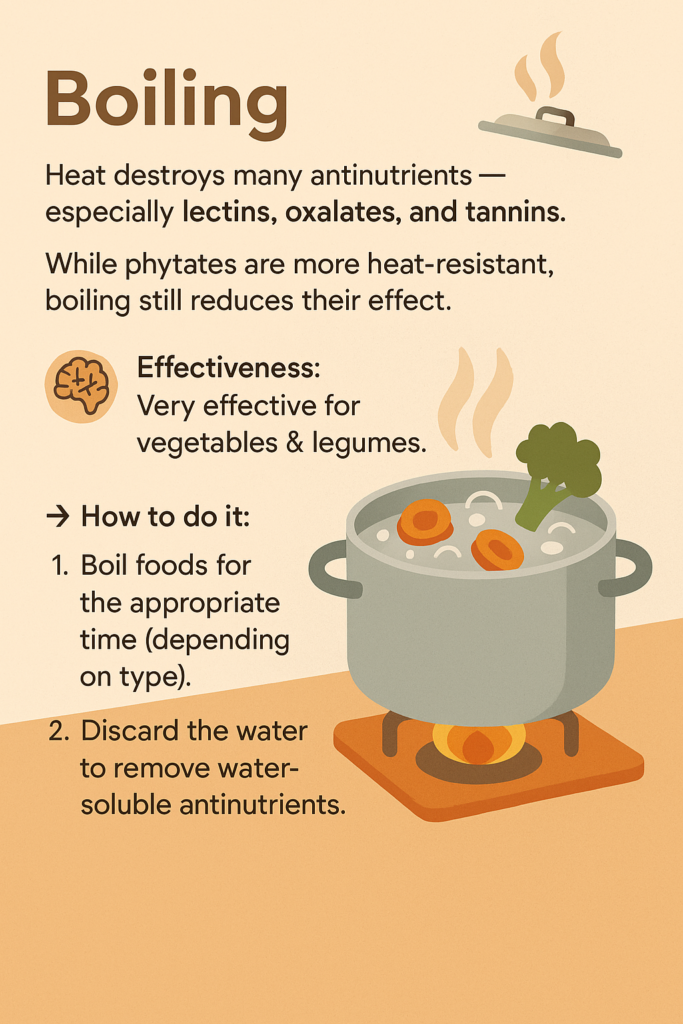
Heat destroys many antinutrients — especially lectins, oxalates, and tannins.
While phytates are more heat-resistant, boiling still reduces their effect.
Effectiveness:
Very effective for vegetables & legumes.
🔹 How to do it:
- Boil foods for the appropriate time (depending on type).
- Discard the water to remove water-soluble antinutrients.
Summary Table – Reducing Antinutrients for Safe & Beneficial Consumption
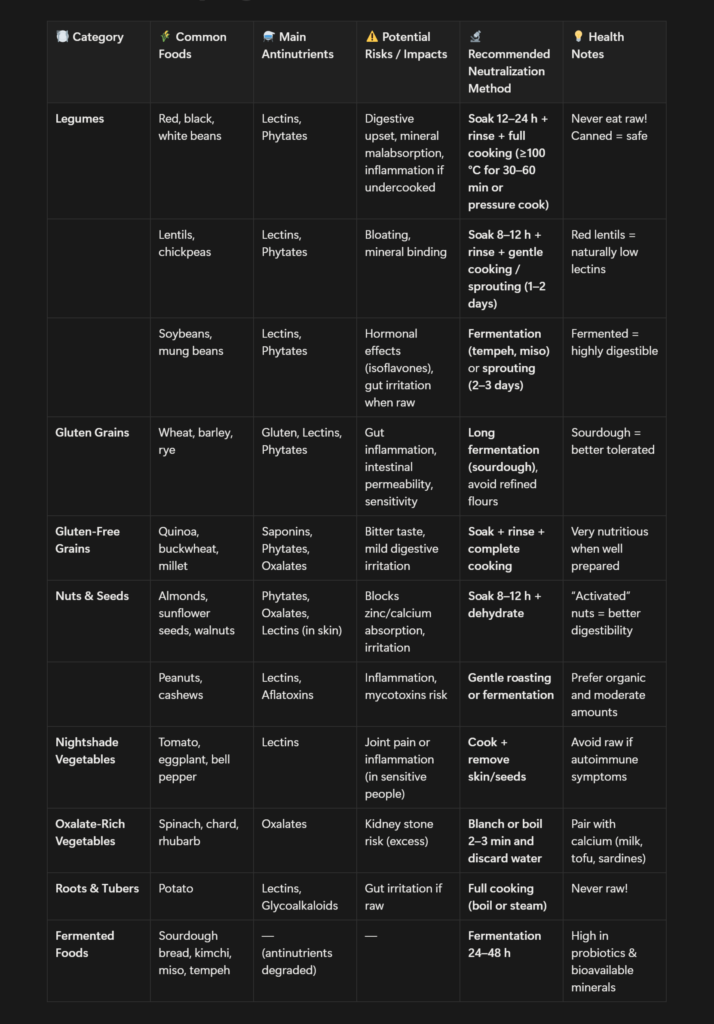
(Not an exhaustive list — only the most commonly consumed foods.)
AUTHOR’S NOTE
For nearly eight years, I lived inside this “nutrition optimization” question.
Chronic symptoms led me deep into the world of nutrition — gut health, inflammation, brain fog, immunity — searching for answers.I’ve tried almost everything: alkaline diets, chinese energetic food principles, 0 lectins, low-lectin, anti-inflammatory diets and low-FODMAP protocols, ketogenic, low carbs, microbiome healing, carnivore, vegan, juicing, paleo, bone broth diets, Intermittent fasting, fasting for weeks, refeeding phases, longevity hacks, nutrigenomics… you name it.
Hundreds of books, courses, and experiments later, one truth stands out:
Nutrition is not linear — it’s cyclical, adaptive, and deeply individual.
You are always learning, for instance, eliminating every “bad” food, like lectins or oxalates, may look smart on paper, but in practice, it often becomes a form of stress — mental, social, even emotional.Dr. Gundry’s work on lectins opened an important conversation for me, but over time I realized:
the long term solution isn’t in zero lectins or perfect diets.It’s in understanding balance, preparation, and rhythm — respecting how your unique biology interacts with food.
So rather than fearing anti-nutrients, observe, experiment, and adapt.
Your genetics, your microbiome, your gut integrity — all shape what “healthy” truly means for you.In the end, optimal nutrition is less about restriction and more about relationship — with your food, your body, and your internal feedback system.
That’s what eating smarter, not stricter, really means.
CONCLUSION
Anti-nutrients are not the “bad guys” of nutrition. They’re part of a complex biological system designed for survival — one we can easily outsmart with knowledge and preparation.
By soaking, sprouting, fermenting, and cooking properly, you can deactivate plant defenses while keeping all their benefits: fiber, vitamins, minerals, and antioxidants.
Eat smarter, not stricter.
When you blend modern science with ancestral wisdom, you get the best of both worlds — nourishment without compromise.
Erwin
F.A.Q
Are all anti-nutrients bad?
No. Dose, preparation, and your biology matter. Some (like phytates) have antioxidant/metabolic upsides.
Which are the most problematic?
Often gluten, lectins (poorly cooked beans), phytates (minerals), and oxalates (with calcium balance). Sensitivity varies.
What methods reduce them best?
Soaking, sprouting, fermentation, full boiling/pressure-cooking—and discarding cooking water for high-oxalate/lectin foods.
How do I know if I’m sensitive?
Track meals + symptoms. Try a short, structured elimination followed by controlled reintroduction. If in doubt, get guidance and consider basic labs (iron/zinc status, kidney stone risk, etc.).
REFERENCES
[1] Fasano A. Zonulin and its regulation of intestinal barrier function: the biological door to inflammation, autoimmunity, and cancer. Physiol Rev. 2011 Jan;91(1):151–175. doi:10.1152/physrev.00003.2008.Available from: https://pubmed.ncbi.nlm.nih.gov/21248165/[2] Lopez HW, Leenhardt F, Remesy C. New data on the bioavailability of minerals in cereal products: role of phytate and phytase. J Agric Food Chem. 2002 May;50(22):6589–6594. doi:10.1021/jf0204263.
Available from: https://www.researchgate.net/publication/316462339_Cereal_phytases_and_their_importance_in_improvement_of_micronutrients_bioavailability[3] Holmes RP, Assimos DG. The impact of dietary oxalate on kidney stone formation. Urol Res. 2004 Oct;32(5):311–316. doi:10.1007/s00240-004-0437-3. Epub 2004 Jun 17.
Available from: https://pubmed.ncbi.nlm.nih.gov/15221245/ [4] Uhde M, Ajamian M, Caio G, De Giorgio R, Indart A, Green PH, Alaedini A. Intestinal cell damage and systemic immune activation in individuals reporting sensitivity to wheat in the absence of coeliac disease. Gut. 2016 Dec;65(12):1930–1937. doi:10.1136/gutjnl-2016-311964.
Available from: https://pubmed.ncbi.nlm.nih.gov/27459152/ [5] Petroski W, Minich DM. Is there such a thing as “anti-nutrients”? A narrative review of perceived problematic plant compounds. Nutrients. 2020 Oct;12(10):2929. doi:10.3390/nu12102929.
Available from: https://pubmed.ncbi.nlm.nih.gov/32987890/[6] Salim R, Nehvi IB, Mir RA, Tyagi A, Ali S, Bhat OM.
A review on anti-nutritional factors: unraveling the natural gateways to human health.
Front Nutr. 2023 Aug 31;10:1215873. doi:10.3389/fnut.2023.1215873.
Available from: https://pubmed.ncbi.nlm.nih.gov/37720522/
