The Vitamin D Guide: Decode the Sunshine Hormone for Energy, Immunity & Longevity
TL;DR
Core Concept: Vitamin D isn’t just a vitamin — it’s a steroid hormone that regulates over 5% of your genome. Often called the “sunshine vitamin,” it acts like biological software, influencing energy, mood, immunity, bone strength, and longevity.
Significance: Deficiency is a silent global epidemic (50–70% of people), driving fatigue, depression, poor immunity, metabolic dysfunction, and accelerated aging. Optimizing Vitamin D isn’t optional.
Challenges: Indoor lifestyles, darker skin tones, northern latitudes, poor absorption, and medical under-testing keep most people deficient. Confusion about testing and fear of the sun make the problem worse.
Strong Fact: Studies show low sun exposure carries a mortality risk as high as smoking. Optimizing Vitamin D levels (50–70 ng/mL) reduces risk of dementia, autoimmune disease, infections, cardiovascular death, and fractures — while boosting energy, mood, and resilience.
Implementation Tips – Practical Guidelines (Shared below!) (Scroll down in the full article!)
OVERVIEW
Vitamin D is one of the most powerful levers for health optimization — yet one of the most overlooked. Despite being free from sunlight and cheap in supplement form, deficiency is rampant.
Think of Vitamin D as the master key hormone: it powers your mitochondria, tunes your mood, trains your immune system, and strengthens your bones. When optimized, you feel more dynamic, resilient, and protected against chronic disease.
This isn’t about chasing “feel good.” It’s about building a strong biological foundation for long-term vitality and performance.
By restoring optimal vitamin D levels, you can unlock:
☀️ more vibrant energy & mitochondrial power
🧘♀️ greater mood stability & mental clarity
🛡 stronger immune defenses against infections
🦴 resilient bones, teeth & joints
❤️ protection for heart, metabolism & longevity
It’s not just about “topping up a vitamin” — it’s about activating the hormonal software your body depends on to thrive.
What is Vitamin D? (Definition)
Vitamin D is a fat-soluble hormone-like nutrient made when UVB rays hit your skin.
- Vitamin D3 (cholecalciferol): #1 Skin + Sun, or best form for supplements.
- Vitamin D2: Plant-based, weaker, poorly metabolized.
It binds to receptors in nearly every tissue — turning genes on/off and regulating cell growth, immunity, and energy.
Natural sources to get Vitamin D :
☀️ Sunlight (primary)
🐟 Fatty fish (salmon, sardines, cod liver oil) [D3 form – not enough to fix a deficency]
🥚 fortified dairy & plant milks [D2 form – poorly absorbed. Human do not make D2].
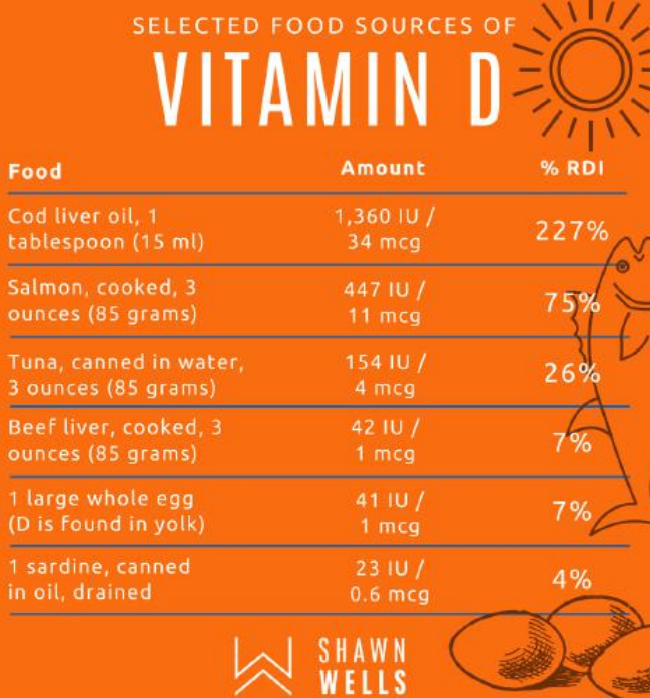
need.
Why Should You Care ?
Vitamin D deficiency is a global health crisis with profound effects on your body. It’s not just another nutrient gap — it’s a hormone imbalance that impacts energy, mood, immunity, and longevity.
Widespread Deficiency
- ~50% of the global population is deficient.
- 70% of U.S. adults and 80% of French adults have inadequate levels.
- Darker skin tones are especially at risk (85% deficiency rates), since melanin blocks UVB and requires up to 6x more sun exposure.
- Add to this a modern lifestyle indoors (92% of time spent inside), and deficiency becomes almost inevitable.
The “Biological Software” Effect
Vitamin D regulates 5%+ of your genome and acts like biological software, switching genes on and off to influence immunity, energy metabolism, and organ health. Its reach makes it one of the most important levers of long-term vitality.
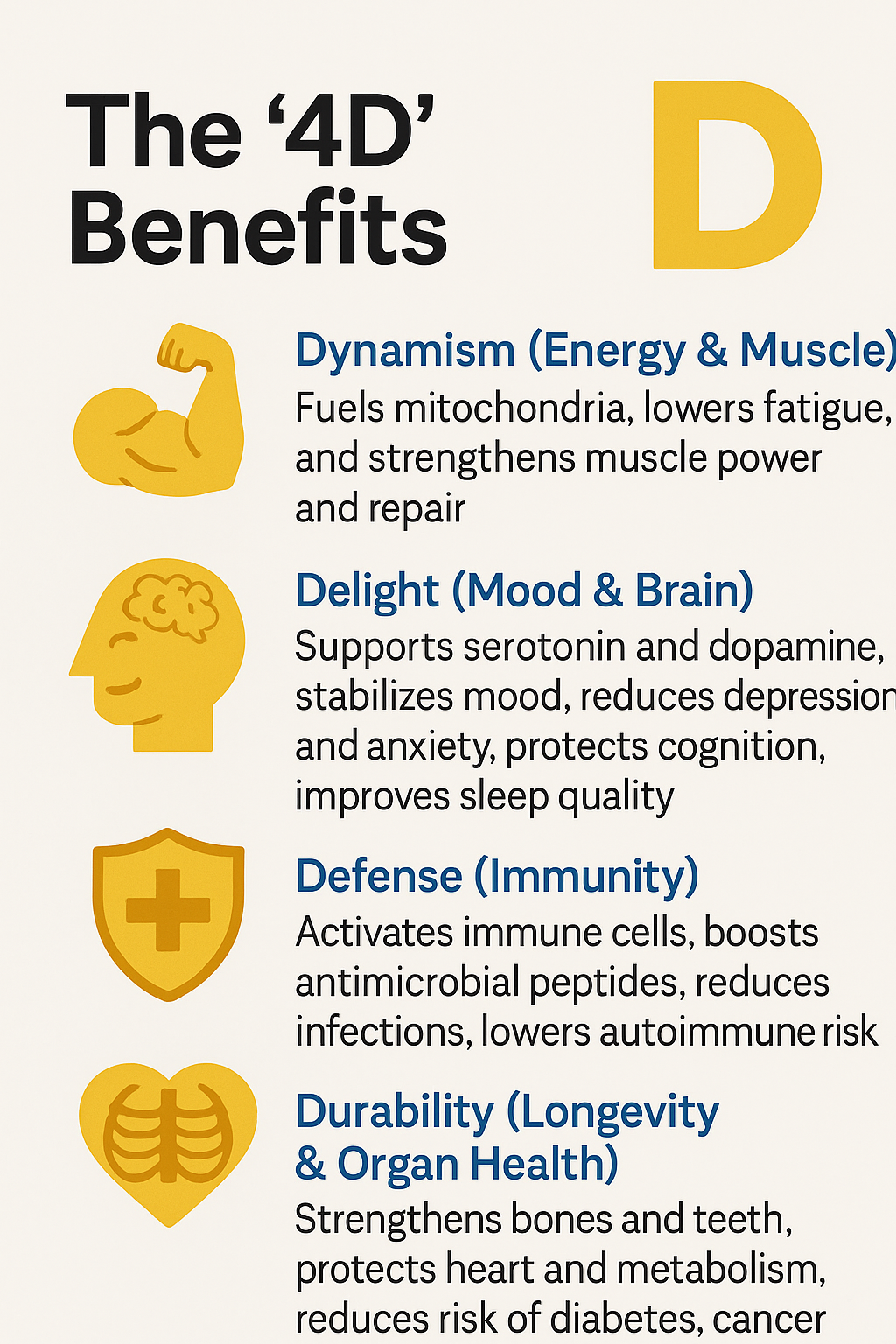
The “4D” Benefits
Dynamism (Energy & Muscle) → Fuels mitochondria, lowers fatigue, and strengthens muscle power and repair.
Delight (Mood & Brain) → Supports serotonin and dopamine, stabilizes mood, reduces depression and anxiety, protects cognition, and improves sleep quality.
Defense (Immunity) → Activates immune cells, boosts antimicrobial peptides, reduces infections, and lowers autoimmune risk.
Durability (Longevity & Organ Health) → Strengthens bones and teeth, protects heart and metabolism, reduces risk of diabetes, cancer, and chronic inflammation.
Common Challenges
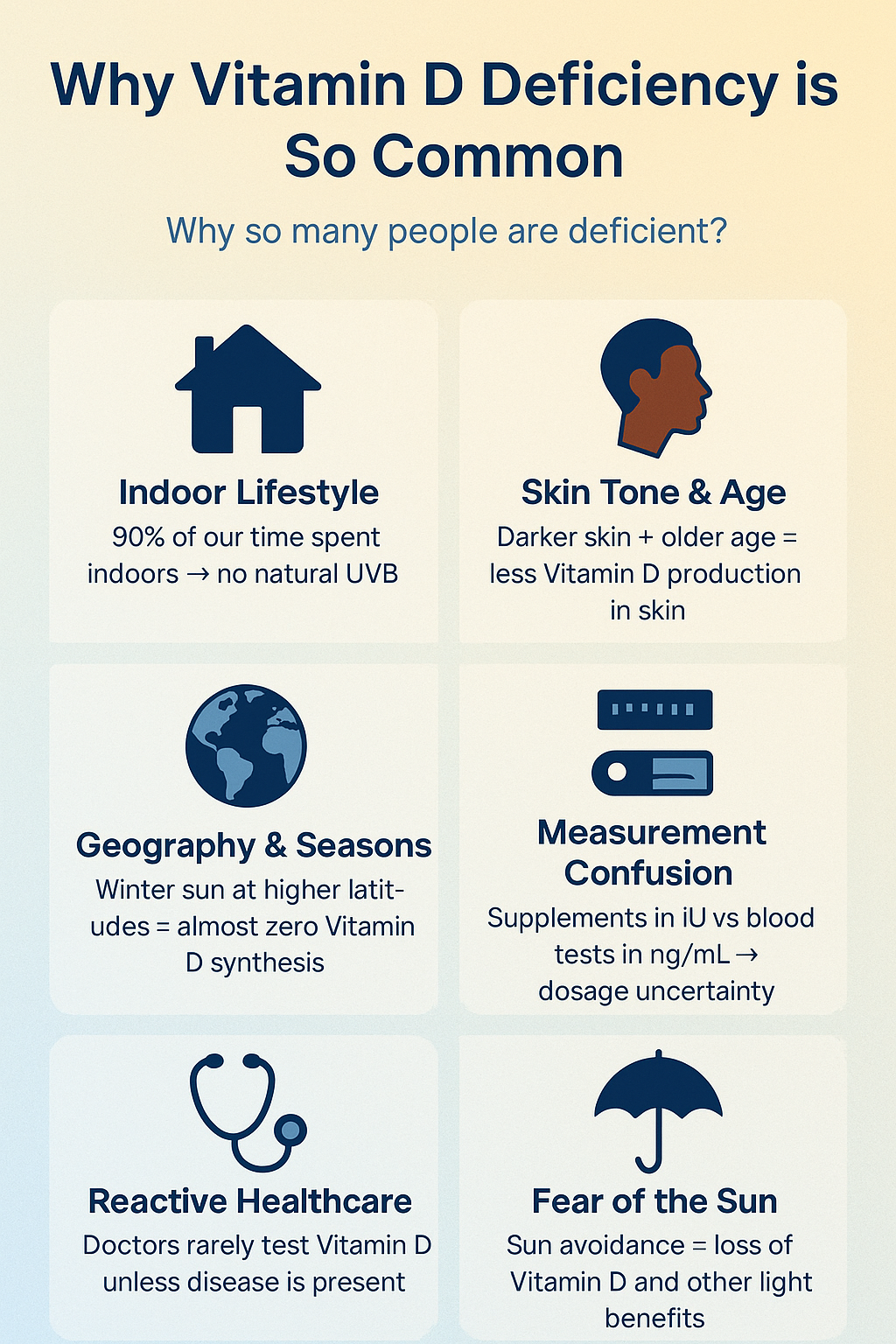
Even with awareness, many people struggle to reach optimal Vitamin D levels. The reasons are both biological and lifestyle-driven:
- Indoor Lifestyle → We spend over 90% of our time inside, cutting off natural UVB exposure.
- Geography & Seasons → At higher latitudes, the winter sun simply doesn’t provide enough UVB for Vitamin D synthesis.
- Skin Tone & Age → Darker skin and older age both reduce the skin’s ability to produce Vitamin D.
- Absorption Barriers → Obesity, gut inflammation, liver or gallbladder issues, stress, and certain genetic variations can all limit Vitamin D absorption or activation.
- Measurement Confusion → Supplements are dosed in IU, while blood tests use ng/mL or nmol/L. This mismatch often leaves people unsure of how much to take.
- Reactive Healthcare → Most doctors don’t routinely test Vitamin D levels unless disease is already present, leaving deficiencies undetected for years.
- Fear of the Sun → Warnings about skin cancer have led many to avoid direct sunlight, missing out on Vitamin D and other light-driven health benefits.
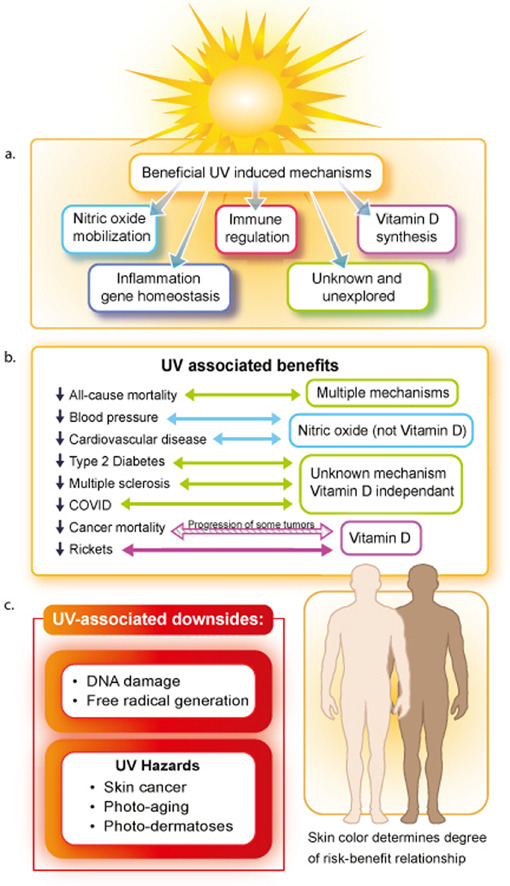
Hard Facts to Motivate You (Science-Based)
Here are five undeniable reasons why sunlight – as Vitamin D — are non-negotiable for your health:
- Sunlight Is More Than Just Vitamin D
- Vitamin D pills ≠ sunlight. UV and infrared light trigger many non–Vitamin D benefits: nitric oxide release (lowers blood pressure, blocks viral entry), systemic anti-inflammation, mitochondrial protection, and better brain health. [1]
- Vitamin D pills ≠ sunlight. UV and infrared light trigger many non–Vitamin D benefits: nitric oxide release (lowers blood pressure, blocks viral entry), systemic anti-inflammation, mitochondrial protection, and better brain health. [1]
- Genomic Activation
- Almost 25% of your genome is seasonally expressed through sunlight exposure, influencing everything from immunity to mood and metabolism. [2]
- Almost 25% of your genome is seasonally expressed through sunlight exposure, influencing everything from immunity to mood and metabolism. [2]
- Sunlight Reduces All-Cause Mortality
- Long-term studies (Sweden, UK Biobank) show that avoiding sun increases risk of death as much as smoking. More exposure = lower cancer and cardiovascular mortality. [3][4]
- Long-term studies (Sweden, UK Biobank) show that avoiding sun increases risk of death as much as smoking. More exposure = lower cancer and cardiovascular mortality. [3][4]
- Immune System & Disease Response
- High Vitamin D levels are linked with milder infections and lower risk of autoimmunity. Low levels predict severe outcomes, from COVID-19 to lung infections. [5][6]
- High Vitamin D levels are linked with milder infections and lower risk of autoimmunity. Low levels predict severe outcomes, from COVID-19 to lung infections. [5][6]
- Optimal Blood Levels Are Higher
- The old “sufficient” cutoff (>30 ng/mL) is outdated. Experts recommend 40–60 ng/mL, ideally 50–70 ng/mL, for brain, cardiovascular, and longevity benefits. Higher levels reduce dementia risk by up to 40% and Alzheimer’s by 30%.[7][8]
INTERESTING VIDEOS TO WATCH
Dr Huberman discuss the four major categories of micronutrients that regulate cellular and organ stress, antioxidants, inflammation, hormone regulation, the immune system and longevity with Dr. Patrick.
HOW TO GET INTO HACKTION?

Practical Instructions
Now that you understand why Vitamin D is essential, let’s talk about how to actually optimize it.
But first, a key reminder:
Supplements don’t replace the basics. No amount of Vitamin D capsules will undo a life spent entirely indoors, poor sleep, or a diet stripped of nutrients. Sunlight, real food, and daily movement remain the foundation. Vitamin D is a powerful amplifier — but it works best on top of a solid lifestyle.
Step 1 – Measure Your Levels
You cannot optimize what you don’t measure.
- Ask for: a 25(OH)D blood test (25-hydroxyvitamin D) in pharmacy ([auto test type]) or go to a lab to perform the test.
- Cost: In many countries, it’s inexpensive (e.g. ~8 € lab test in France without prescription).
- Target: Aim for 50–70 ng/mL — the range most experts agree is optimal for health, mood, immunity, and longevity.
Step 2 – Sunlight: The Natural Source
Nothing beats natural sunlight — because it gives you Vitamin D plus other light-driven benefits (nitric oxide release, mitochondrial melatonin, circadian regulation).
- Timing: 15–20 minutes/day [Minimum], ideally between 10 am and 3 pm. Produce around 3000IU naturally.
- Skin exposure: ~40% of your body, without sunscreen, sunglasses during that short period.
- Notes:
- Darker skin = longer exposure needed.
- Older adults synthesize less, so need more sun or supplements.
- Avoid burning — the goal is light, not damage. Speaking of skin damage: you can consider taking 12 mg of astaxanthin to help protect your skin from the side effects of sun exposure. It can serve as a natural complement — or even an alternative — to sunscreen when you’re gently exposing your skin to sunlight to boost Vitamin D.
💊 Step 3– Define Your Dosage (supplementation)
Once again, UVB activation through the skin is unbeatable compared to synthetic supplementation.
If you can’t get enough sunlight exposure daily, supplementation is a valuable tool to restore Vitamin D levels.
If you decide to supplement, personalization is key — it depends on your blood levels, and absorption.
- Rule of thumb: 1,000 IU raises Vitamin D by ~5 ng/mL.
- Maintenance (already optimal): 1,000–2,000 IU/day with K2.
- Correction (deficiency, ~20 ng/mL): 4,000–10,000 IU/day to climb into optimal range.
- Expert protocols:
- Functional medicine: 5,000 IU D3 + 120–140 mcg K2 MK7 daily.
- Some cases require 8,000–10,000 IU/day to maintain >50 ng/mL.
Cofactors that matter:
- Vitamin K2 (MK7): 120–140 mcg/day.
- Magnesium: vital for activation (malate by day, glycinate or threonate at night, or a complex (cf. Magnesium Guide ).
- Zinc: supports Vitamin D metabolism.
⏰ How to Take It (Timing)
| Aspect | Guideline |
|---|---|
| Consistency | Daily intake > sporadic megadoses (better absorption & stability). |
| With Meals | Take D3 with your main meal (lunch or dinner) containing healthy fats. |
| High Dosage | If >5,000 IU/day → split into 2 doses (AM + PM) for better absorption. |
| Sunlight Synergy | Supplementation is second-best. UVB skin activation remains unmatched — it raises Vitamin D and triggers nitric oxide release, mitochondrial melatonin, and other benefits no pill can replicate. |
📆 Duration: How Long Should You Supplement?
| Duration | Guideline |
|---|---|
| Initial Correction | 3–4 months at tailored dose → then re-test your 25(OH)D levels. |
| Maintenance | Once in 50–70 ng/mL range → reduce to 2,000–5,000 IU/day with K2. |
| Long-Term | Vitamin D is often lifelong maintenance, especially in winter or low-sun lifestyles. |
AUTHOR’S NOTE
*Vitamin D Optimization: My Personal Journey*
Let’s dig into some datas to draw conclusions :
Reference Ranges (traditional labs):
- Deficiency: < 10 ng/ml
- “Desirable”: 30–60 ng/ml
- Toxicity risk: > 150 ng/ml
Longevity perspective (recent interpretations):
Optimal range: 50–70 ng/ml
🔹 My Observations
Despite taking ~2000 IU/day since 2019, my Vitamin D levels were never really optimal until very recently.
At the time, my health priorities were different: struggling with chronic Lyme disease symptoms, I intuitively felt Vitamin D wasn’t going to be my “game-changer.” Important, yes — but not the top priority. So I stuck with a “normal” supplementation routine while focusing my energy elsewhere.
🔹 Shifting Focus
In 2024, as my symptoms eased, I decided to push for optimization — not just “normalization.”
I wanted to see if reaching peak performance ranges of this pro-hormone could make a difference.
It took me two 4-month phases (2024) to reach my target:
- Phase 1 → ~5000 IU/day → plateau around 50 ng/ml.
- Phase 2 → increased to ~8000 IU/day → finally reached 70+ ng/ml ✅.
🔹 How to Maintain?
Now the challenge is to stabilize:
- Sun exposure, diet, and my individual metabolism all play a role.
- A maintenance dose is usually lower than the “building dose.”After my blood test hit (76 ng/ml), I thought I was “safe.”
- So I reduced supplementation to ~1000–2000 IU/day, thinking it would be enough to maintain.
- But gradually, I noticed my levels sliding back down (2025 lab test). I had to increase again to ~5000 IU/day.
🔹 The Effects
Let’s be honest: I didn’t suddenly feel like Superman with “super levels” of Vitamin D.
I can’t claim a direct cause-effect relationship, but I do believe that an optimized Vitamin D pathway makes me “cellularly better” by some percentage (X > 0), even if the effect is subtle. And research supports that reasoning.
My Takeaways:
Optimizing Vitamin D may not feel like a magic bullet — but it is one of those foundational levers that strengthens the whole system quietly, in the background. Therefore, improving my energy, mood and life.
Maintenance is highly individual. I have a specific equation with immune/infectious issues that may increase my body’s demand.
Without regular testing, it’s easy to go from optimized → normal → below normal.
CONCLUSION
Vitamin D is not just another supplement — it’s a pillar of health and performance.
By testing your levels, embracing sunlight, and supplementing wisely with D3, K2, and magnesium, you unlock more energy, better mood, stronger immunity, and long-term protection against chronic disease.
Think of it as biological software maintenance: a small daily habit with profound, lifelong benefits.
Erwin
F.A.Q
Is sun better than supplements?
Yes — sunlight delivers nitric oxide, mitochondrial melatonin, and anti-inflammatory effects that pills cannot.
How much is too much?
Toxicity is RARE. Regular testing ensures safety. >150 ng/mL is excessive.
Why combine with K2?
To direct calcium into bones/teeth and away from arteries/kidneys.
Can diet alone fix deficiency?
Unlikely. Even fatty fish provides too little. Sun + supplements are necessary.
Best time for sun?
10 am–3 pm for Vitamin D. Morning/evening sun still gives infrared benefits.
REFERENCES
[1] Lucas RM, Gorman S, Geldenhuys S. Sun Exposure: Beyond the Risks. Photochem Photobiol Sci. 2019.https://pmc.ncbi.nlm.nih.gov/articles/PMC6830553/
[2] Rey G, Milev NB, et al. Widespread seasonal gene expression in human biology. Nature Communications. 2015.
https://www.nature.com/articles/ncomms8000[3] Lindqvist PG, Epstein E, et al. Avoidance of sun exposure as a risk factor for major causes of death. Journal of Internal Medicine. 2014.
https://pubmed.ncbi.nlm.nih.gov/24697969/[4] Juzeniene A, Moan J. Sunlight: Time for a rethink? Journal of the American Academy of Dermatology. 2024.
https://www.sciencedirect.com/science/article/pii/S0022202X2400280X[5] Meltzer DO, Best TJ, Zhang H, et al. Vitamin D status and COVID-19 outcomes. Frontiers in Public Health. 2025.
https://pmc.ncbi.nlm.nih.gov/articles/PMC12112806/[6] Andrade EA, et al. Vitamin D: A potentially important secosteroid in COVID-19 and beyond. Anais da Academia Brasileira de Ciências. 2022.
https://www.scielo.br/j/aabc/a/dbCNJKVXm6X4kTNDfGQ38Hw/[7] Littlejohns TJ, Henley WE, et al. Vitamin D and the risk of dementia and Alzheimer disease. Neurology. 2014.
https://www.neurology.org/doi/10.1212/WNL.0000000000000755[8] Amen Clinics. The shocking connection between Vitamin D and dementia risk. Amen Clinics Blog, 2025.
https://www.amenclinics.com/blog/the-shocking-connection-between-vitamin-d-and-dementia-risk/
Other useful reference not directly quoted : https://ods.od.nih.gov/factsheets/VitaminD-HealthProfessional/
