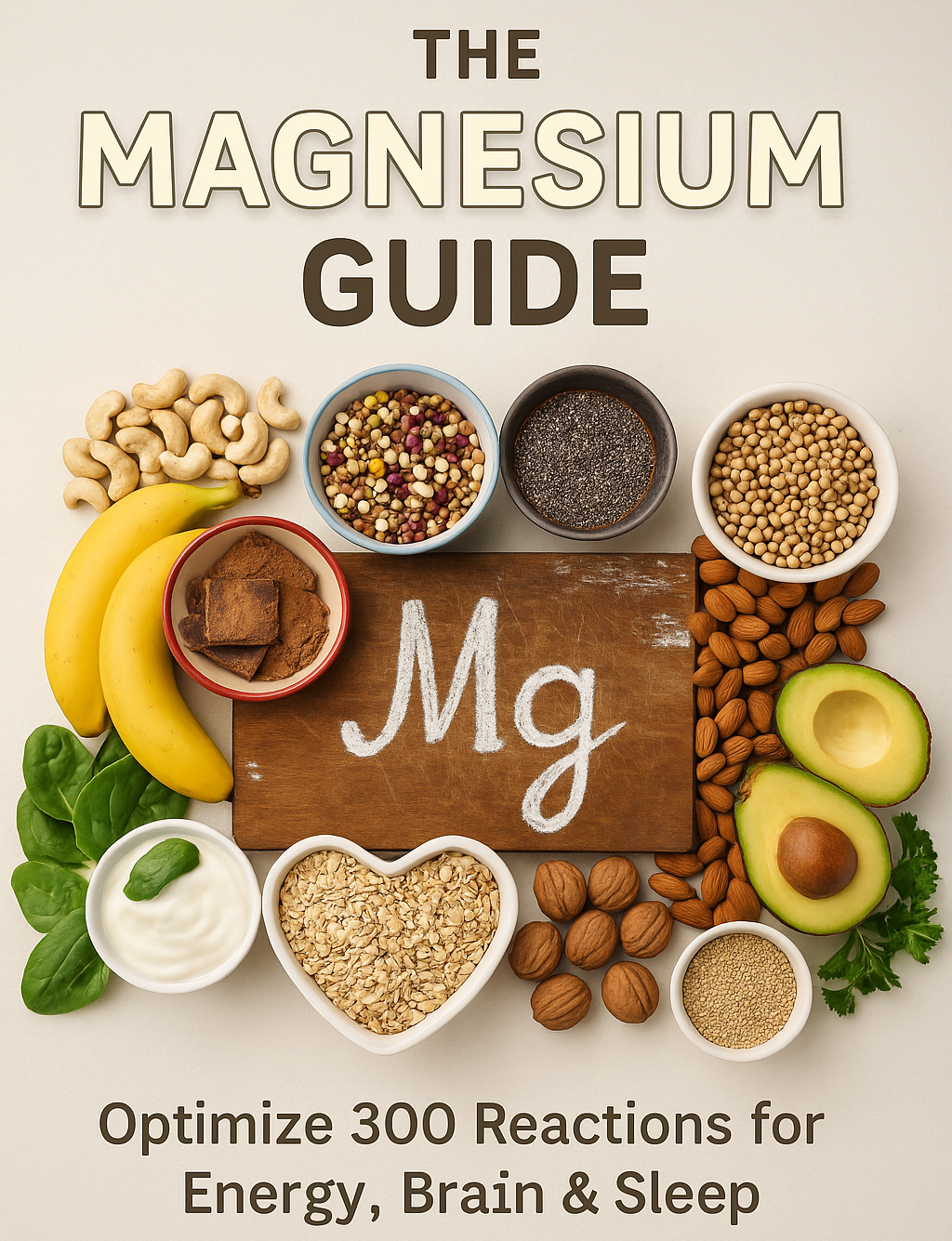
The Magnesium Guide: Optimize 300 Reactions for Energy, Brain & Sleep
TL;DR
Core Concept: Magnesium is a fundamental mineral, essential for over 300 biochemical reactions in the body, from energy production and DNA repair to brain function and sleep. Supplementing with highly bioavailable forms of magnesium can address this widespread deficiency and significantly improve overall health.
Significance: This micronutrient is a cornerstone for mental well-being (reducing anxiety, improving sleep, enhancing cognition) and physical health (strengthening bones, regulating blood pressure, supporting DNA repair, and activating Vitamin D). Its deficiency contributes to a multitude of chronic conditions and can accelerate aging.
Challenges: Key obstacles include unreliable blood tests for deficiency, underestimation of individual needs, overestimation of dietary intake due to soil depletion and food processing, and the prevalence of poorly absorbed supplement forms like magnesium oxide. Stress and certain medications also deplete magnesium.
Strong Fact: Nearly 45% of the US population doesn’t get enough magnesium from their diet, which is critical for vital processes like DNA repair (implicated in cancer prevention) and plays a role in preventing accelerated brain volume loss and dementia. Addressing this deficiency is crucial for long-term health and performance.
Implementation Tips – Practical Guidelines (Shared below!) (Scroll down in the full article!)
OVERVIEW
Today, we explore one of the most underrated yet vital minerals in the human body: magnesium. Often called the “unsung hero” of health, magnesium is involved in over 300 essential enzymatic reactions. From producing energy to regulating your nervous system, supporting muscle function, stabilizing your mood, and balancing blood sugar — magnesium plays a foundational role in your daily performance and long-term vitality.
Yet, nearly half of the population is deficient, often unknowingly. This widespread deficiency is not a minor issue — it’s a silent contributor to fatigue, stress, poor sleep, and accelerated aging.
By restoring optimal magnesium levels, you can unlock:
- 🛌 deeper, more restful sleep
- 🧠 sharper cognition
- 💪 improved physical recovery
- 💓 cardiovascular protection
- 🧬 better hormonal and metabolic balance
It’s not just about feeling better — it’s about giving your body what it needs to thrive.

What is Magnesium? (Definition)
Magnesium is a positively charged mineral ion (cation) that acts as a cofactor — a helper molecule essential for enzyme activity. It’s the fourth most abundant mineral in the body, with about 60% stored in bones, 27% in muscles, and only <1% circulating in the blood (which makes blood tests often misleading).
Here’s what magnesium enables in your body:
- Energy Production (ATP): It stabilizes and activates ATP, the body’s main energy molecule. Without magnesium, energy simply can’t be produced.
- Nerve & Muscle Function: Magnesium helps regulate the movement of calcium and sodium in and out of nerve cells, which calms overactive signals and supports smooth muscle contraction and relaxation..
- Blood Sugar & Insulin Regulation: It improves insulin receptor sensitivity and supports glucose transport into cells.
- DNA Repair & Genetic Integrity: It enables enzymes that protect your DNA and prevent mutations.
- Blood Pressure & Hormonal Balance: It supports vasodilation and regulates hormone receptor binding, including for stress and sex hormones.
In short, magnesium is not optional — it’s foundational.
Why Should You Care About Magnesium?
Most people don’t realize they’re deficient in magnesium — yet it quietly affects nearly every system in your body. Studies [1] suggest that 40–45% of people don’t meet the recommended magnesium intake. In reality, your needs may be even higher than official RDAs (recommended dietary allowance : 400–420 mg/day for men, 310–320 mg/day for women), especially under stress, intense training, or chronic inflammation.
Worse still, even those who try to “fix” the problem often buy the wrong form, at the wrong dose, or don’t absorb it well. The result? No improvement… and the belief that “magnesium doesn’t work.”
But the truth is:
If you’re struggling with unexplained fatigue, poor sleep, or increased stress, magnesium might be the hidden lever.
Here are some common signs that your body might be running low — even if your blood test says you’re “normal”:
- Your brain feels foggy or overstimulated — Trouble focusing, irritability, or memory lapses, especially under pressure.
- You sleep, but don’t feel restored — Difficulty falling asleep, waking up too early, or muscle cramps in the early morning hours.
- You feel anxious for no clear reason — Magnesium helps regulate the nervous system and supports serotonin production.
- You’re tense or in pain — Chronic tightness, tension headaches, migraines, or widespread muscle fatigue (seen in fibromyalgia) may all stem from low magnesium.
- You take Vitamin D or calcium, but see no benefits — Without magnesium, these nutrients can’t activate properly.
- You crave sugar or get ‘hangry’ fast — Magnesium plays a central role in glucose regulation and insulin sensitivity.
If one or more of these resonates with you, it’s worth exploring whether you’re not just low on magnesium — but taking the wrong form, in the wrong way.
Common Challenges
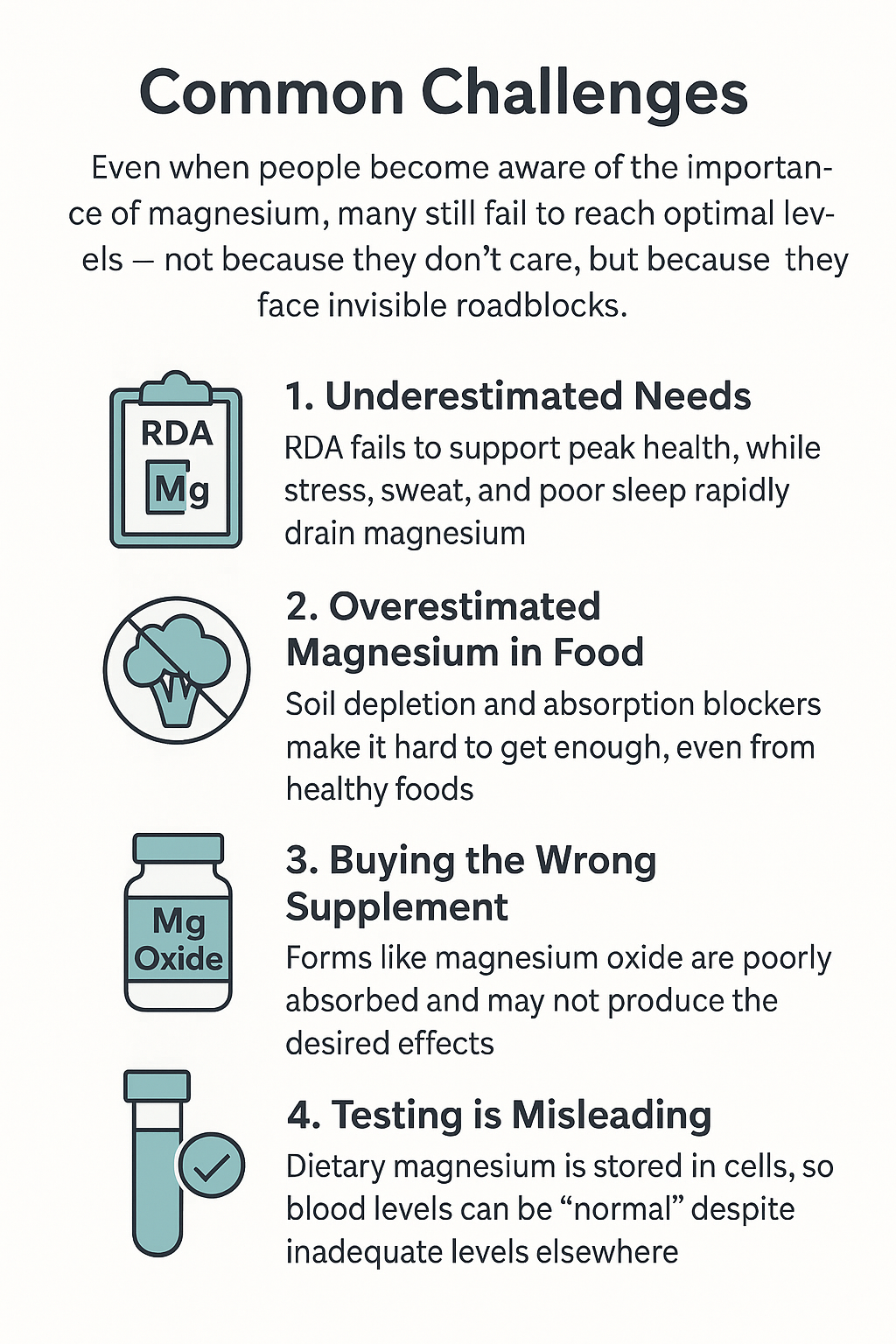
Even when people become aware of the importance of magnesium, many still fail to reach optimal levels — not because they don’t care, but because they face invisible roadblocks. Here’s why magnesium deficiency often persists, even in health-conscious individuals:
1. Underestimated Needs
The official Recommended Daily Allowance (RDA) — around 310–400 mg/day — was designed to prevent extreme deficiency, not to support peak health. In reality, your individual needs may be far higher.
Chronic stress, intense workouts, alcohol consumption, poor sleep, and certain medications (like diuretics or proton pump inhibitors) rapidly drain your magnesium stores. Add to that the fact that your body doesn’t store magnesium efficiently, and it’s easy to fall behind — even if you think you’re eating well.
2. Overestimated Magnesium in Food
Even a clean diet might fall short. Why?
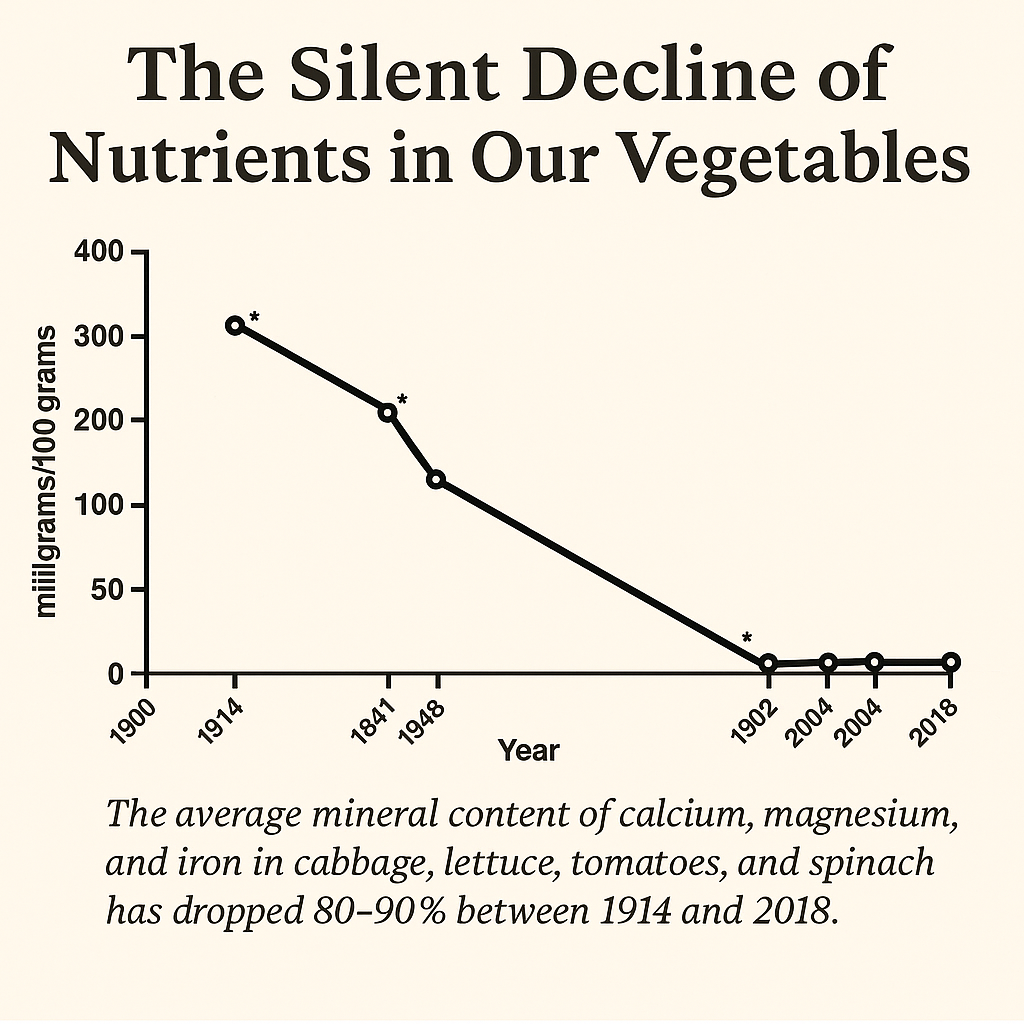
- Soil depletion reduces magnesium in crops,
- Phytates and oxalates block absorption from plants,
- Cooking methods can degrade it,
- Processed foods are low in all minerals,
- And gut issues impair absorption.
3. Buying the Wrong Supplement
One of the biggest pitfalls: buying a magnesium supplement that barely works.
Many popular brands use magnesium oxide, because it’s cheap and compact. But it has an absorption rate of less than 4% — meaning you may be taking 400 mg on the label, but only absorbing a fraction… if your body tolerates it at all. The rest often ends up in the toilet, along with your hope for better sleep or calm.
Other forms, like magnesium citrate, are better absorbed but often cause digestive issues (laxative effect).
Without proper guidance (see practical instructions below), many give up before they find the right form — thinking “magnesium just isn’t for me.”
4. Testing is Misleading
Here’s the twist: even if your blood test says your magnesium level is “normal,” you might still be deficient.
That’s because only ~1% of magnesium circulates in the blood — the rest is stored inside your cells or bones. Standard serum magnesium tests miss the bigger picture. More accurate tests (like RBC magnesium) exist, but they’re rarely used outside specialized clinics or functional medicine settings.
Bottom line:
You might be doing everything “right” and still not getting the benefits — not because magnesium doesn’t work, but because the system around it is outdated, incomplete, or misunderstood.

Hard Facts to Motivate You (Science-Based)
- Every 100 mg/day decrease in magnesium intake = 24% higher pancreatic cancer risk [2]
- Higher magnesium = larger brain volume, up to 1 year “younger” neurologically [3]
- Magnesium deficiency is linked to a 37% increased dementia risk [4]
- 600 mg/day of magnesium reduces migraine frequency & intensity [5]
- Supplementation (~368 mg/day) significantly lowers blood pressure [6]
- It’s essential to activate vitamin D3 into its usable form [7]
- Stress rapidly depletes magnesium — creating a vicious loop of anxiety and fatigue [8]
INTERESTING VIDEOS TO WATCH
HOW TO GET INTO HACKTION?

Practical Instructions
Now that you understand how essential magnesium is — and why so many people are unknowingly deficient — let’s talk about how to actually fix it.
But first, a crucial reminder:
Before reaching for supplements, fix the foundations.
No amount of magnesium will compensate for poor sleep hygiene, a chaotic circadian rhythm, or a highly inflammatory diet stripped of real nutrients. You can’t shortcut your biology with capsules alone.
Magnesium is a potent amplifier of health — but it can only work on top of a solid base. That base includes deep, restorative sleep, low stress, regular movement, and mineral-rich food. Let’s start there.
🧱 Step 1 – Get the Foundations Right
- 💤 Prioritize deep sleep
(No screens after 10 PM, no caffeine after 2 PM, regular sleep-wake rhythm) - 🧘♂️ Manage chronic stress
(Daily breathwork, time in nature, meditation, or journaling) - 🏃♂️ Move your body daily
(Even just walking + resistance training helps optimize hormone sensitivity and mitochondrial health) - 🥦 Eat real, unprocessed food
Favor foods high in magnesium: spinach, pumpkin seeds, dark chocolate (85%+), quinoa, avocados etc.
These simple habits alone increase absorption, reduce depletion, and improve the effectiveness of any supplementation.
💊 Step 2 – Choose the Right Form of Magnesium
Now that the lifestyle foundations are in place, let’s talk about choosing the right type of magnesium.
👉 Not all forms of magnesium are created equal.
Some are poorly absorbed or cause unwanted side effects (like laxative effects or digestive discomfort), while others target specific physiological systems more effectively. Here’s what science and leading health experts tell us:
| Form | Best For | Key Benefits | Expert Notes |
|---|---|---|---|
| Magnesium L-Threonate (Magtein®) | Brain, focus, deep sleep | Crosses the blood-brain barrier; supports memory and cognitive function | Used by Dr. Huberman & Dr. Jin Sung; low elemental Mg |
| Magnesium Glycinate | Sleep, anxiety, muscle tension | Up to 80% absorption; very gentle on the gut | Ideal at night for calming effect |
| Magnesium Malate | Energy, chronic fatigue, fibromyalgia | Supports mitochondrial function and metabolic energy without sedating effects | Can be taken in the morning |
| Magnesium Taurate | Heart health, blood pressure, nervous system | Contains taurine (supports cardiovascular function and longevity) | Daily use for cardiovascular protection |
| Magnesium Citrate | Digestion, constipation, detox | Well absorbed, mild laxative effect | Avoid if sensitive gut |
| Magnesium Orotate | ATP production, cell energy, heart | Deep cellular penetration; used in sports and heart medicine | Excellent for energy and cardiac support |
| Transdermal Magnesium (Chloride / Epsom Salt) | Muscle cramps, local relief | Topical use via creams or baths | Not ideal for systemic replenishment |
| ❌ Magnesium Oxide | – | Poor absorption (<4%), strong laxative effect | Common in cheap supplements; best to avoid |
So… Which Form Should You Choose?
Once you’ve recognized your daily need for magnesium and decided to supplement intelligently, it’s easy to feel overwhelmed by the variety of options.
Glycinate, threonate, malate, citrate…
Each form has its strengths, and different experts recommend different versions depending on your needs.
So what’s the best form?
Truth is — there isn’t one.
And that’s exactly the challenge most people face:
Should you choose based on your symptoms? Spend hours comparing products? Try different forms one by one and hope for the best?
That can quickly become a frustrating puzzle.
👉 The most effective and simple strategy is to use a broad-spectrum magnesium complex — one that combines several bioavailable forms in a single formula.
This way:
- You avoid the trap of picking the “wrong” one.
- You cover multiple benefits at once (sleep, brain, muscle, energy, heart).
- You increase your chances of actually feeling the difference.
It simplifies the process — and dramatically improves your odds of success.
In the end, a well-designed magnesium complex is, in my opinion, the easiest way to make magnesium supplementation work for you, without the guesswork.
You can BUY one from BIOPTIMIZERS or from SUNDAY NATURAL
🕒 Step 3 – Dosage, Frequency & Timing
Let’s now get practical with how to take magnesium correctly — not just what form to use, but how much, when, and for how long to supplement.
✅ Daily Dosage: How Much Magnesium Do You Actually Need?
- General maintenance dose (for most adults):
→ 300–400 mg of elemental magnesium per day
This aligns with the RDA (Recommended Dietary Allowance), but Dr. Dean [9] highlights that these numbers are only sufficient to prevent disease — not to optimize health. - Optimal dose under stress or deficiency:
→ Dr. Carolyn Dean recommends 6–8 mg per kg of body weight per day, which equates to:- 420–560 mg/day for a 70 kg adult
- Higher needs for athletes, pregnant women, or individuals with chronic stress, inflammation, or poor gut absorption.
💡 Always calculate the elemental magnesium, not just the weight of the compound (e.g., 1000 mg of magnesium glycinate ≠ 1000 mg of elemental Mg).
⏰ Timing: When Should You Take It?
Magnesium can be taken once daily, but splitting your dose helps increase absorption and reduce potential digestive issues. You could choose to follow this chart if you use independant types of magnesium.
| Timing | Best For | Tips |
|---|---|---|
| Morning | Energy, focus, muscle performance | Use malate or citrate with breakfast |
| Lunch | Baseline support, smooth energy | Complexes (glycinate + malate) are well tolerated |
| Evening | Sleep, relaxation, nervous system | Use glycinate or threonate 1–2h before bed |
Note: Magnesium L-Threonate may absorb better on an empty stomach, but other forms are often best tolerated with meals.
Personally, as I mentionned earlier, I take a broad-spectrum magnesium complex (Ultra 9 or 11 from Sunday Natural) with meals — split between lunch and dinner. It’s easy to digest, gentle on the stomach, and offers a wide range of benefits without the guesswork.
📆 Duration: How Long Should You Supplement?
Magnesium isn’t a one-off fix. Restoring levels takes time — especially when deficiency is chronic.
| Supplementation Duration | Goal |
|---|---|
| 1–2 weeks | Acute symptom relief (sleep, cramps) |
| 4–6 weeks | Start to rebalance magnesium stores |
| 3 months | Replenish intracellular magnesium and restore enzyme function |
| Ongoing maintenance | Daily intake from food + low-dose supplement to stay in the optimal range |
For the record, Dr. Dean [9] often speaks of magnesium as a long-term foundation — not just a short intervention. Think of it as daily nervous system insurance.
Pro tip: Conduct an “Oral Clinical Trial”
Because blood tests aren’t reliable for magnesium status, Dr. Dean [9] recommends a self-monitoring approach:
- Choose a well-absorbed form (or complex)
- Take daily for 4–8 weeks
- Track symptoms like:
- Sleep quality
- Muscle cramps
- Energy levels
- Chocolate cravings (often a sign of low Mg)
- Stress resilience or anxiety
- Adjust dose or switch forms as needed
AUTHOR’S NOTE
When I started writing this guide, my goal was simple: to help you see magnesium not as a minor mineral, but as a foundational element for optimal health.
Far too many people believe they’re getting enough magnesium — either because they “eat healthy” or because their blood test says they’re “normal.” But as we’ve seen, most of the population is deficient — and worse, they don’t realize it.
For those who do become aware of their deficiency, another trap appears: they underestimate its importance. They might think, “It’s just another supplement.” I hope this guide helped shift that mindset. Magnesium isn’t just “important” — it supports over 300 enzymatic reactions that govern your energy, mood, cognition, recovery, and longevity. That’s not optional. That’s vital.
The final challenge is knowing how to supplement wisely. I personally struggled with this. I tried isolated forms of magnesium, switched brands, experimented with timing. It was messy. I felt fatigued and overwhelmed — until I simplified everything.
That’s when I shifted to a broad-spectrum magnesium complex — combining several bioavailable forms in one. It gave me consistency, ease, and noticeable results. Since then, I’ve viewed magnesium not as a “quick fix,” but as daily nervous system insurance — one capsule a day that supports the most critical pathways in my body.
If there’s one message to leave you with, it’s this:
Magnesium is not optional. It’s the master key that keeps your metabolic engine running.
Respect it. Use it wisely. And make it part of your lifelong foundation.
CONCLUSION
Magnesium is truly a powerful, yet often overlooked, gear within the larger system of your health. As Dr. Carolyn Dean [9] , a recognized magnesium expert, aptly puts it, it’s a “miracle discreet,” intricately involved in countless bodily functions that underpin your energy, focus, sleep, and overall well-being. The journey to optimal magnesium levels starts not with a magic pill, but with a rational, informed, and personalized approach that builds upon the bedrock of behavioral and nutritional habits.
By consciously choosing magnesium-rich foods, avoiding common depleters, and intelligently supplementing with highly bioavailable forms, you empower your body to perform at its peak. The goal is to make magnesium intake a simple, daily practice—a consistent investment in your long-term health and vitality. This isn’t just about alleviating symptoms; it’s about fortifying your internal systems against the stresses of modern life, reducing your risk of chronic diseases, and enhancing every aspect of your physical and mental performance. Embrace the power of magnesium, and unlock a healthier, more vibrant you!
Erwin
F.A.Q
Is magnesium testing reliable to know if I’m deficient?
No, standard blood tests (plasma or serum magnesium) are generally not reliable indicators of your total body magnesium status. This is because your body tightly regulates blood magnesium levels by pulling it from bone reserves, masking an underlying deficiency. A “normal” result doesn’t rule out deficiency. Instead, a practical approach is to monitor your symptoms and conduct an “oral clinical trial” by observing how you feel after supplementing for 1-3 months
What is the “best” form of magnesium to take?
There isn’t one single “best” form, as different forms offer specific benefits and absorption rates. However, organic or chelated forms are generally more bioavailable and better absorbed than inorganic forms like magnesium oxide
Can I take too much magnesium?
Yes, you can take too much supplemental magnesium, though it’s generally considered safe within certain limits. The most common side effect of excessive oral magnesium intake is diarrhea. The US Institute of Medicine’s Food and Nutrition Board set the upper safe limit for daily supplemental magnesium intake at 350mg per day for most people, beyond which GI issues may occur. This limit does not include magnesium obtained from food sources. To optimize absorption and minimize discomfort, it’s recommended to split your daily dose into smaller, frequent amounts
How long does it take to see the effects of magnesium supplementation?
The timeframe can vary, but for noticeable improvements in symptoms of magnesium deficiency, it’s often suggested to take supplements consistently for one to three months. Some effects, like improved sleep or reduced anxiety, might be felt sooner, while more profound changes (e.g., in bone density or long-term cognitive function) would require longer-term consistent intake.
Will I become dependent on magnesium supplements for sleep?
No, magnesium sleep supplements typically do not create a dependency in the same way that prescription sleeping pills might. While you might find that your sleep quality is better with supplementation, many people report being able to sleep fine even on nights when they miss their magnesium, suggesting that the benefits are not due to addiction but rather the body’s improved function and neural circuit plasticity.
REFERENCES
[1] Workinger, J. L., Doyle, R. P., & Bortz, J. (2018). Challenges in the diagnosis of magnesium status. Nutrients, 10(9), 1202. https://doi.org/10.3390/nu10091202 [2] Bao, Y., Sato, K., Boursi, B., & Mukamal, K. J. (2019). Magnesium intake and pancreatic cancer risk: The VITamins And Lifestyle Study. British Journal of Cancer, 120(8), 779–784.https://pubmed.ncbi.nlm.nih.gov/26554653/ [3] Liebl, M. M., Ruhl, R., Schneider, A., et al. (2022). Higher serum magnesium is associated with larger brain volumes and younger-appearing brains on MRI in middle-aged adults. Neurology, 99(16), e1707–e1716.
https://pmc.ncbi.nlm.nih.gov/articles/PMC8703422/#sec5-nutrients-13-04496[4] Kieboom, B. C. T., Murray, A. M., Heijer, T. D., et al. (2018). Serum magnesium and the risk of dementia: The Rotterdam Study. Neurology, 90(13), e1186–e1192.
https://pubmed.ncbi.nlm.nih.gov/28931641/[5] Peikert, A., Wilimzig, C., & Köhne-Volland, R. (1996). Prophylaxis of migraine with oral magnesium: Results from a prospective, multi-center, placebo-controlled and double-blind randomized study. Headache, 36(3), 154–160.
https://journals.sagepub.com/doi/10.1046/j.1468-2982.1996.1604257.x?url_ver=Z39.88-2003&rfr_id=ori:rid:crossref.org&rfr_dat=cr_pub%20%200pubmed[6] Zhang, X., Li, Y., Del Gobbo, L. C., et al. (2016). Effects of magnesium supplementation on blood pressure: A meta-analysis of randomized double-blind placebo-controlled trials. Hypertension, 68(2), 324–333.
https://pubmed.ncbi.nlm.nih.gov/27402922/ [7] Uwitonze, A. M., & Razzaque, M. S. (2018). Role of magnesium in vitamin D activation and function. The Journal of the American Osteopathic Association, 118(3), 181–189.
https://pubmed.ncbi.nlm.nih.gov/29480918/ [8] Boyle, N. B., Lawton, C., & Dye, L. (2017). The effects of magnesium supplementation on subjective anxiety and stress—a systematic review. Nutrients, 9(5), 429.
https://www.mdpi.com/2072-6643/9/5/429 [9] Dean, C. (2017). The Magnesium Miracle (2nd ed.). Ballantine Books.
